✕

← All free Thai content

Textbook Thai vs real-life Thai

What you learn in a textbook and what you hear in real life are often different. Swipe through the most common spoken shortcuts, like อะไร becoming ไร.
1 / 13
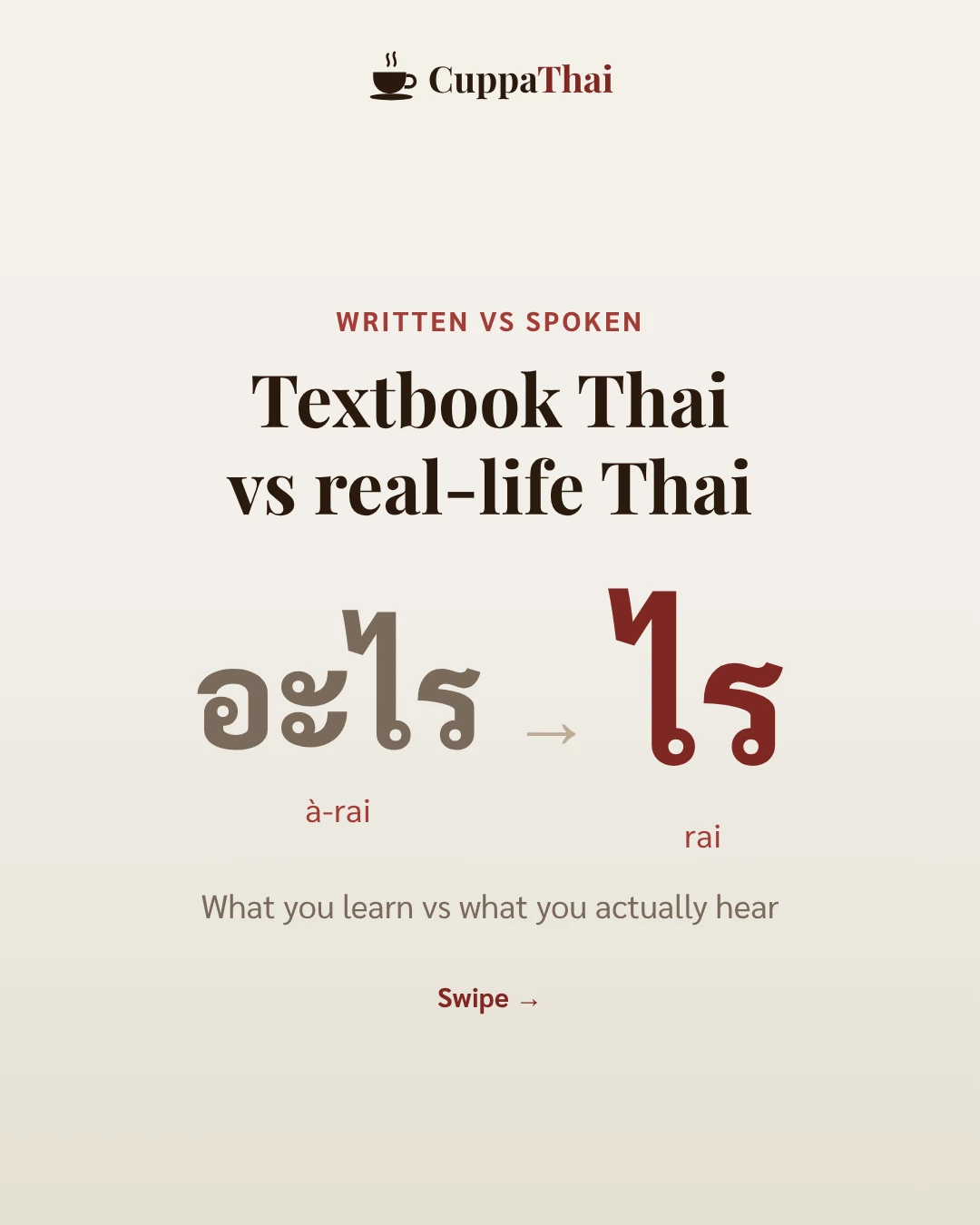
Cover. Textbook Thai vs real-life Thai. อะไร (à-rai) becomes ไร (rai). What you learn vs what you actually hear.
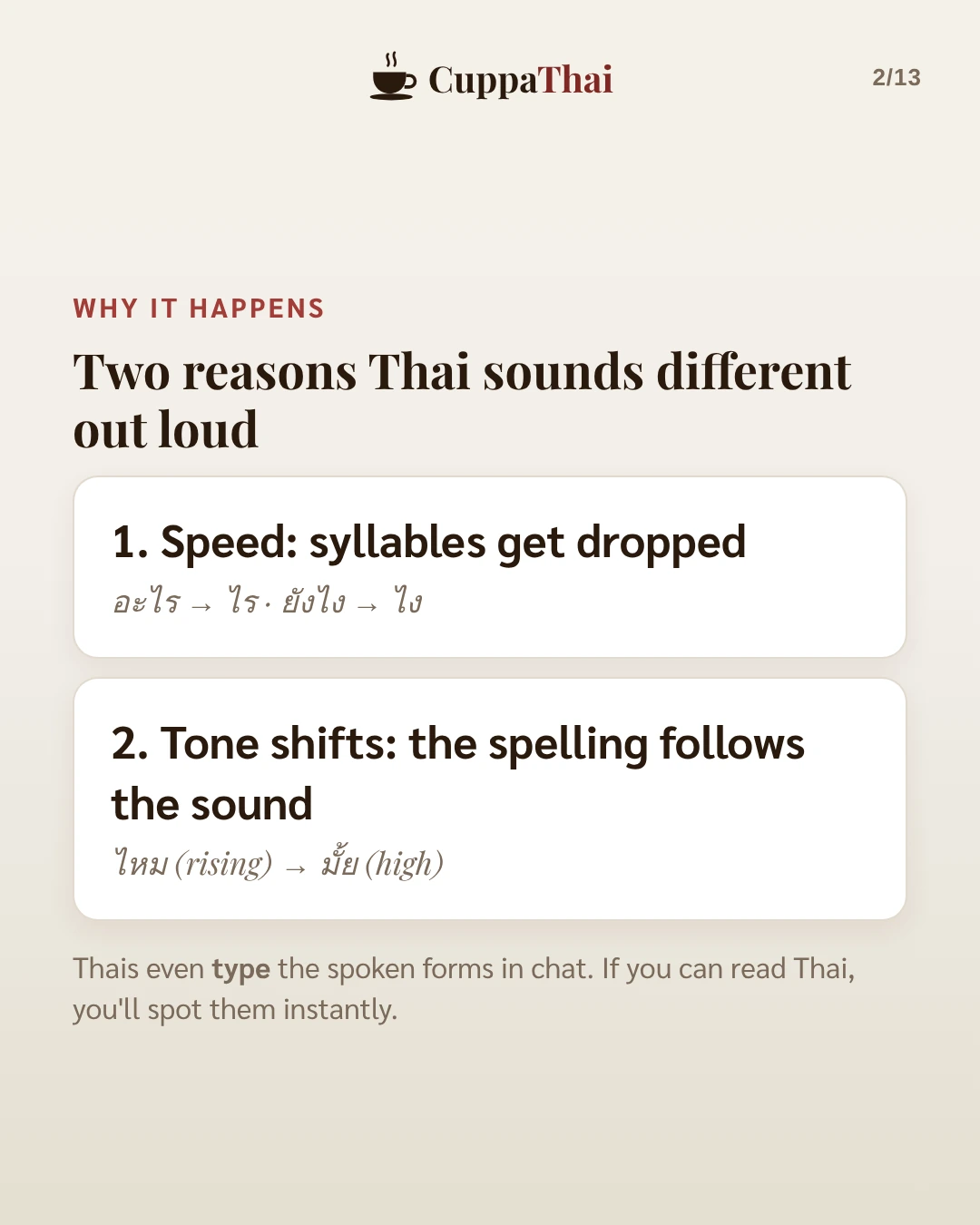
Why it happens. Two reasons Thai sounds different out loud. 1. Speed: syllables get dropped, so อะไร becomes ไร and ยังไง becomes ไง. 2. Tone shifts: the spelling follows the sound, so ไหม (rising) becomes มั้ย (high). Thais even type the spoken forms in chat. If you can read Thai, you'll spot them instantly.
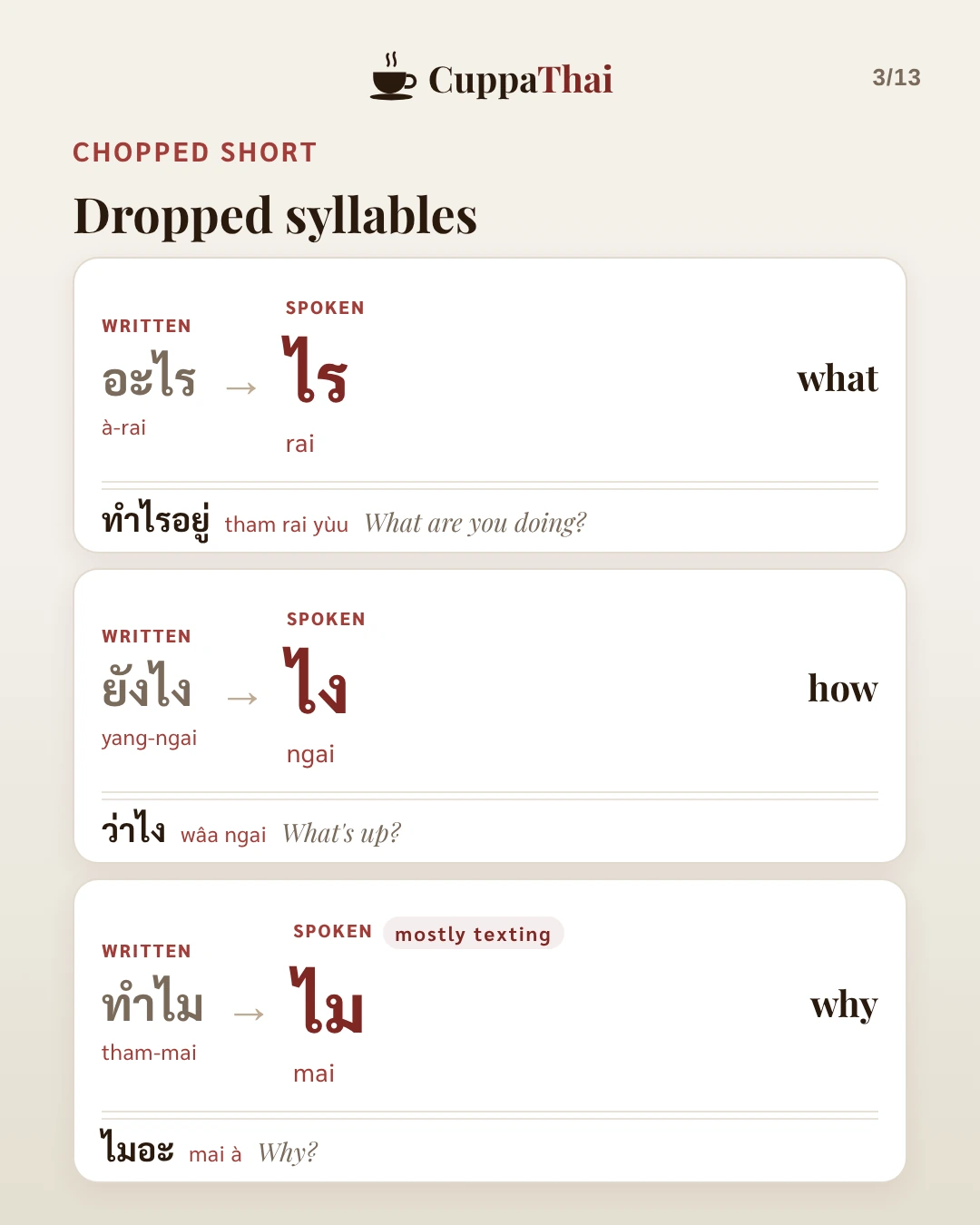
Dropped syllables. อะไร (à-rai) becomes ไร (rai), what. Example: ทำไรอยู่ (tham rai yùu), What are you doing? ยังไง (yang-ngai) becomes ไง (ngai), how. Example: ว่าไง (wâa ngai), What's up? ทำไม (tham-mai) becomes ไม (mai), why, mostly in texting. Example: ไมอะ (mai à), Why?
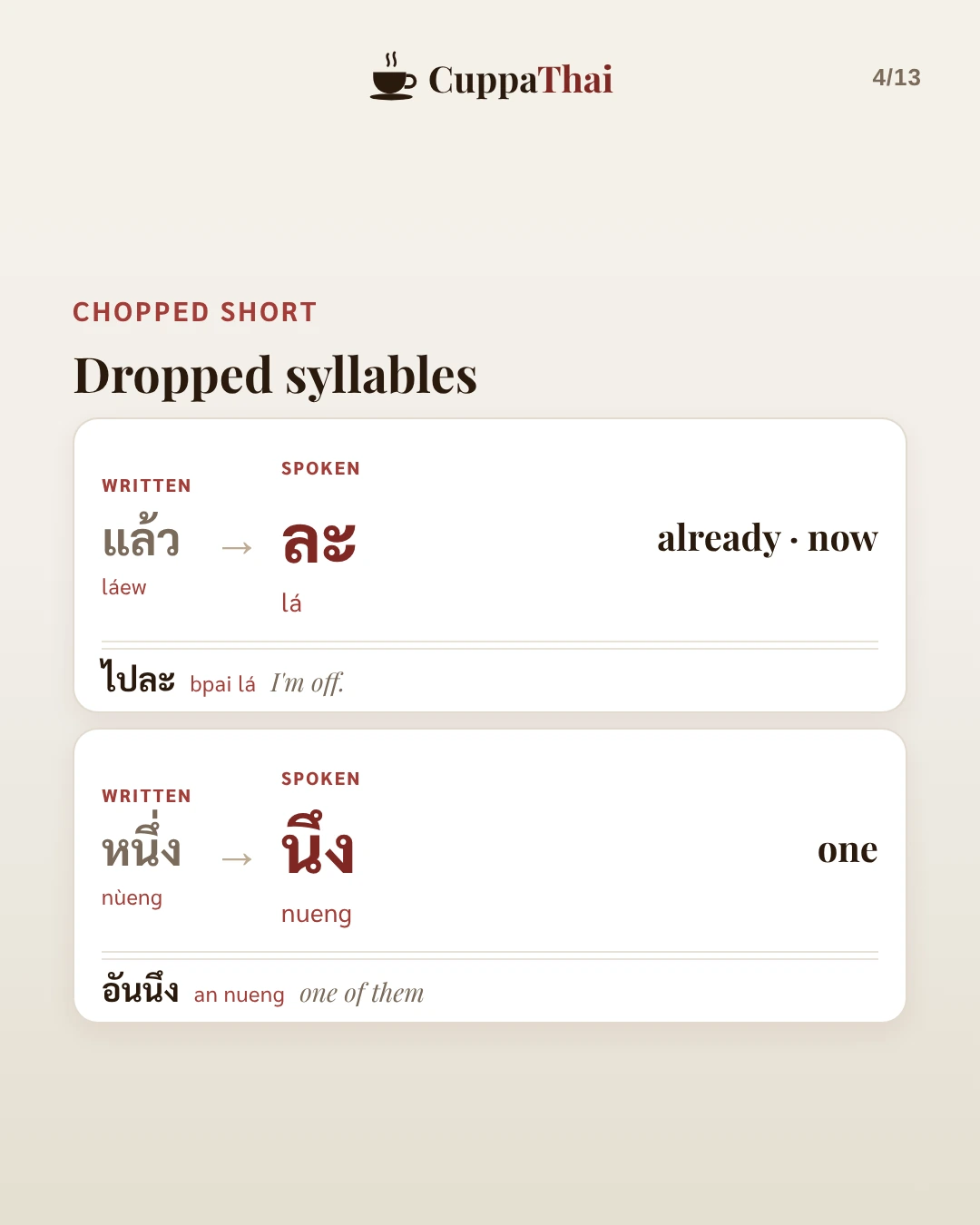
Dropped syllables. แล้ว (láew) becomes ละ (lá), already or now. Example: ไปละ (bpai lá), I'm off. หนึ่ง (nùeng) becomes นึง (nueng), one. Example: อันนึง (an nueng), one of them.
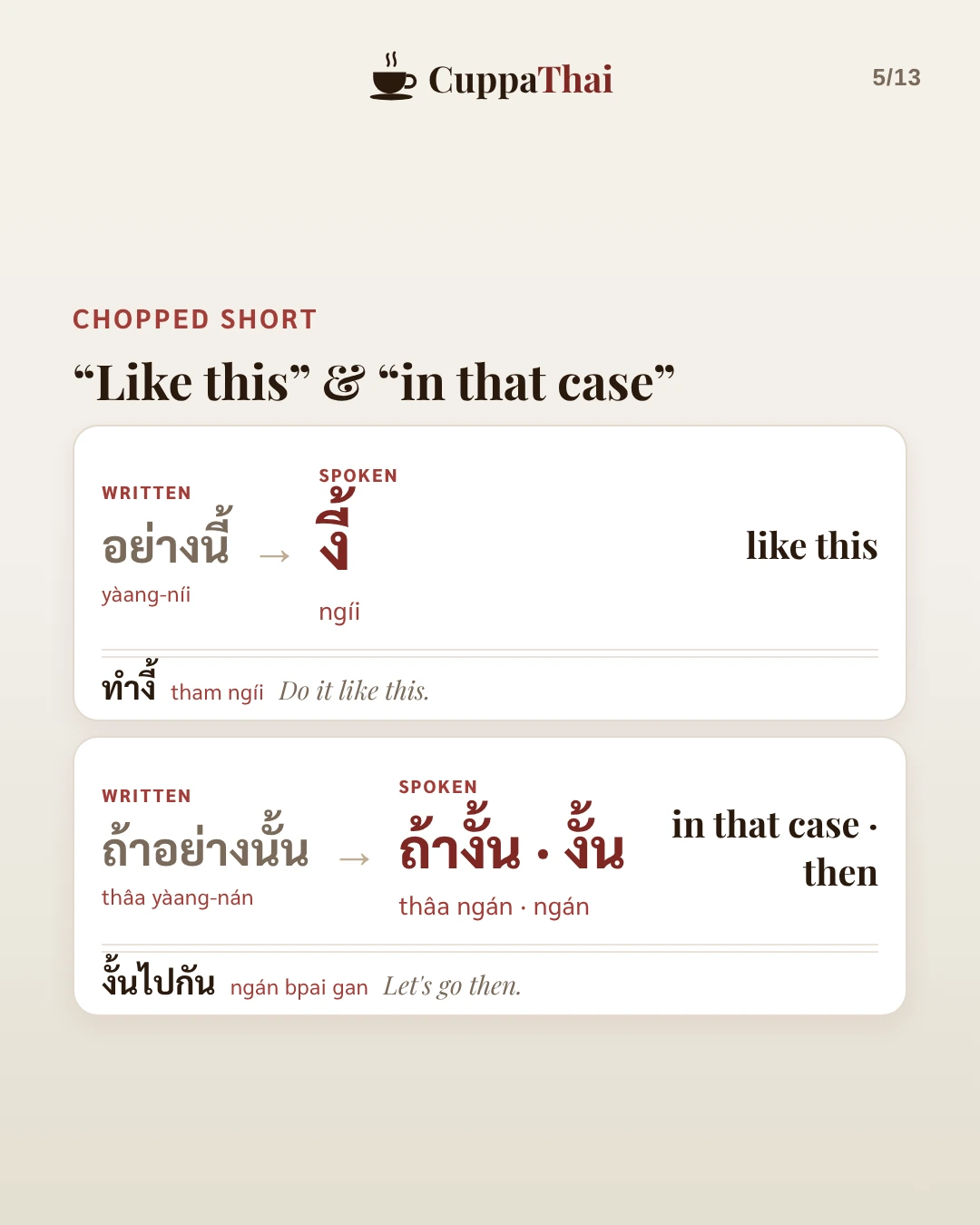
Like this and in that case. อย่างนี้ (yàang-níi) becomes งี้ (ngíi), like this. Example: ทำงี้ (tham ngíi), Do it like this. ถ้าอย่างนั้น (thâa yàang-nán) becomes ถ้างั้น or งั้น (thâa ngán, ngán), in that case, then. Example: งั้นไปกัน (ngán bpai gan), Let's go then.
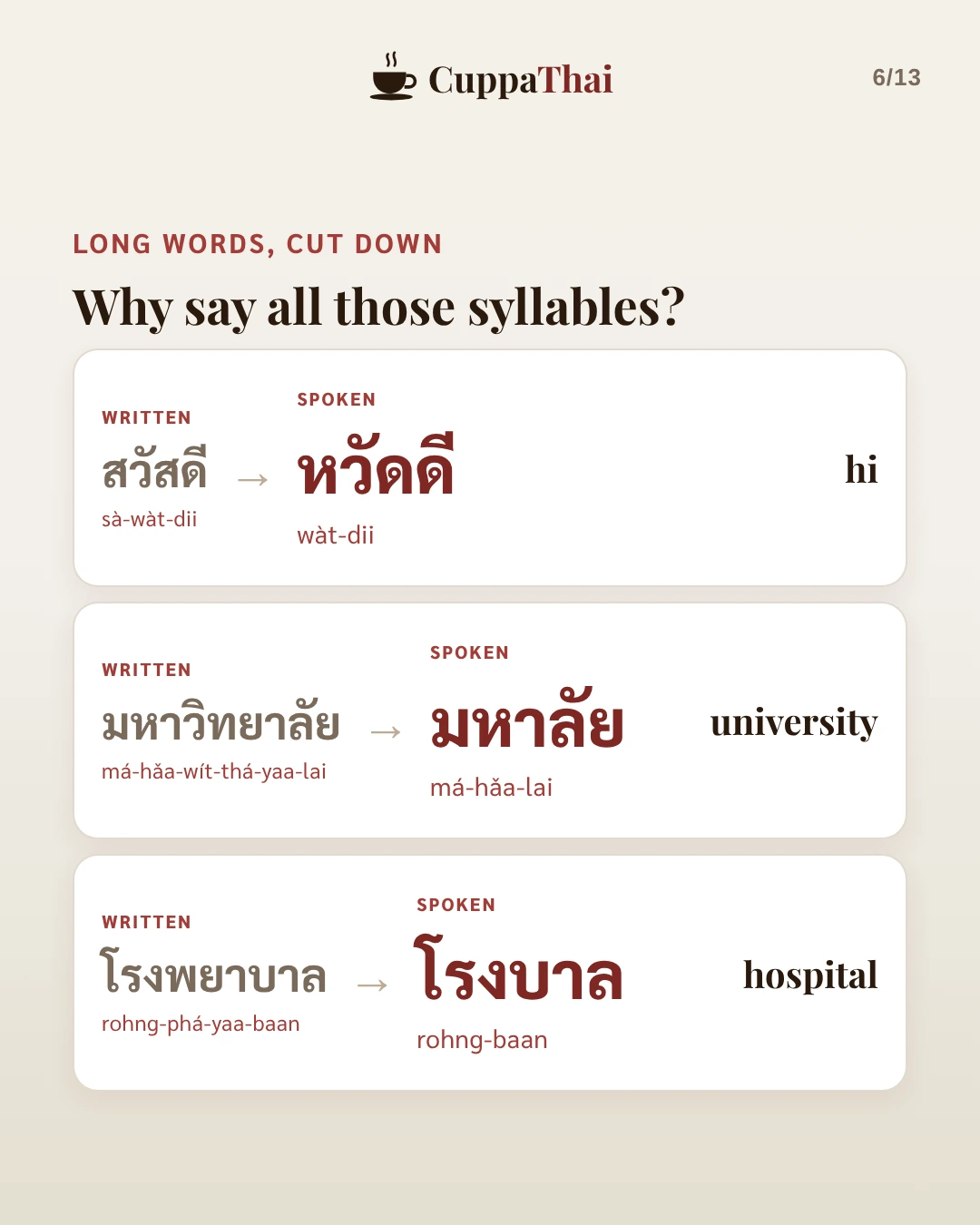
Long words, cut down. Why say all those syllables? สวัสดี (sà-wàt-dii) becomes หวัดดี (wàt-dii), hi. มหาวิทยาลัย (má-hǎa-wít-thá-yaa-lai) becomes มหาลัย (má-hǎa-lai), university. โรงพยาบาล (rohng-phá-yaa-baan) becomes โรงบาล (rohng-baan), hospital.
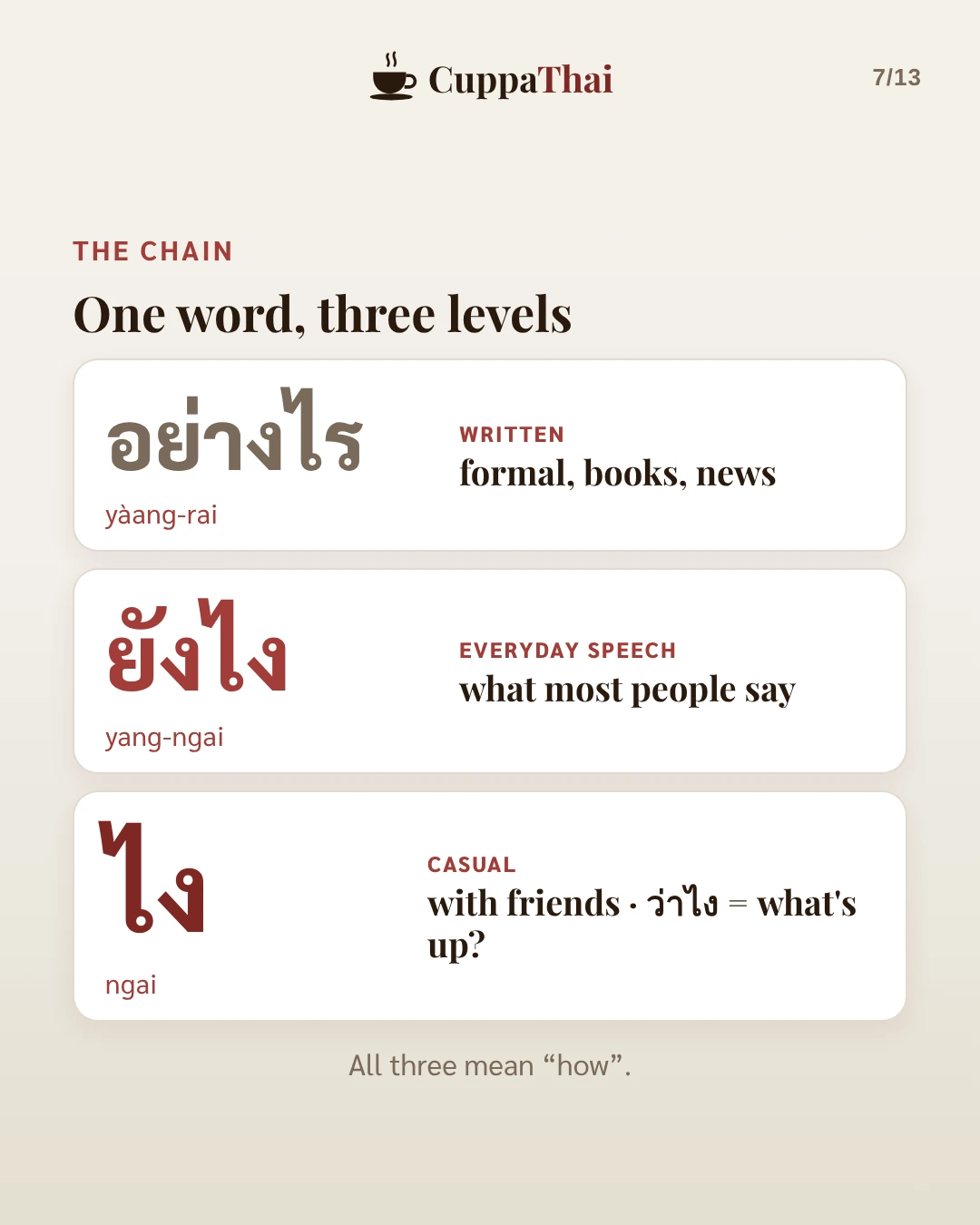
The chain. One word, three levels. อย่างไร (yàang-rai) is the written, formal form used in books and news. ยังไง (yang-ngai) is everyday speech, what most people say. ไง (ngai) is casual, used with friends, and ว่าไง means what's up? All three mean how.
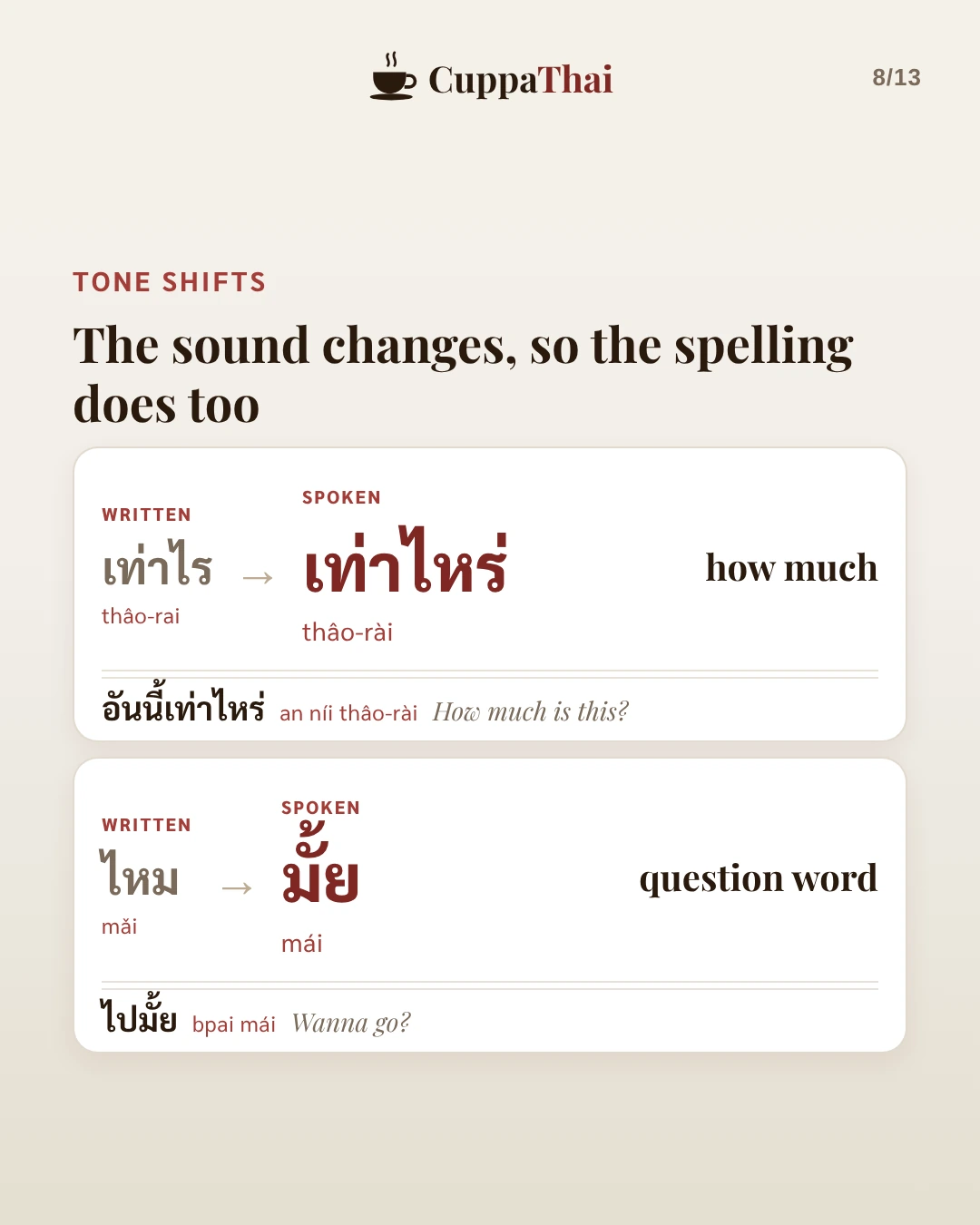
Tone shifts. The sound changes, so the spelling does too. เท่าไร (thâo-rai) becomes เท่าไหร่ (thâo-rài), how much. Example: อันนี้เท่าไหร่ (an níi thâo-rài), How much is this? ไหม (mǎi) becomes มั้ย (mái), the question word. Example: ไปมั้ย (bpai mái), Wanna go?
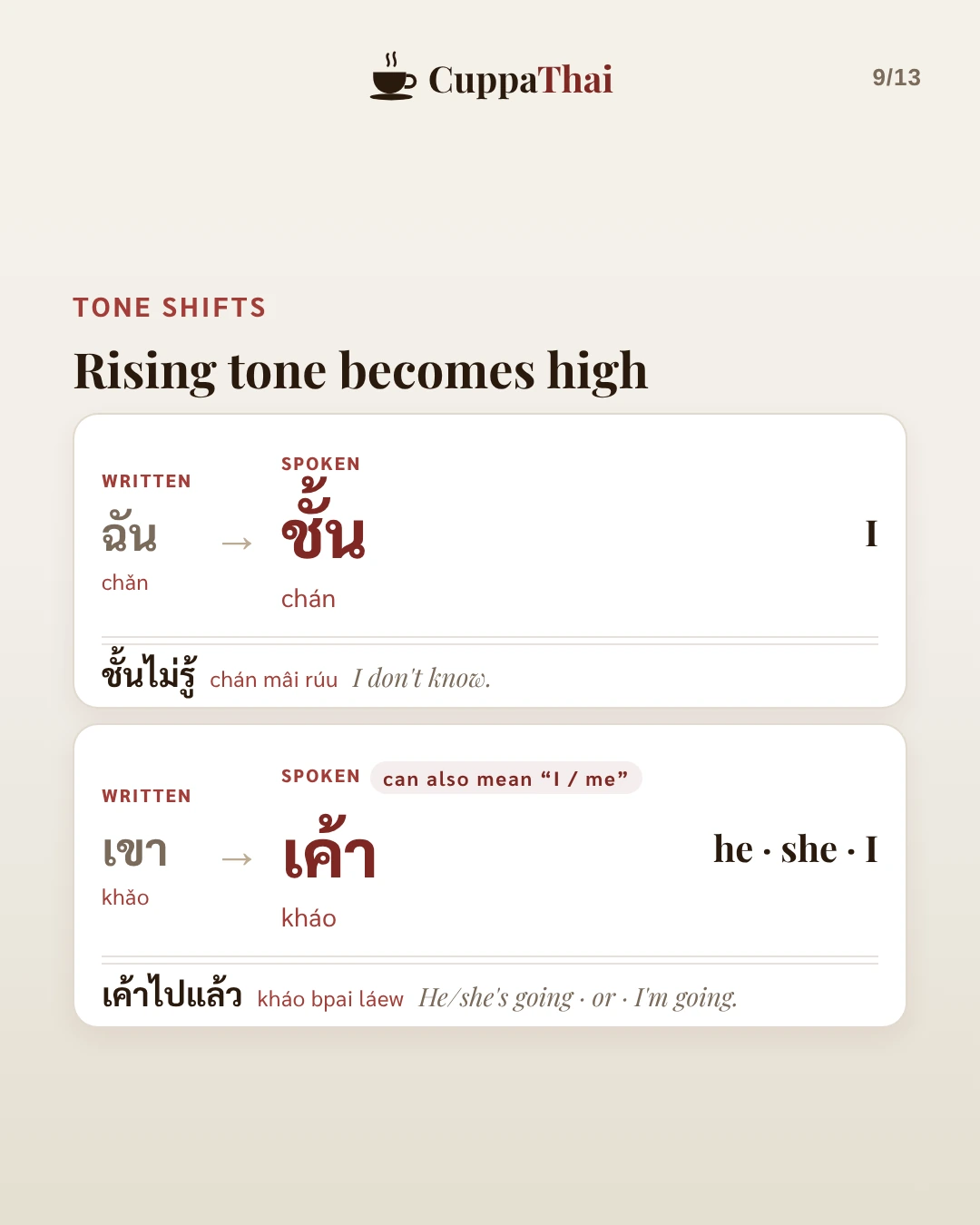
Tone shifts. Rising tone becomes high. ฉัน (chǎn) becomes ชั้น (chán), I. Example: ชั้นไม่รู้ (chán mâi rúu), I don't know. เขา (khǎo) becomes เค้า (kháo), he, she, and it can also mean I or me. Example: เค้าไปแล้ว (kháo bpai láew), He or she's going, or I'm going.
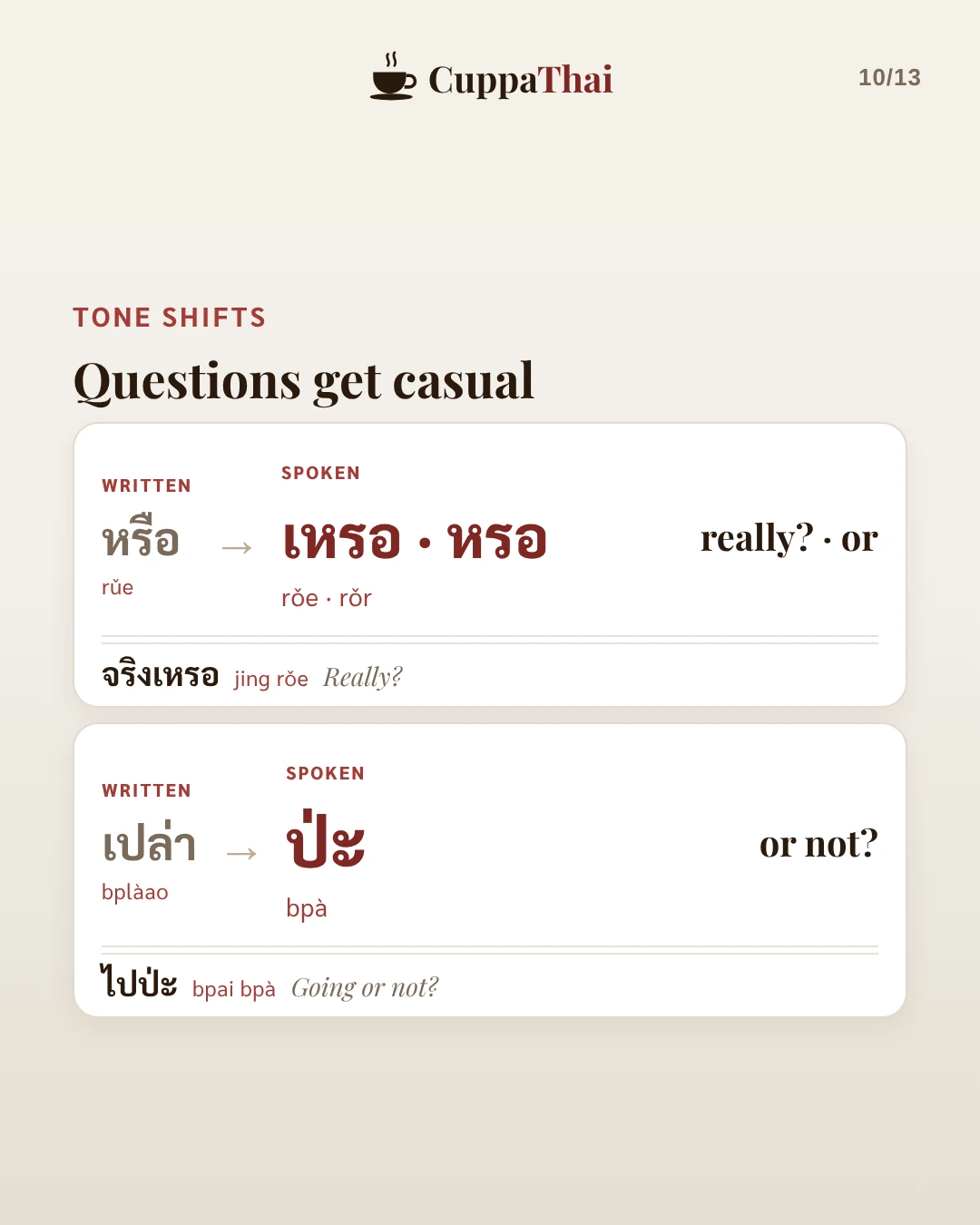
Tone shifts. Questions get casual. หรือ (rǔe) becomes เหรอ or หรอ (rǒe, rǒr), really? or. Example: จริงเหรอ (jing rǒe), Really? เปล่า (bplàao) becomes ป่ะ (bpà), or not? Example: ไปป่ะ (bpai bpà), Going or not?
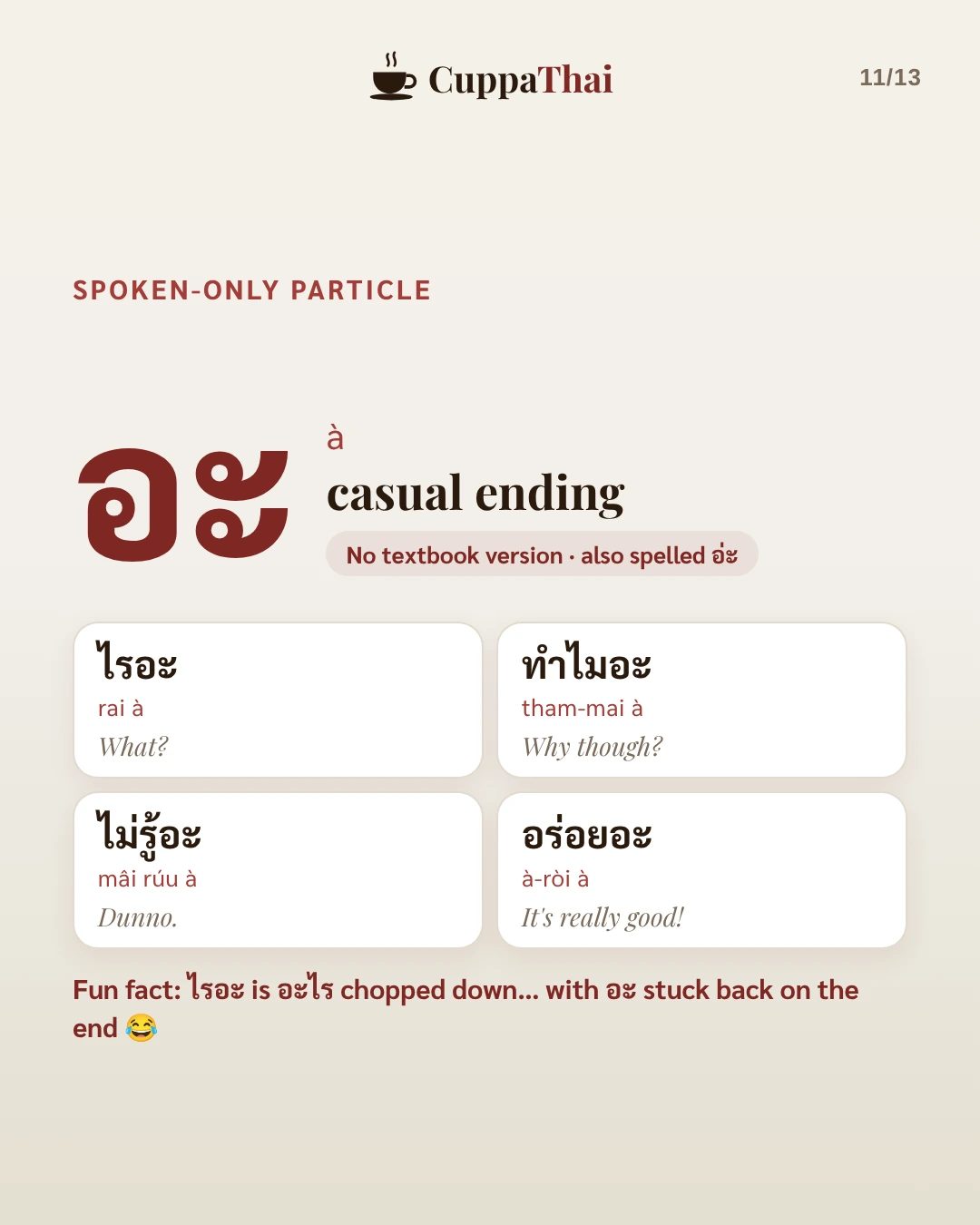
Spoken-only particle. อะ (à) is a casual ending. There is no textbook version, and it is also spelled อ่ะ. Examples: ไรอะ (rai à), What? ทำไมอะ (tham-mai à), Why though? ไม่รู้อะ (mâi rúu à), Dunno. อร่อยอะ (à-ròi à), It's really good! Fun fact: ไรอะ is อะไร chopped down, with อะ stuck back on the end.
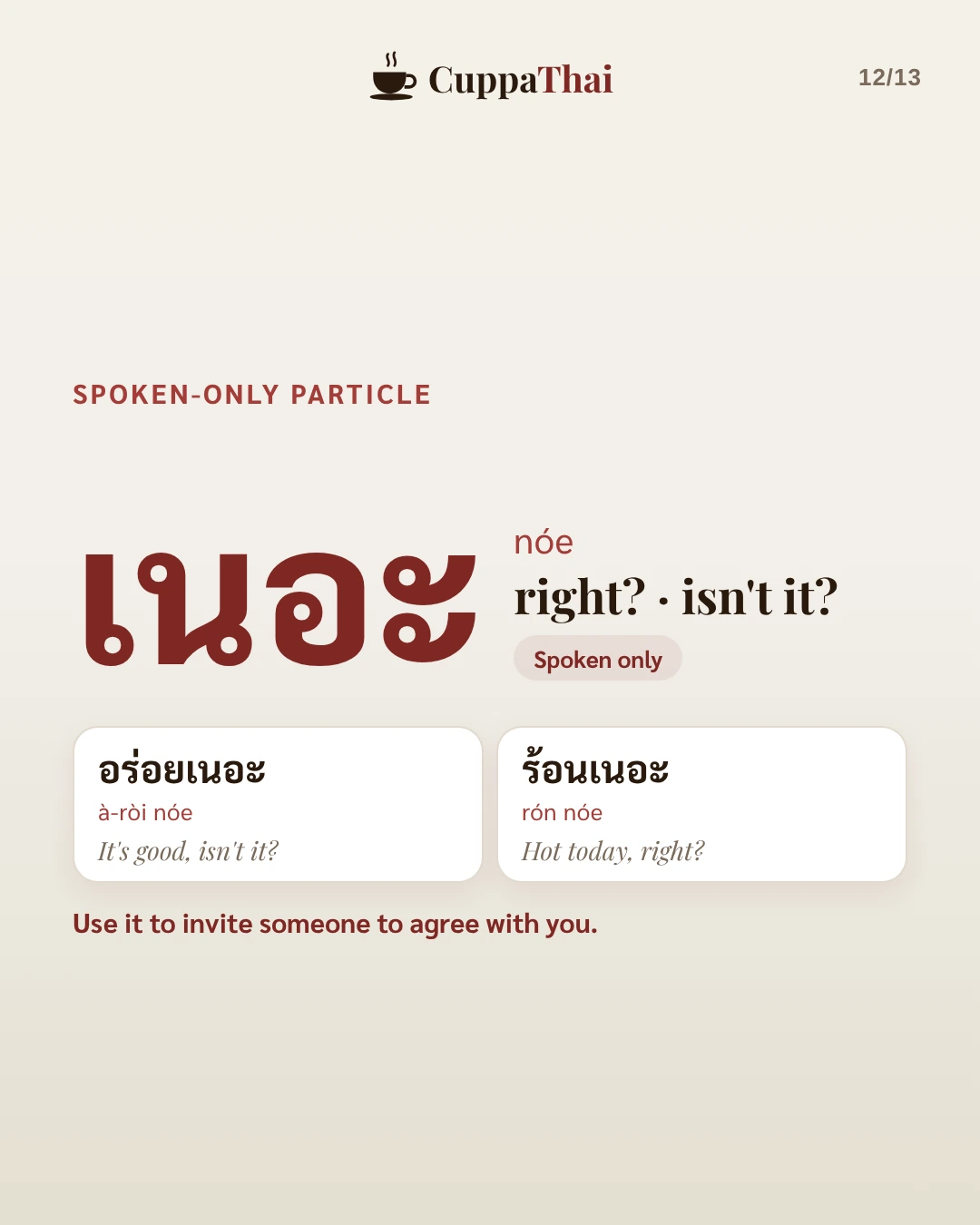
Spoken-only particle. เนอะ (nóe), right? or isn't it? Spoken only. Examples: อร่อยเนอะ (à-ròi nóe), It's good, isn't it? ร้อนเนอะ (rón nóe), Hot today, right? Use it to invite someone to agree with you.
Now you know. Which one have you heard the most? Save this for later. Want to learn Thai? Comment or DM me if you're interested in lessons. Reading Thai from lesson one, from someone who grew up here.

That's the lot 🎉

With full lesson explanations like these, plus live practice with a teacher, in English, in a small group or one-to-one, is the best and easiest way to learn.

See the live Thai classesMore free content
Read this as text
  1. Cover. Textbook Thai vs real-life Thai. อะไร (à-rai) becomes ไร (rai). What you learn vs what you actually hear.
  2. Why it happens. Two reasons Thai sounds different out loud. 1. Speed: syllables get dropped, so อะไร becomes ไร and ยังไง becomes ไง. 2. Tone shifts: the spelling follows the sound, so ไหม (rising) becomes มั้ย (high). Thais even type the spoken forms in chat. If you can read Thai, you'll spot them instantly.
  3. Dropped syllables. อะไร (à-rai) becomes ไร (rai), what. Example: ทำไรอยู่ (tham rai yùu), What are you doing? ยังไง (yang-ngai) becomes ไง (ngai), how. Example: ว่าไง (wâa ngai), What's up? ทำไม (tham-mai) becomes ไม (mai), why, mostly in texting. Example: ไมอะ (mai à), Why?
  4. Dropped syllables. แล้ว (láew) becomes ละ (lá), already or now. Example: ไปละ (bpai lá), I'm off. หนึ่ง (nùeng) becomes นึง (nueng), one. Example: อันนึง (an nueng), one of them.
  5. Like this and in that case. อย่างนี้ (yàang-níi) becomes งี้ (ngíi), like this. Example: ทำงี้ (tham ngíi), Do it like this. ถ้าอย่างนั้น (thâa yàang-nán) becomes ถ้างั้น or งั้น (thâa ngán, ngán), in that case, then. Example: งั้นไปกัน (ngán bpai gan), Let's go then.
  6. Long words, cut down. Why say all those syllables? สวัสดี (sà-wàt-dii) becomes หวัดดี (wàt-dii), hi. มหาวิทยาลัย (má-hǎa-wít-thá-yaa-lai) becomes มหาลัย (má-hǎa-lai), university. โรงพยาบาล (rohng-phá-yaa-baan) becomes โรงบาล (rohng-baan), hospital.
  7. The chain. One word, three levels. อย่างไร (yàang-rai) is the written, formal form used in books and news. ยังไง (yang-ngai) is everyday speech, what most people say. ไง (ngai) is casual, used with friends, and ว่าไง means what's up? All three mean how.
  8. Tone shifts. The sound changes, so the spelling does too. เท่าไร (thâo-rai) becomes เท่าไหร่ (thâo-rài), how much. Example: อันนี้เท่าไหร่ (an níi thâo-rài), How much is this? ไหม (mǎi) becomes มั้ย (mái), the question word. Example: ไปมั้ย (bpai mái), Wanna go?
  9. Tone shifts. Rising tone becomes high. ฉัน (chǎn) becomes ชั้น (chán), I. Example: ชั้นไม่รู้ (chán mâi rúu), I don't know. เขา (khǎo) becomes เค้า (kháo), he, she, and it can also mean I or me. Example: เค้าไปแล้ว (kháo bpai láew), He or she's going, or I'm going.
  10. Tone shifts. Questions get casual. หรือ (rǔe) becomes เหรอ or หรอ (rǒe, rǒr), really? or. Example: จริงเหรอ (jing rǒe), Really? เปล่า (bplàao) becomes ป่ะ (bpà), or not? Example: ไปป่ะ (bpai bpà), Going or not?
  11. Spoken-only particle. อะ (à) is a casual ending. There is no textbook version, and it is also spelled อ่ะ. Examples: ไรอะ (rai à), What? ทำไมอะ (tham-mai à), Why though? ไม่รู้อะ (mâi rúu à), Dunno. อร่อยอะ (à-ròi à), It's really good! Fun fact: ไรอะ is อะไร chopped down, with อะ stuck back on the end.
  12. Spoken-only particle. เนอะ (nóe), right? or isn't it? Spoken only. Examples: อร่อยเนอะ (à-ròi nóe), It's good, isn't it? ร้อนเนอะ (rón nóe), Hot today, right? Use it to invite someone to agree with you.
  13. Now you know. Which one have you heard the most? Save this for later. Want to learn Thai? Comment or DM me if you're interested in lessons. Reading Thai from lesson one, from someone who grew up here.

Like how we teach? Practise this live with a teacher, in English, in a small group or one-to-one.

See the live Thai classes

More like this

Pinch to zoom · drag to move · double-tap to zoom