
Calling people in Thai: why Thais almost never say "you"
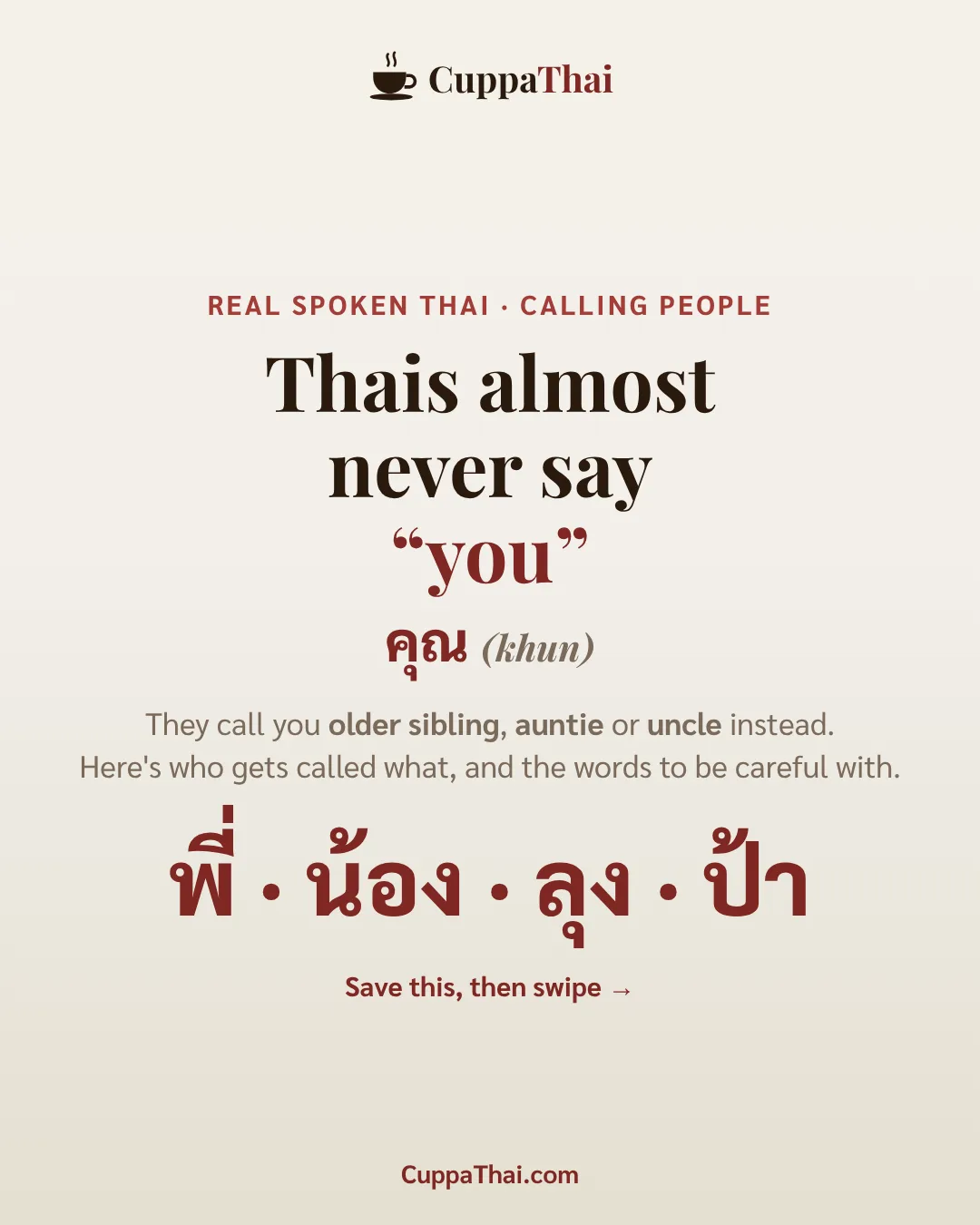
Thai has a word for "you", คุณ (khun), but in everyday life it sounds stiff. Thais call each other by family words based on age: older sibling, younger sibling, auntie, uncle, even strangers. Swipe to see who gets called what, the age ladder, the friends-only words กู and มึง, and a quick check.
That's the lot 🎉
With full lesson explanations like these, plus live practice with a teacher, in English, in a small group or one-to-one, is the best and easiest way to learn.
See the live Thai classesMore free contentRead this as text
- Cover. Real spoken Thai: calling people. Thais almost never say "you", คุณ (khun). They call you older sibling, auntie or uncle instead. Here's who gets called what, and the words to be careful with. พี่, น้อง, ลุง, ป้า. Save this, then swipe.
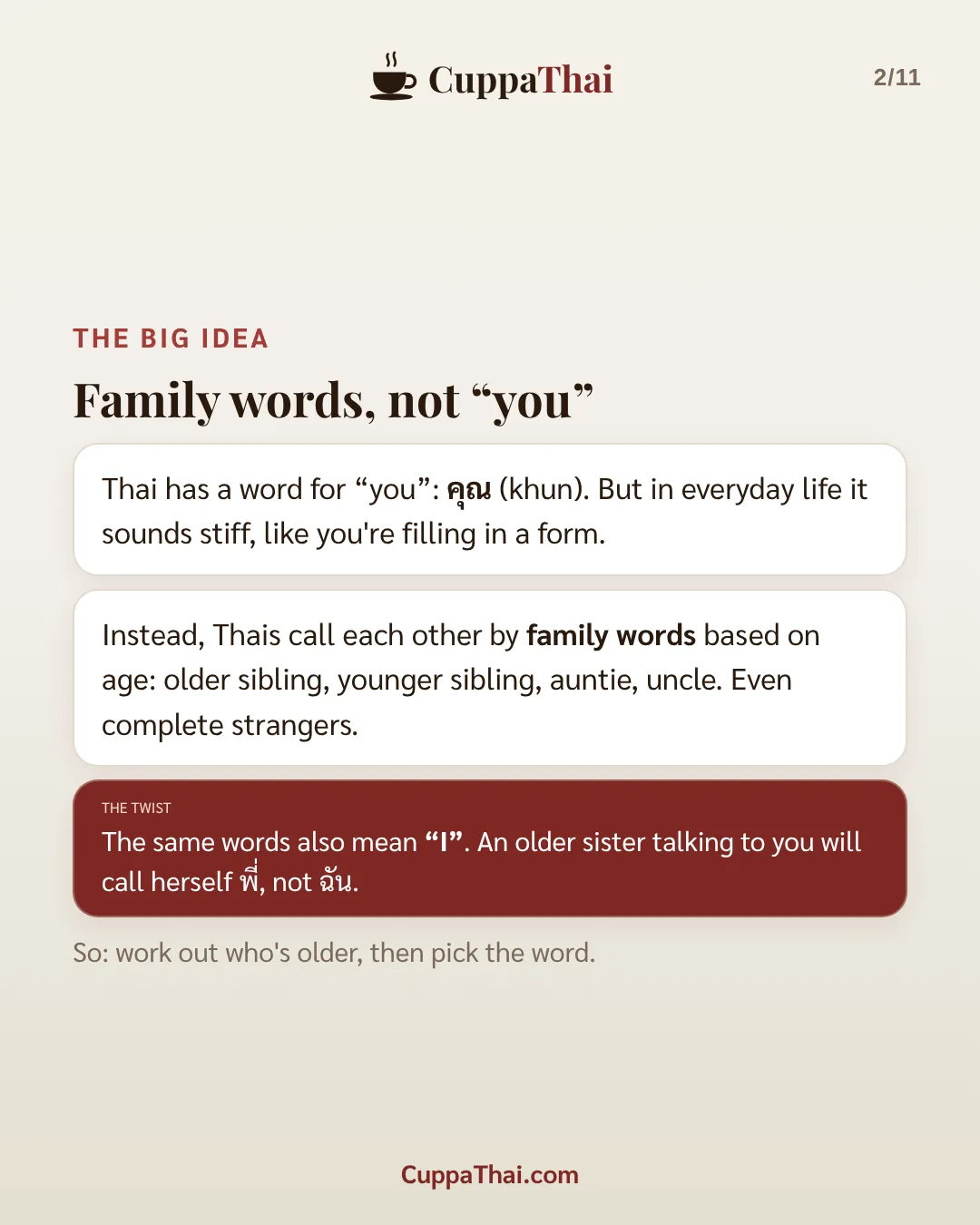
- The big idea. Family words, not "you". Thai has a word for "you": คุณ (khun). But in everyday life it sounds stiff, like you're filling in a form. Instead, Thais call each other by family words based on age: older sibling, younger sibling, auntie, uncle. Even complete strangers. The twist: the same words also mean "I". An older sister talking to you will call herself พี่, not ฉัน. So: work out who's older, then pick the word.
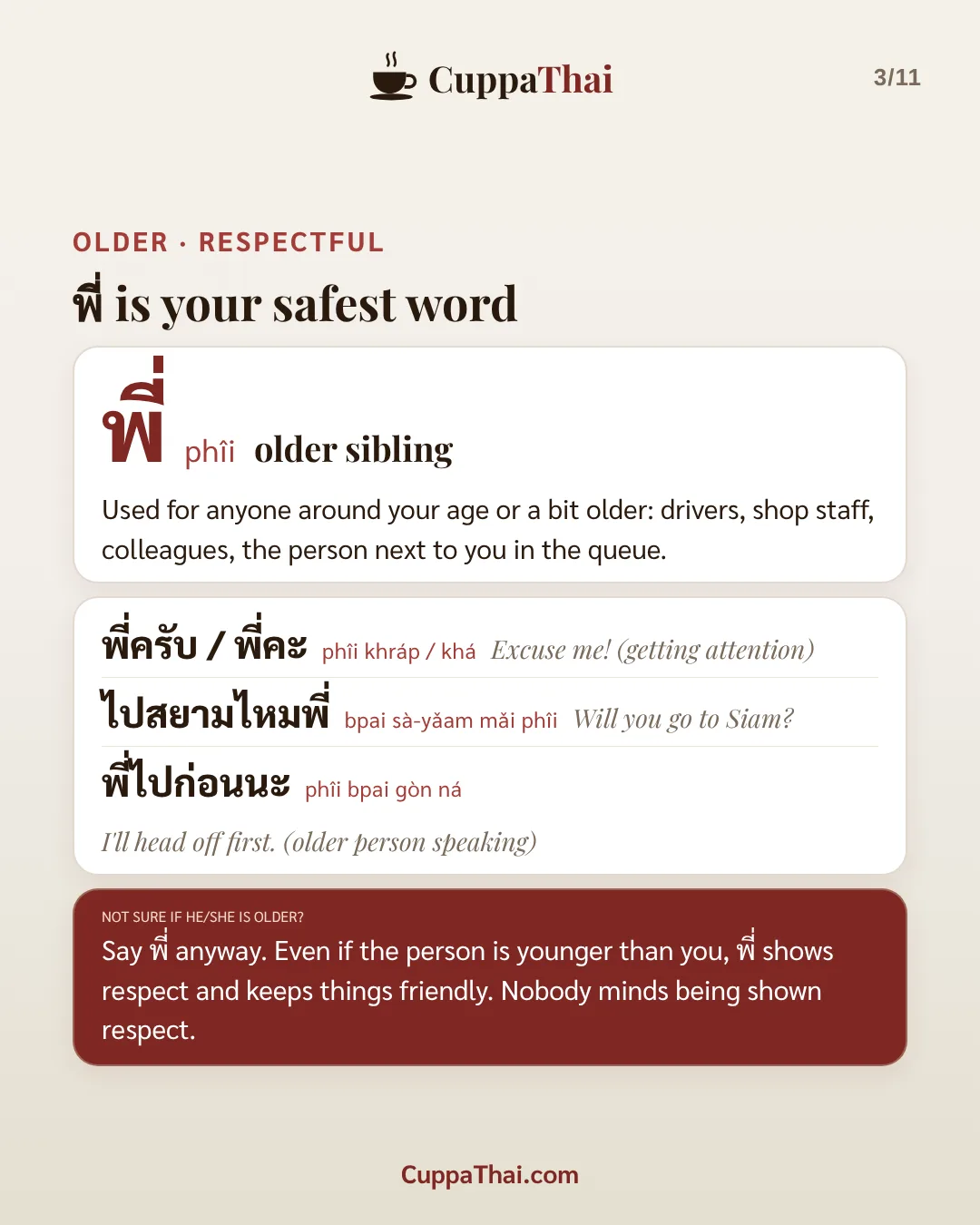
- Older, respectful. พี่ is your safest word. พี่ (phîi) means older sibling. Used for anyone around your age or a bit older: drivers, shop staff, colleagues, the person next to you in the queue. พี่ครับ / พี่คะ (phîi khráp / khá), Excuse me! (getting attention). ไปสยามไหมพี่ (bpai sà-yǎam mǎi phîi), Will you go to Siam? พี่ไปก่อนนะ (phîi bpai gòn ná), I'll head off first (older person speaking). Not sure if he/she is older? Say พี่ anyway. Even if the person is younger than you, พี่ shows respect and keeps things friendly. Nobody minds being shown respect.
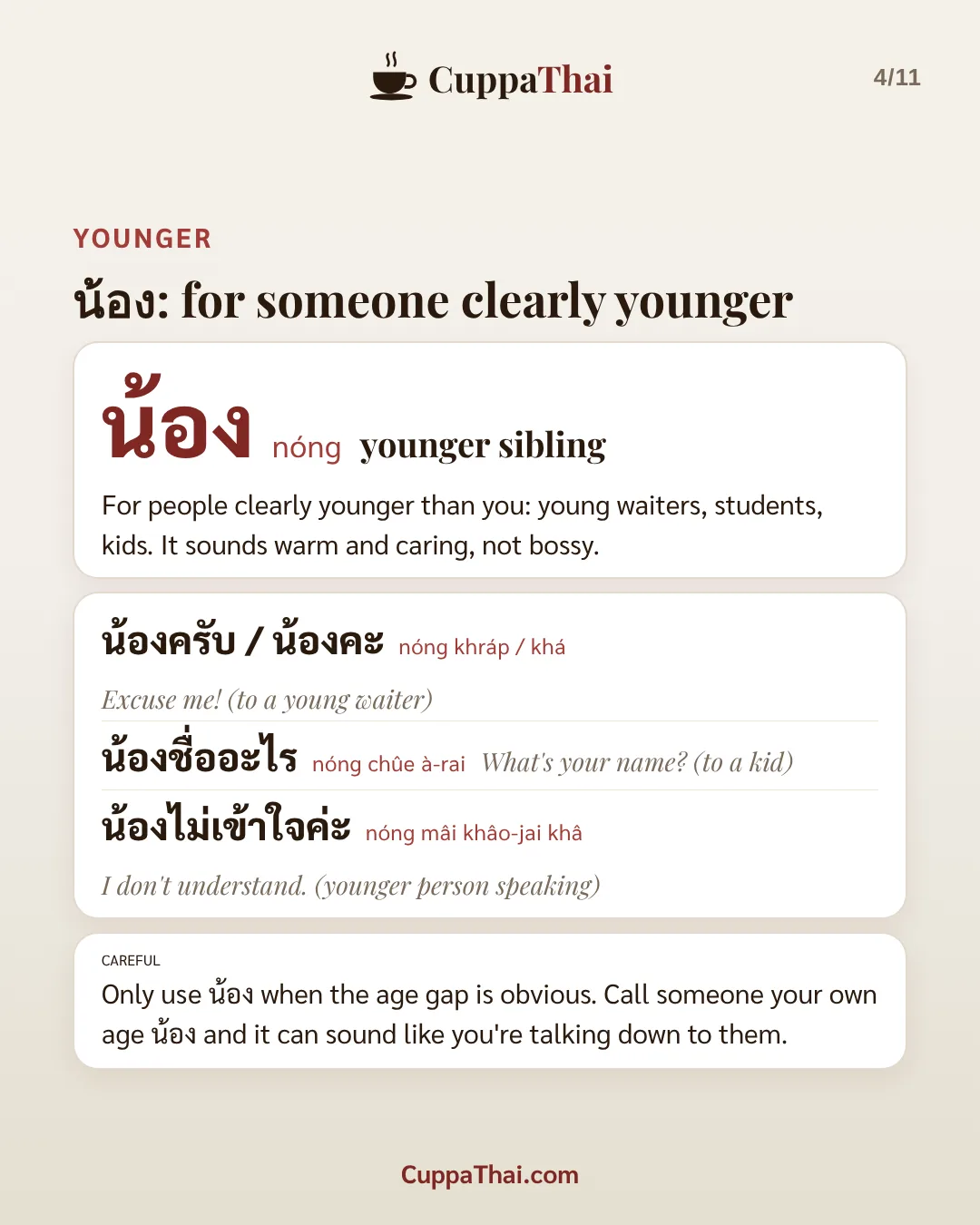
- Younger. น้อง: for someone clearly younger. น้อง (nóng) means younger sibling. For people clearly younger than you: young waiters, students, kids. It sounds warm and caring, not bossy. น้องครับ / น้องคะ (nóng khráp / khá), Excuse me! (to a young waiter). น้องชื่ออะไร (nóng chûe à-rai), What's your name? (to a kid). น้องไม่เข้าใจค่ะ (nóng mâi khâo-jai khâ), I don't understand (younger person speaking). Careful: only use น้อง when the age gap is obvious. Call someone your own age น้อง and it can sound like you're talking down to them.
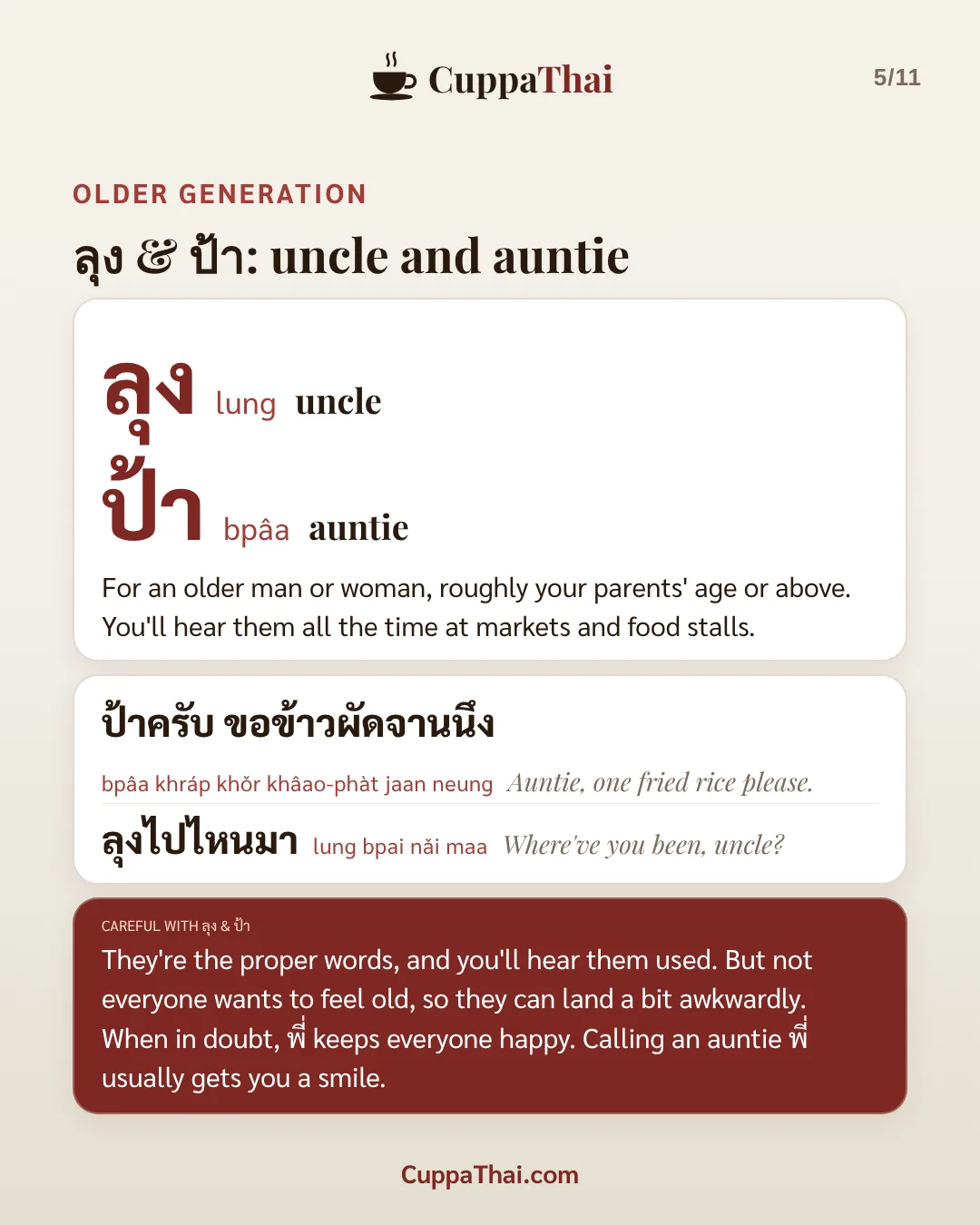
- Older generation. ลุง & ป้า: uncle and auntie. ลุง (lung) means uncle, ป้า (bpâa) means auntie. For an older man or woman, roughly your parents' age or above. You'll hear them all the time at markets and food stalls. ป้าครับ ขอข้าวผัดจานนึง (bpâa khráp khǒr khâao-phàt jaan neung), Auntie, one fried rice please. ลุงไปไหนมา (lung bpai nǎi maa), Where've you been, uncle? Careful with ลุง and ป้า: they're the proper words, and you'll hear them used. But not everyone wants to feel old, so they can land a bit awkwardly. When in doubt, พี่ keeps everyone happy. Calling an auntie พี่ usually gets you a smile.
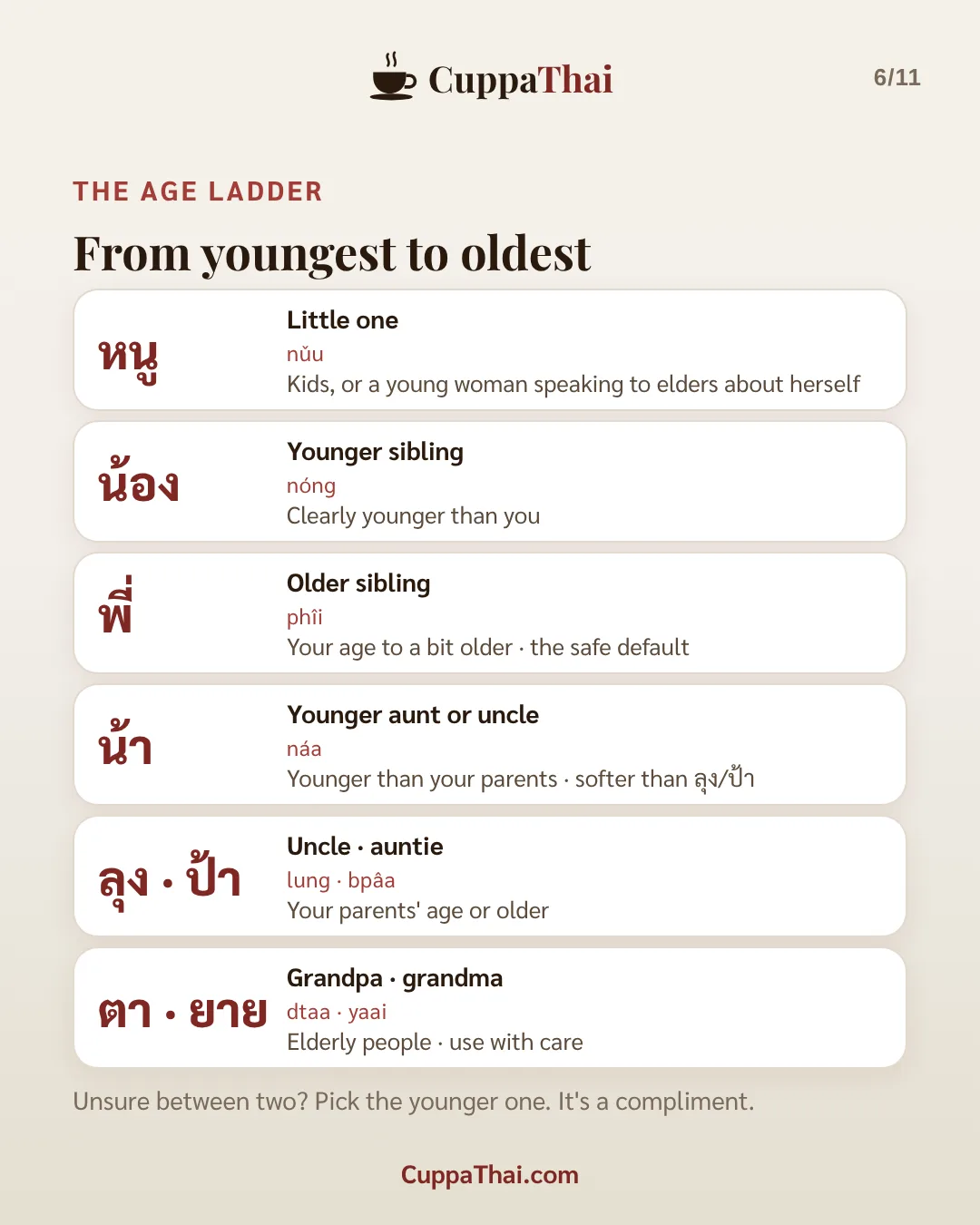
- The age ladder. From youngest to oldest. หนู (nǔu): little one, kids, or a young woman speaking to elders about herself. น้อง (nóng): younger sibling, clearly younger than you. พี่ (phîi): older sibling, your age to a bit older, the safe default. น้า (náa): younger aunt or uncle, younger than your parents, softer than ลุง/ป้า. ลุง · ป้า (lung · bpâa): uncle, auntie, your parents' age or older. ตา · ยาย (dtaa · yaai): grandpa, grandma, elderly people, use with care. Unsure between two? Pick the younger one. It's a compliment.
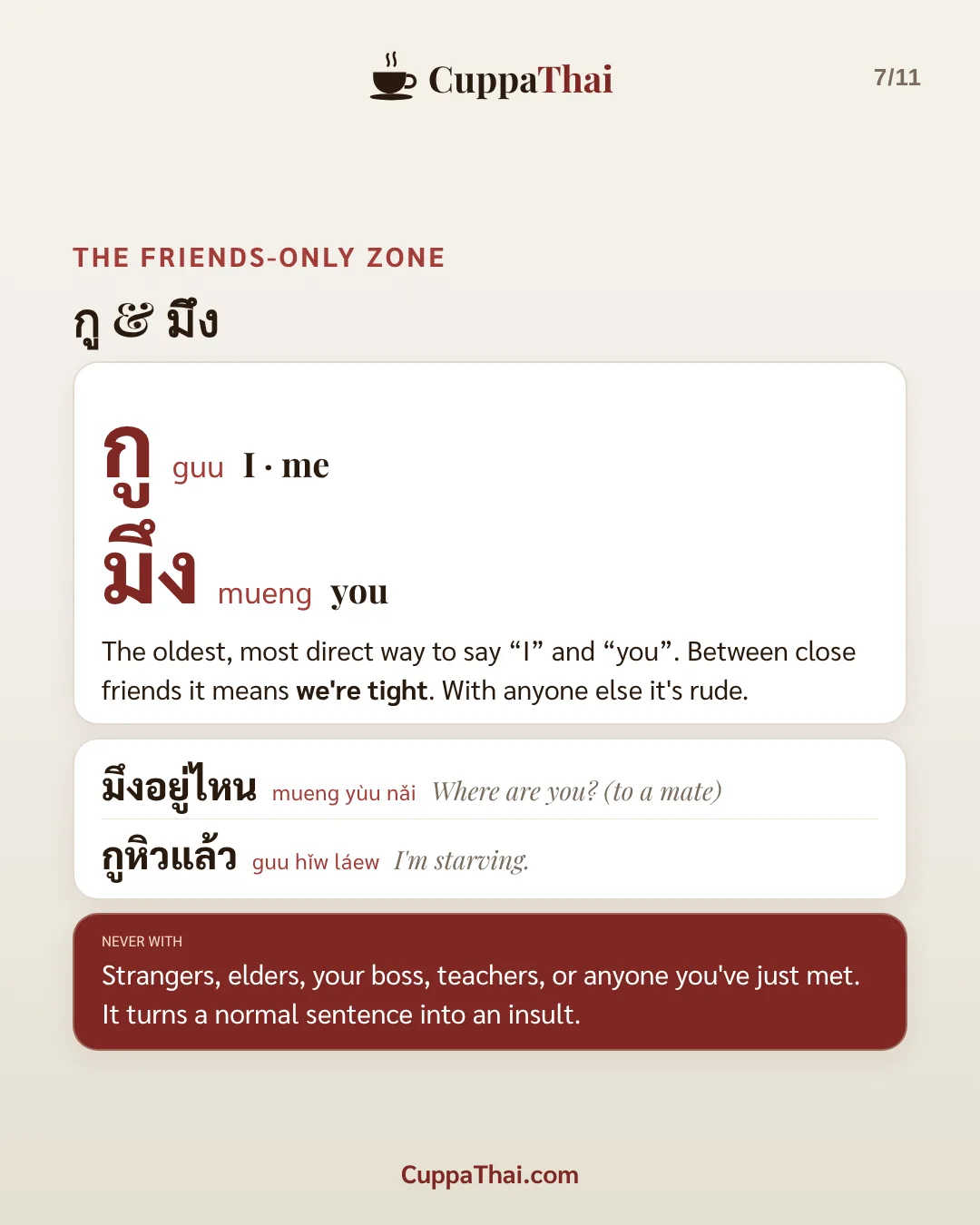
- The friends-only zone. กู & มึง. กู (guu) means I, me. มึง (mueng) means you. The oldest, most direct way to say "I" and "you". Between close friends it means we're tight. With anyone else it's rude. มึงอยู่ไหน (mueng yùu nǎi), Where are you? (to a mate). กูหิวแล้ว (guu hǐw láew), I'm starving. Never with strangers, elders, your boss, teachers, or anyone you've just met. It turns a normal sentence into an insult.
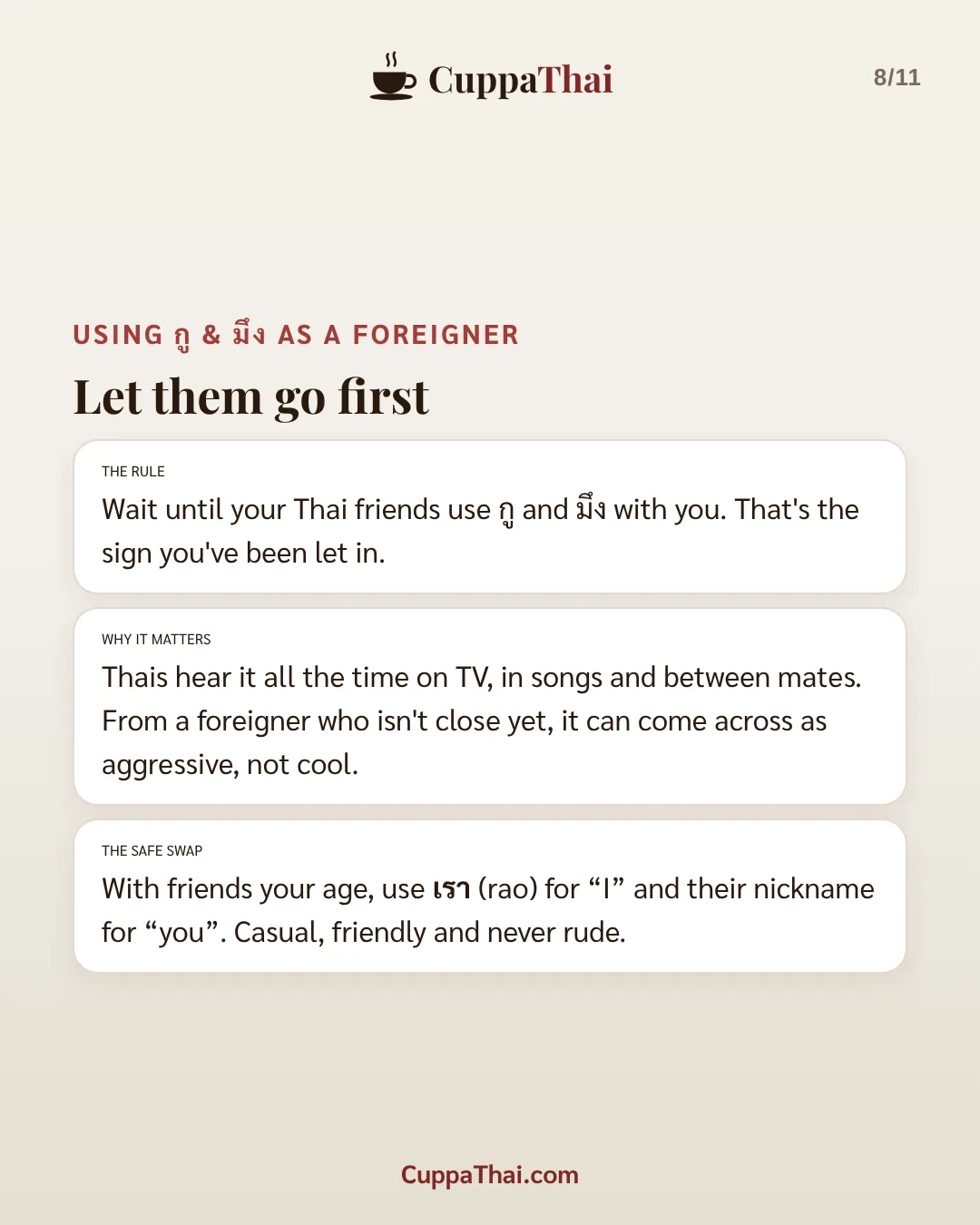
- Using กู & มึง as a foreigner: let them go first. The rule: wait until your Thai friends use กู and มึง with you. That's the sign you've been let in. Why it matters: Thais hear it all the time on TV, in songs and between mates. From a foreigner who isn't close yet, it can come across as aggressive, not cool. The safe swap: with friends your age, use เรา (rao) for "I" and their nickname for "you". Casual, friendly and never rude.
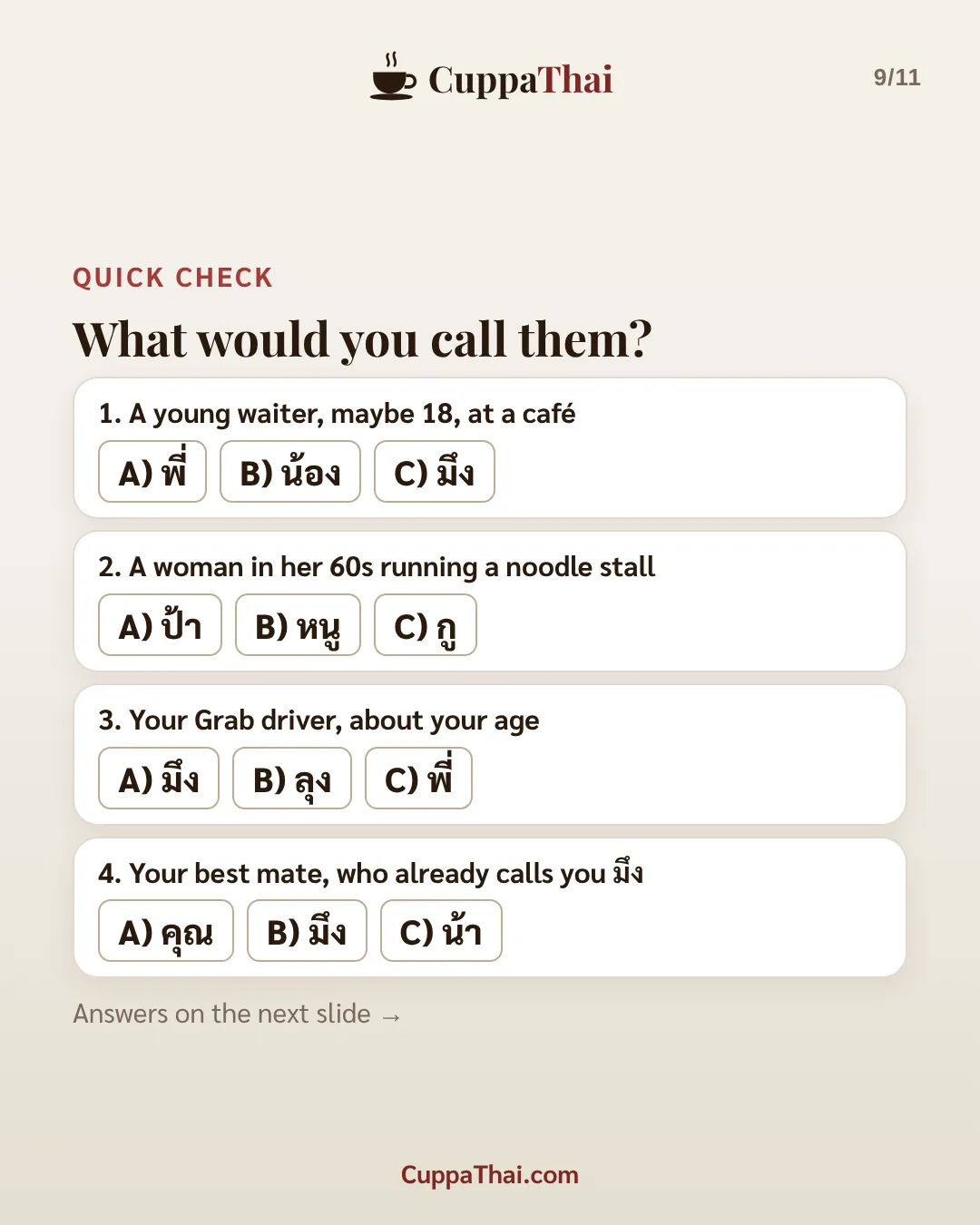
- Quick check. What would you call them? 1. A young waiter, maybe 18, at a café: A) พี่ B) น้อง C) มึง. 2. A woman in her 60s running a noodle stall: A) ป้า B) หนู C) กู. 3. Your Grab driver, about your age: A) มึง B) ลุง C) พี่. 4. Your best mate, who already calls you มึง: A) คุณ B) มึง C) น้า. Answers on the next slide.
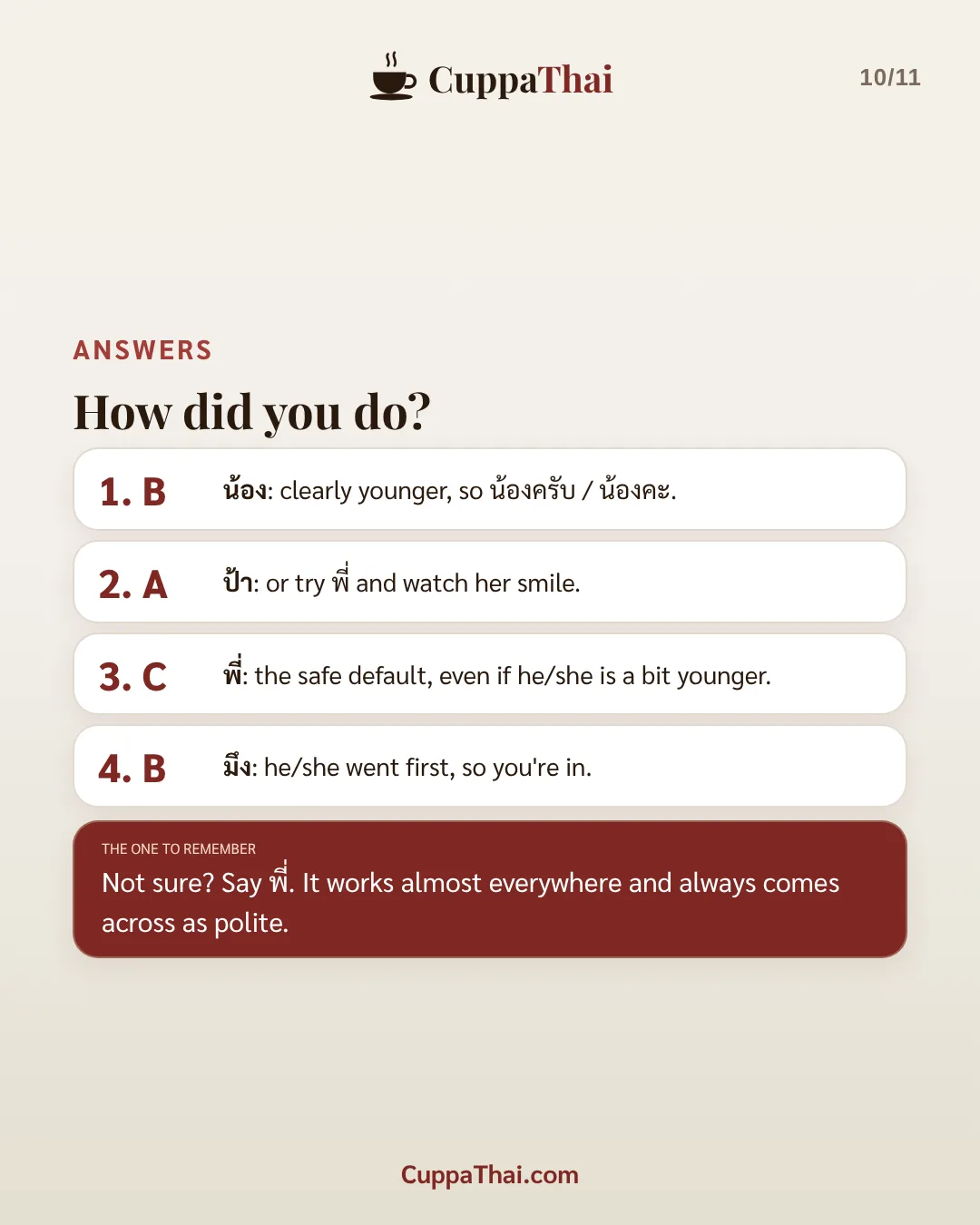
- Answers. How did you do? 1. B: น้อง, clearly younger, so น้องครับ / น้องคะ. 2. A: ป้า, or try พี่ and watch her smile. 3. C: พี่, the safe default, even if he/she is a bit younger. 4. B: มึง, he/she went first, so you're in. The one to remember: not sure? Say พี่. It works almost everywhere and always comes across as polite.
- Your turn. What do Thais call you? พี่, น้อง or something else? Tell me in the comments. Save this. Want to learn Thai? Comment or DM me if you're interested in lessons. Reading Thai from lesson one, from someone who grew up here. Comment or DM.
Like how we teach? Practise this live with a teacher, in English, in a small group or one-to-one.
See the live Thai classesMore like this
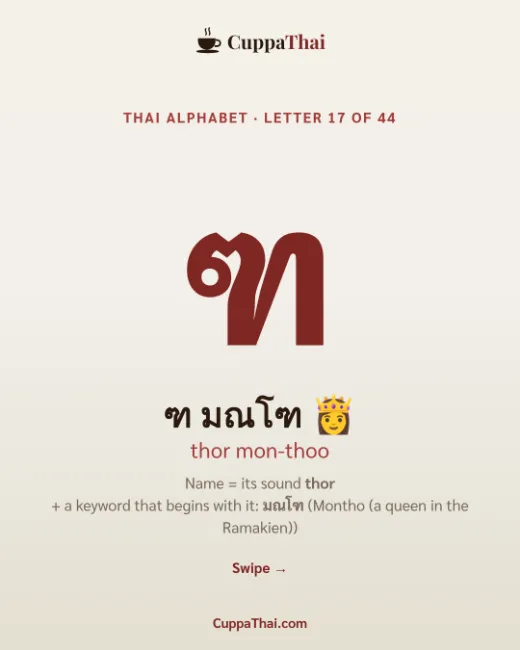
ฑ มณโฑ (thor mon-thoo): Thai alphabet, letter 17 of 44
Letter 17 of 44 in the Thai alphabet: its name, sound, consonant class, tones and everyday words. ฑ มณโฑ (Montho, a figure from the Ramakien).
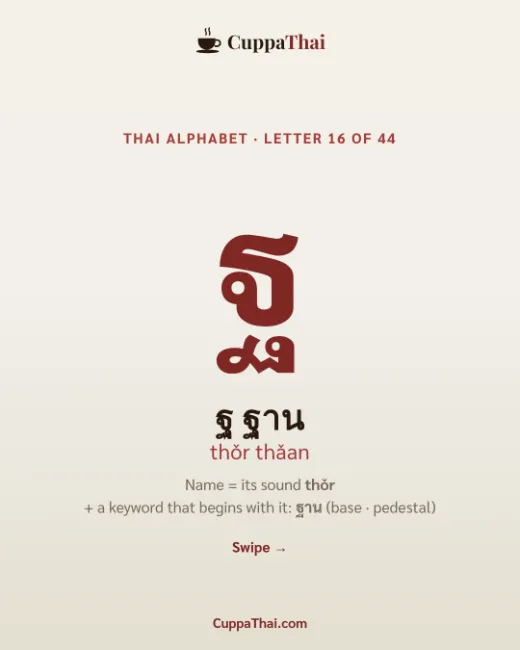
ฐ ฐาน (thor thaan): Thai alphabet, letter 16 of 44
Letter 16 of 44 in the Thai alphabet: its name, sound, consonant class, tones and everyday words. ฐ ฐาน (pedestal).
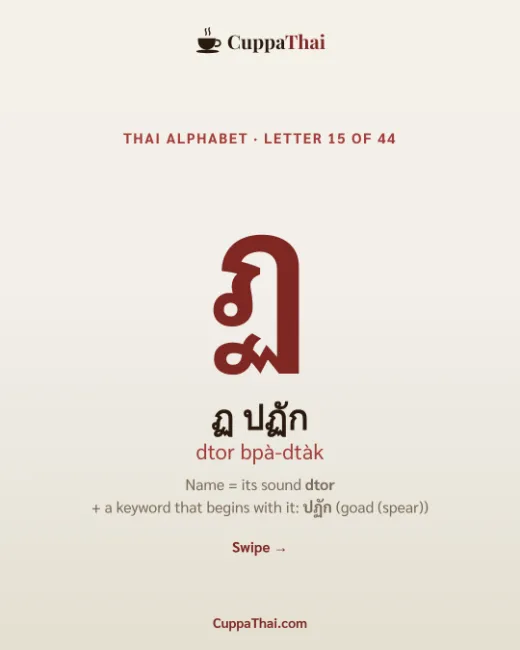
ฏ ปฏัก (dtor bpa-dtak): Thai alphabet, letter 15 of 44
Letter 15 of 44 in the Thai alphabet: its name, sound, consonant class, tones and everyday words. ฏ ปฏัก (goad, a pointed stick).