✕

← All free Thai content

ที่ (thîi): one word, 6 jobs

One small word does many jobs in Thai. The golden rule: ที่ points at a spot, whether that is a place, a person, a position or a moment.
1 / 16
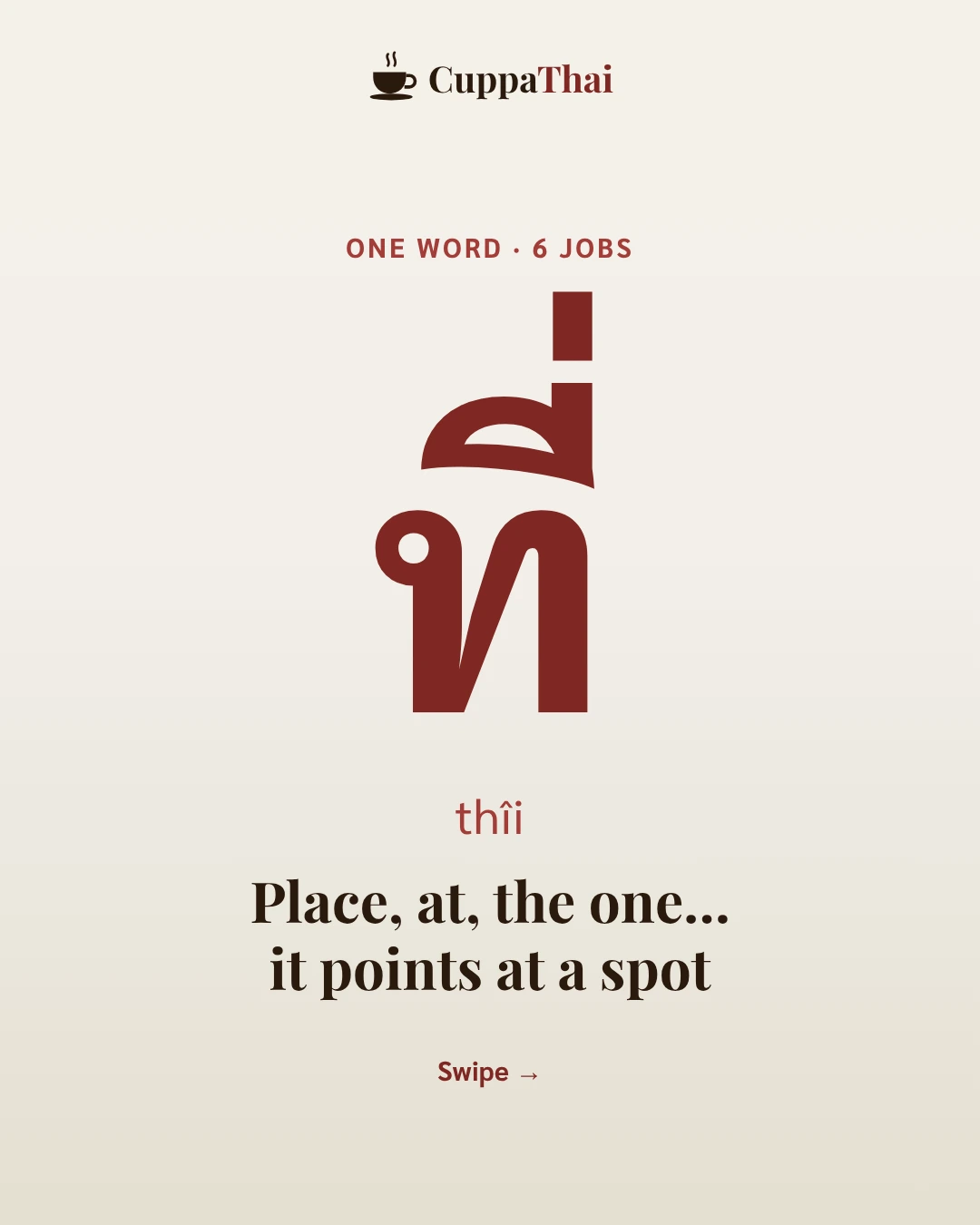
Cover. One word, 6 jobs. ที่ (thîi). Place, at, the one… it points at a spot.
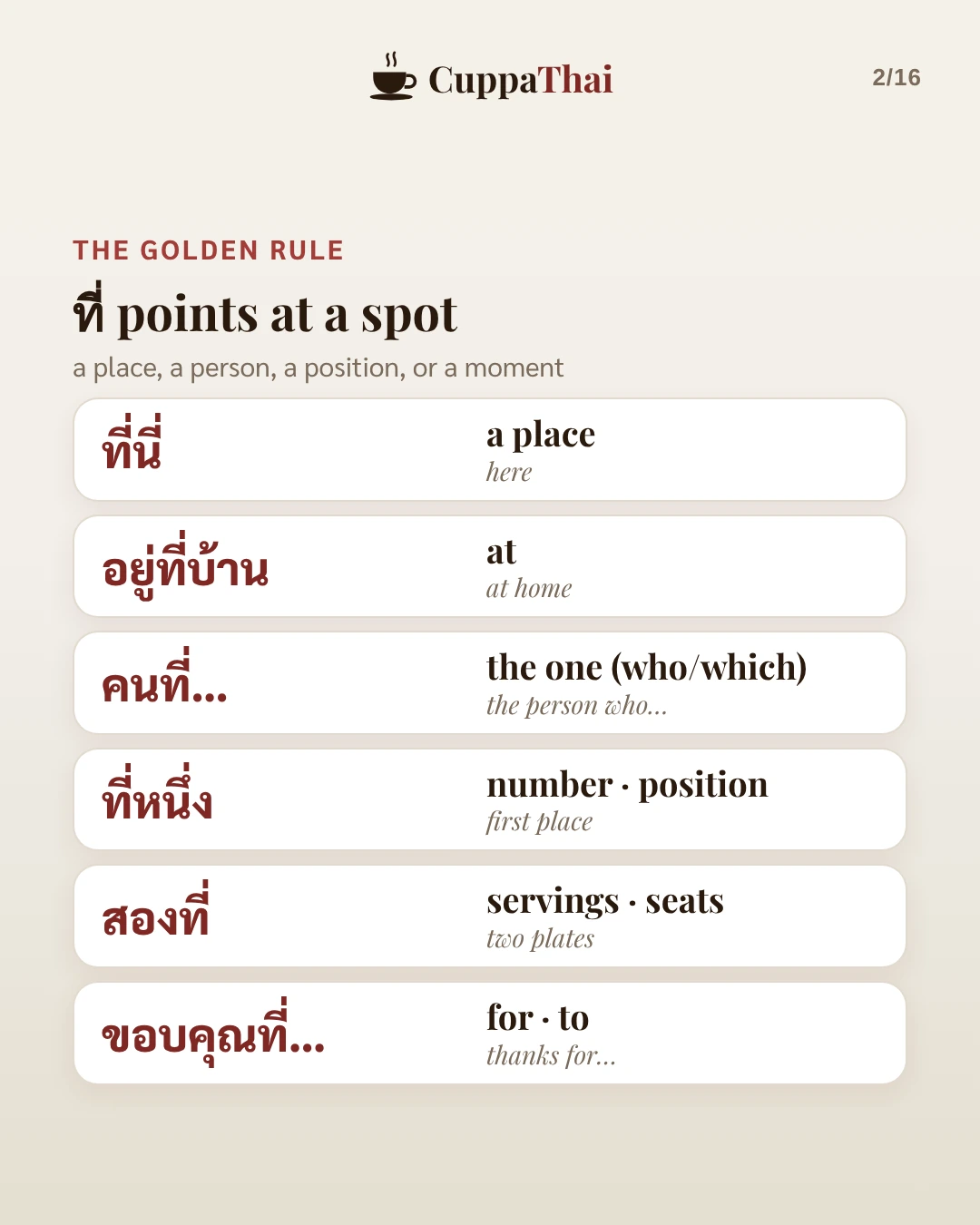
The golden rule. ที่ points at a spot: a place, a person, a position, or a moment. ที่นี่, a place, here. อยู่ที่บ้าน, at, at home. คนที่…, the one who or which, the person who. ที่หนึ่ง, number or position, first place. สองที่, servings or seats, two plates. ขอบคุณที่…, for or to, thanks for.
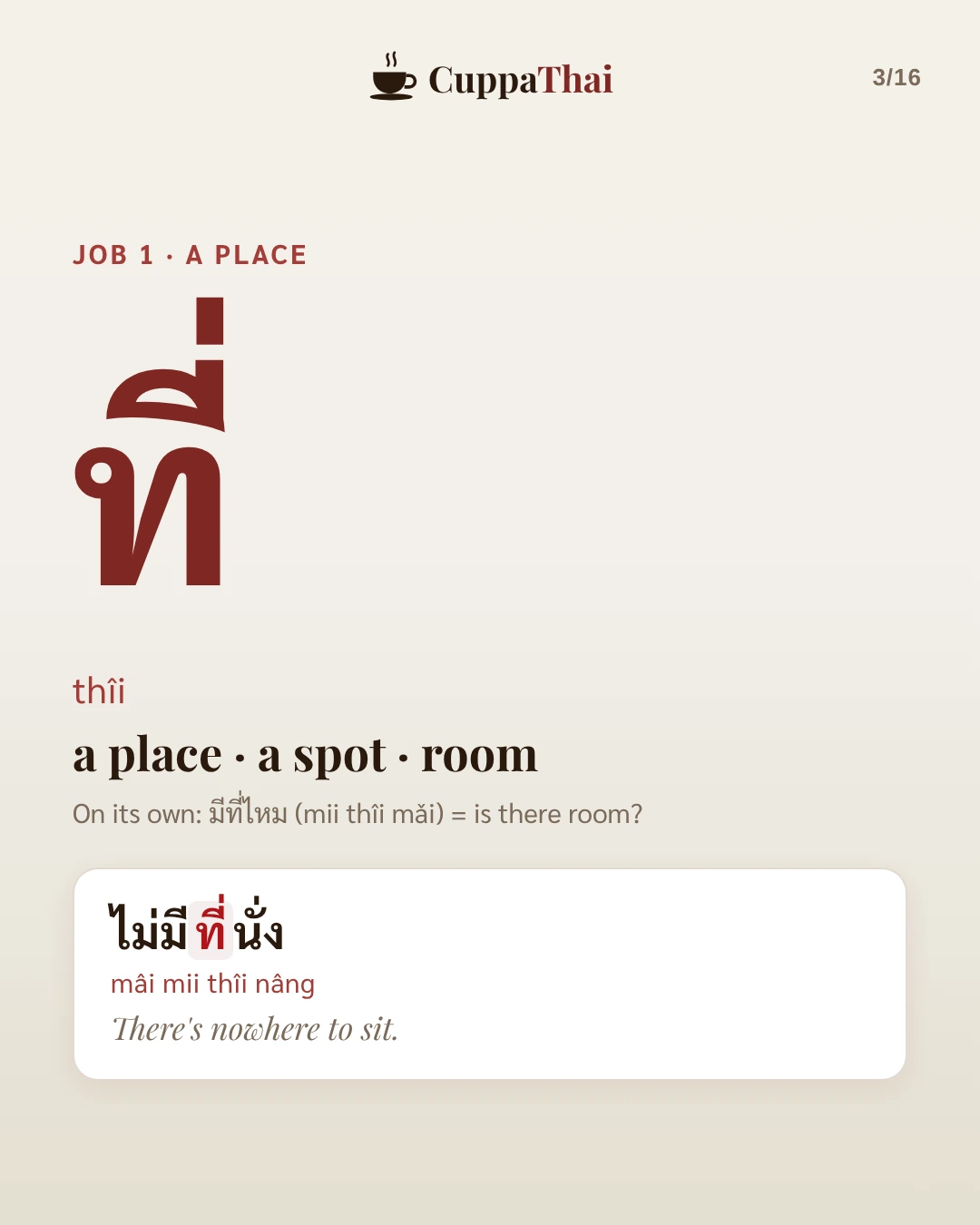
Job 1, a place. ที่ (thîi) means a place, a spot, room. On its own: มีที่ไหม (mii thîi mǎi), is there room? Example: ไม่มีที่นั่ง (mâi mii thîi nâng), There's nowhere to sit.
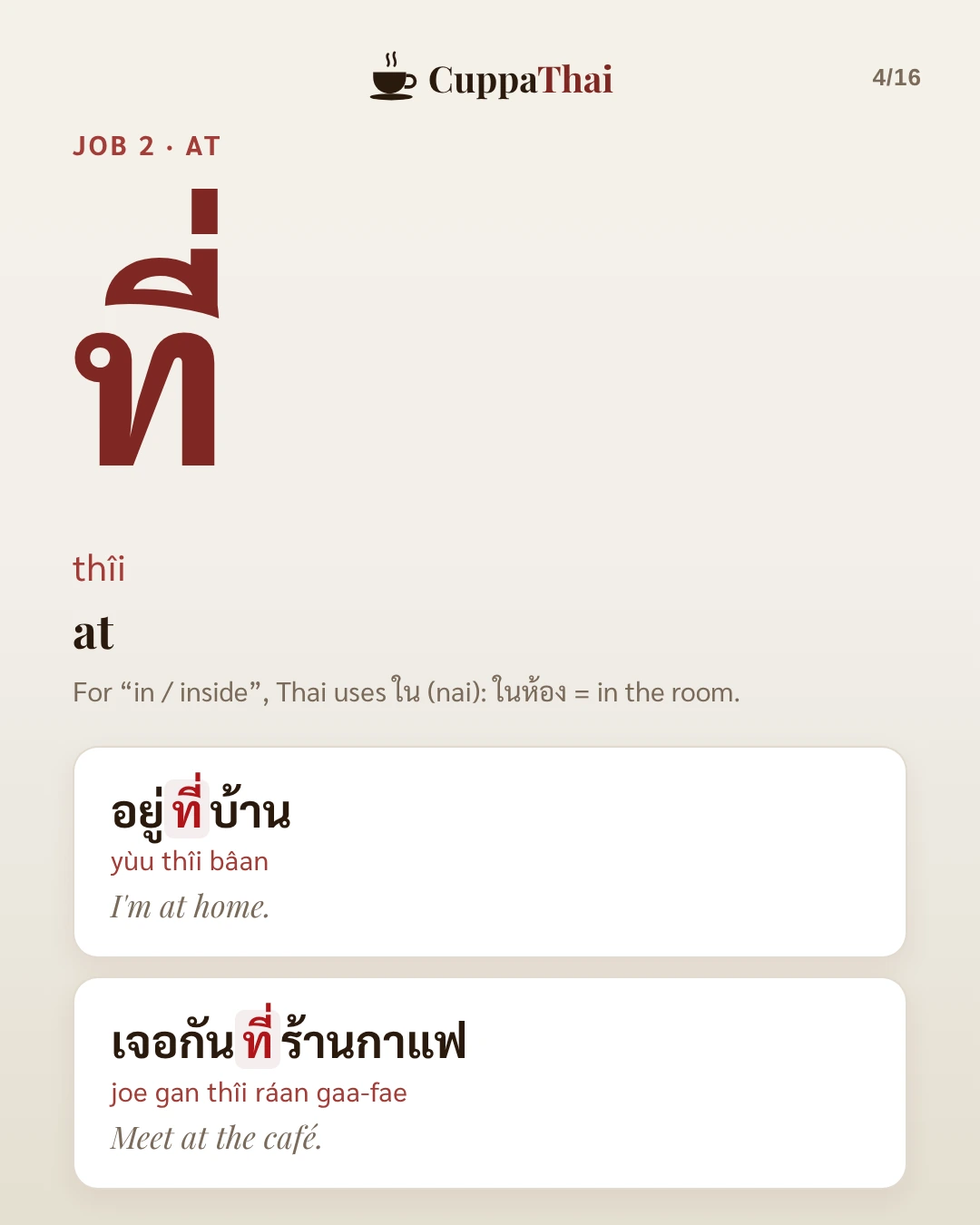
Job 2, at. ที่ (thîi) means at. For in or inside, Thai uses ใน (nai): ในห้อง, in the room. Examples: อยู่ที่บ้าน (yùu thîi bâan), I'm at home. เจอกันที่ร้านกาแฟ (joe gan thîi ráan gaa-fae), Meet at the café.
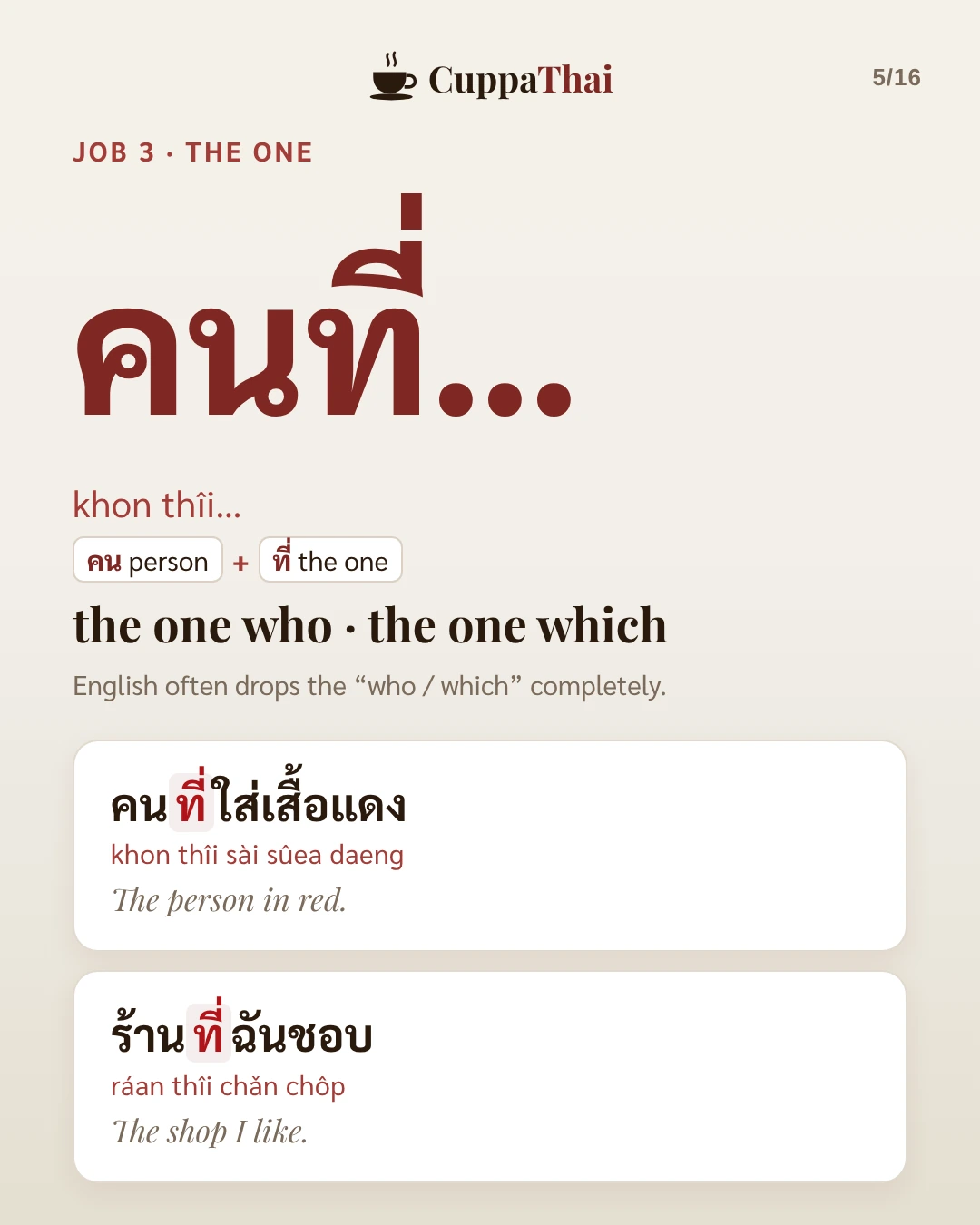
Job 3, the one. คนที่… (khon thîi…), the one who, the one which. คน person plus ที่ the one. English often drops the who or which completely. Examples: คนที่ใส่เสื้อแดง (khon thîi sài sûea daeng), The person in red. ร้านที่ฉันชอบ (ráan thîi chǎn chôp), The shop I like.
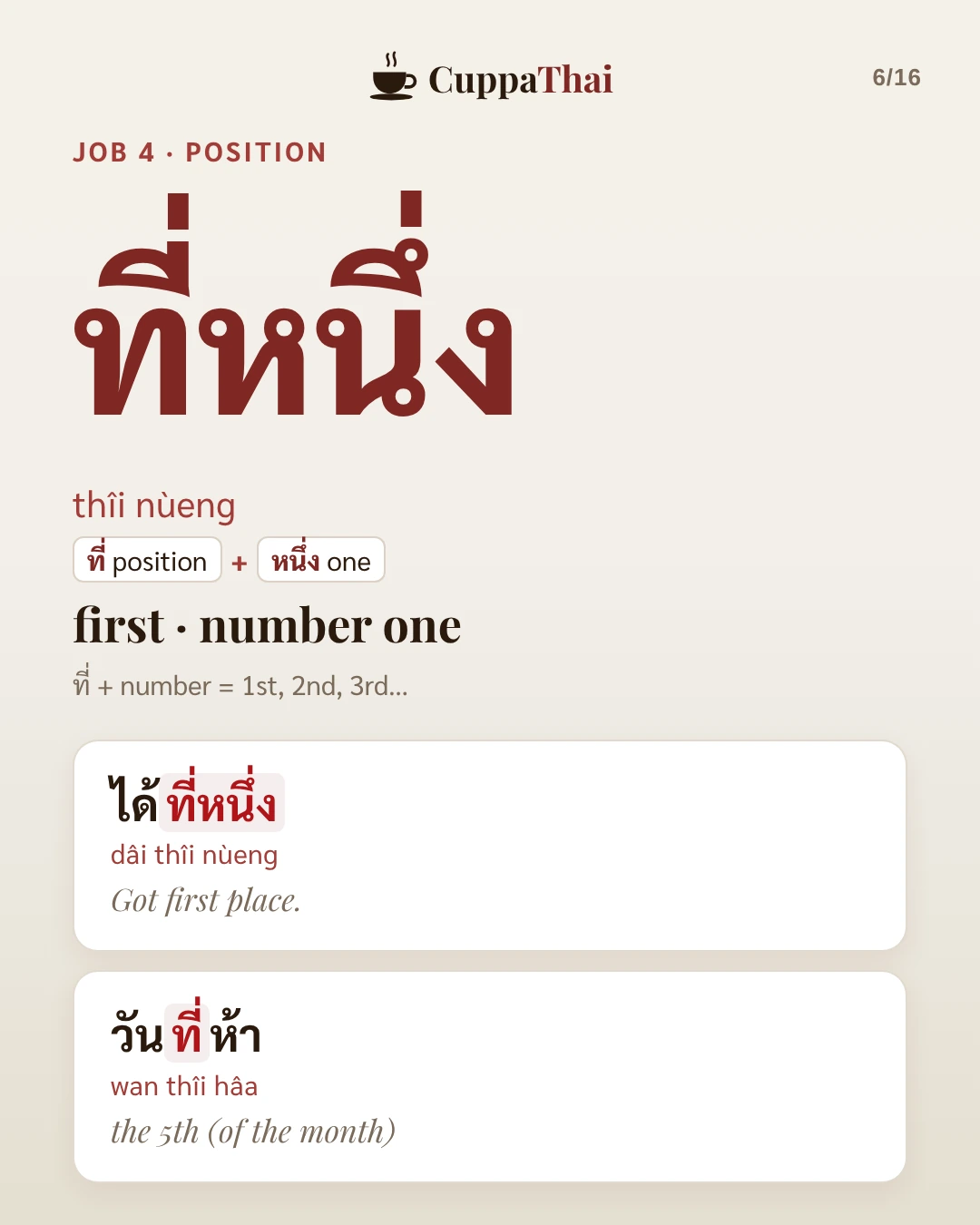
Job 4, position. ที่หนึ่ง (thîi nèung), first, number one. ที่ position plus หนึ่ง one. ที่ plus a number gives 1st, 2nd, 3rd. Examples: ได้ที่หนึ่ง (dâi thîi nèung), Got first place. วันที่ห้า (wan thîi hâa), the 5th of the month.
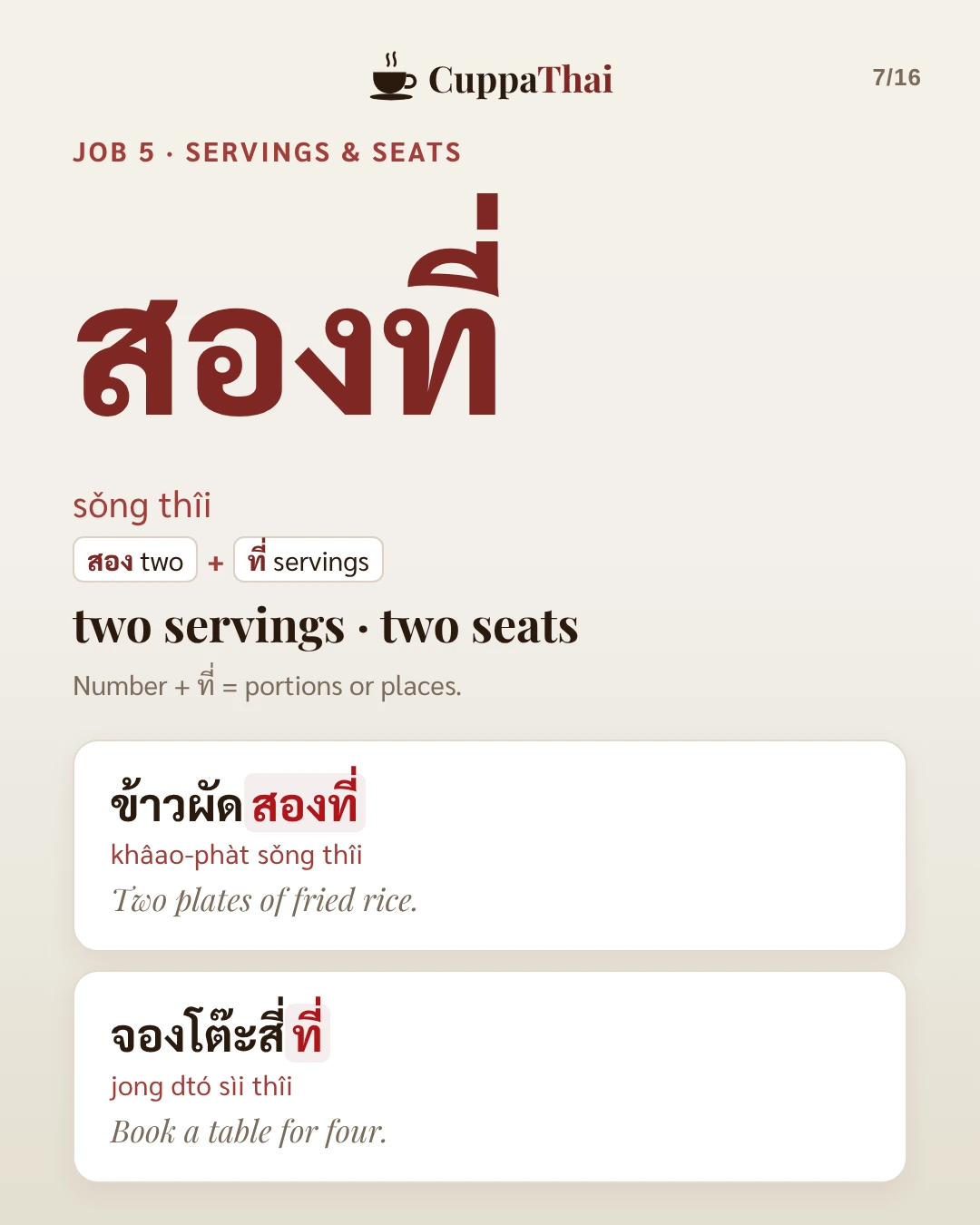
Job 5, servings and seats. สองที่ (sǒng thîi), two servings, two seats. สอง two plus ที่ servings. A number plus ที่ means portions or places. Examples: ข้าวผัดสองที่ (khâao-phàt sǒng thîi), Two plates of fried rice. จองโต๊ะสี่ที่ (jong dtó sìi thîi), Book a table for four.
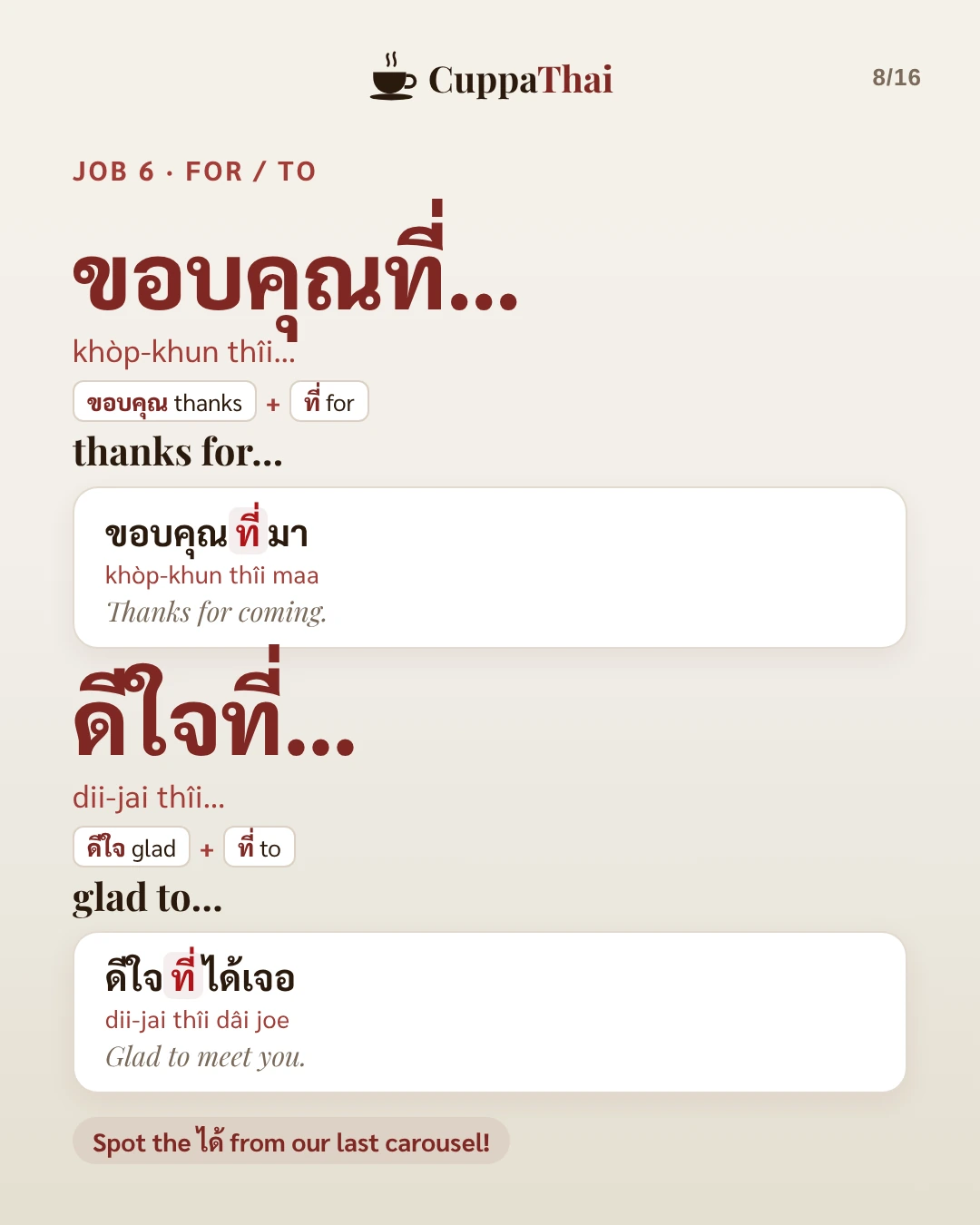
Job 6, for or to. ขอบคุณที่… (khòp-khun thîi…), thanks for. Example: ขอบคุณที่มา (khòp-khun thîi maa), Thanks for coming. ดีใจที่… (dii-jai thîi…), glad to. Example: ดีใจที่ได้เจอ (dii-jai thîi dâi joe), Glad to meet you. Spot the ได้ from our last carousel!
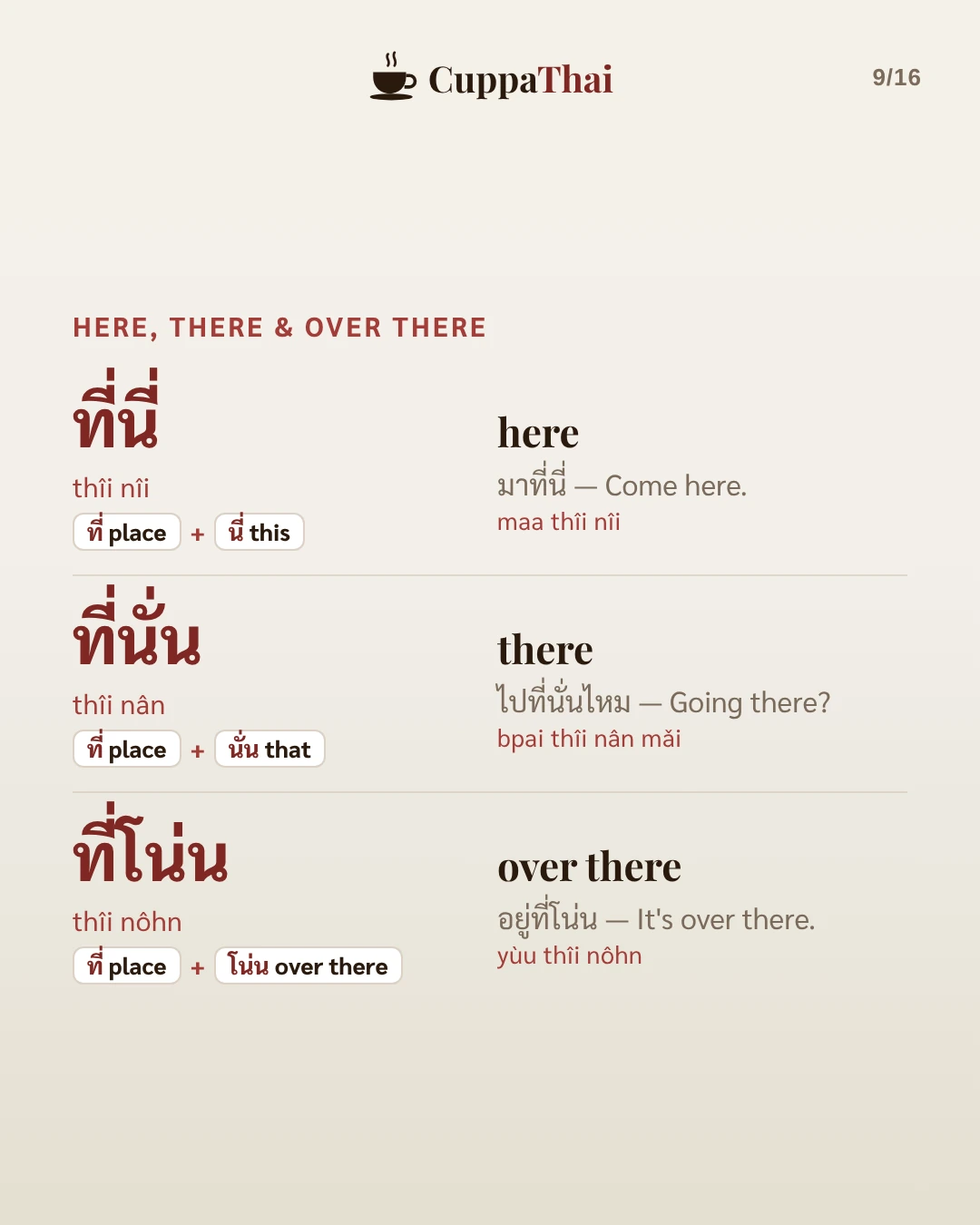
Here, there and over there. ที่นี่ (thîi nîi), here. Example: มาที่นี่ (maa thîi nîi), Come here. ที่นั่น (thîi nân), there. Example: ไปที่นั่นไหม (bpai thîi nân mǎi), Going there? ที่โน่น (thîi nôhn), over there. Example: อยู่ที่โน่น (yùu thîi nôhn), It's over there.
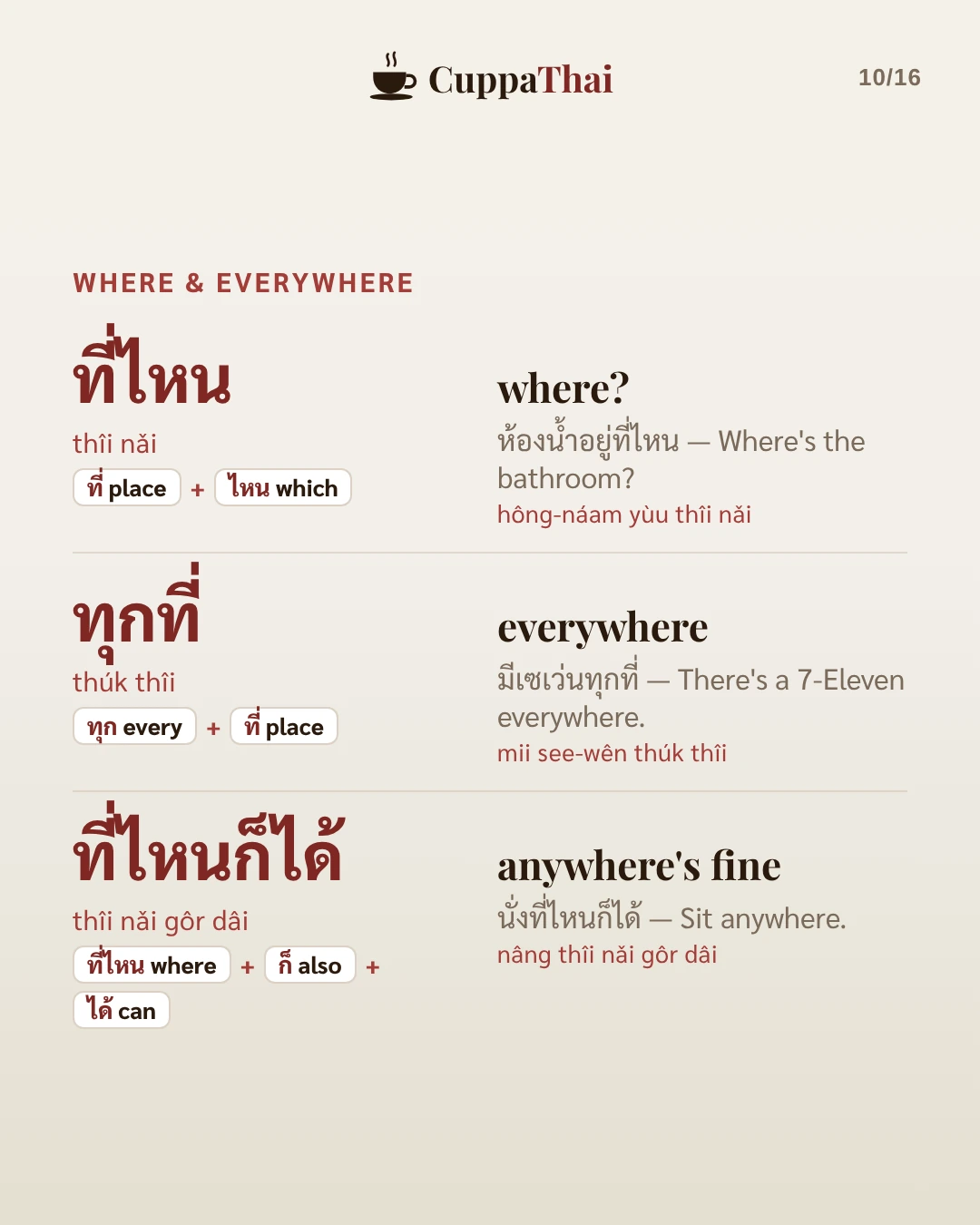
Where and everywhere. ที่ไหน (thîi nǎi), where? Example: ห้องน้ำอยู่ที่ไหน (hông-náam yùu thîi nǎi), Where's the bathroom? ทุกที่ (thúk thîi), everywhere. Example: มีเซเว่นทุกที่ (mii see-wên thúk thîi), There's a 7-Eleven everywhere. ที่ไหนก็ได้ (thîi nǎi gôr dâi), anywhere's fine. Example: นั่งที่ไหนก็ได้ (nâng thîi nǎi gôr dâi), Sit anywhere.
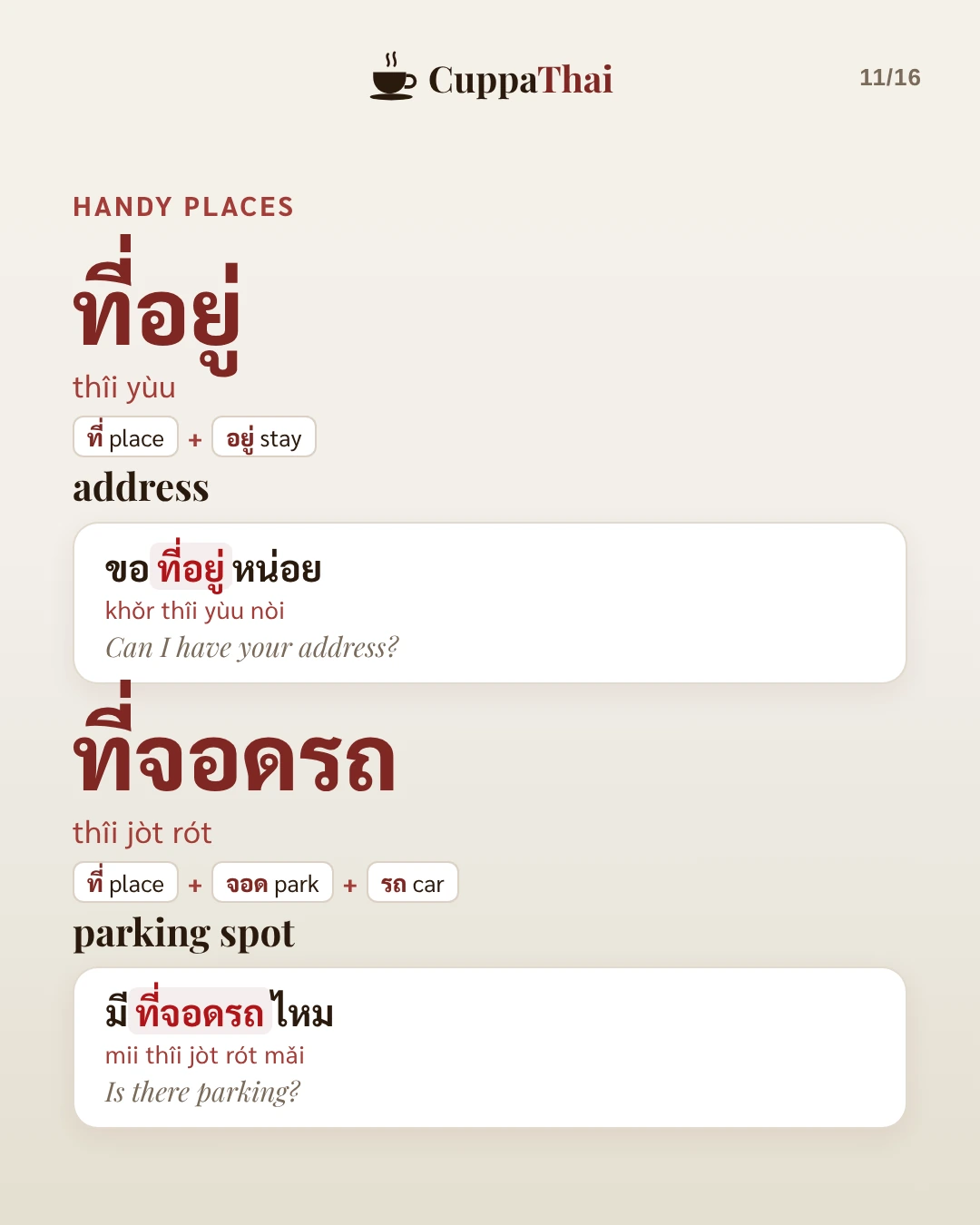
Handy places. ที่อยู่ (thîi yùu), address. Example: ขอที่อยู่หน่อย (khǒr thîi yùu nòi), Can I have your address? ที่จอดรถ (thîi jòt rót), parking spot. Example: มีที่จอดรถไหม (mii thîi jòt rót mǎi), Is there parking?
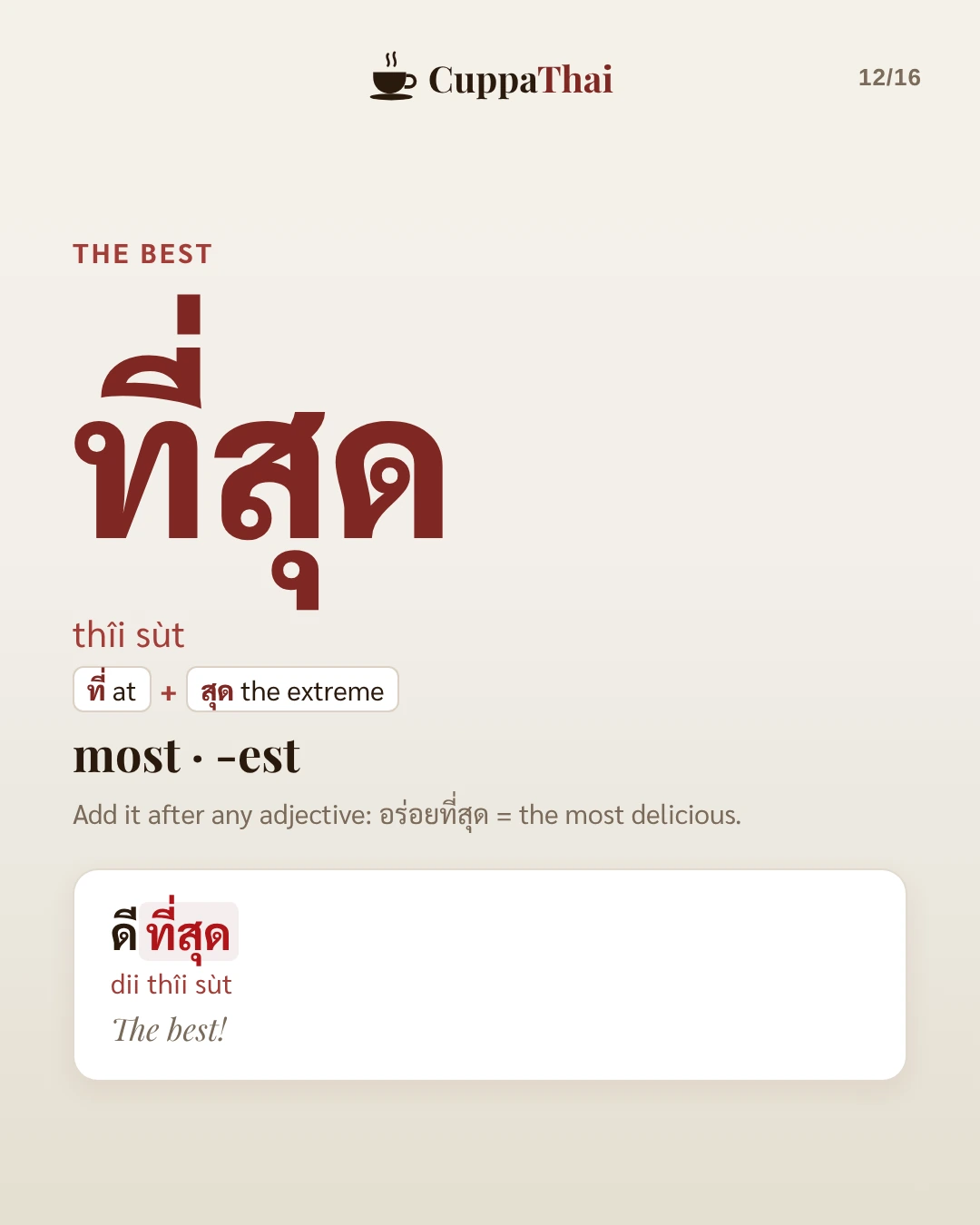
The best. ที่สุด (thîi sùt), most, -est. ที่ at plus สุด the extreme. Add it after any adjective: อร่อยที่สุด = the most delicious. Example: ดีที่สุด (dii thîi sùt), The best!
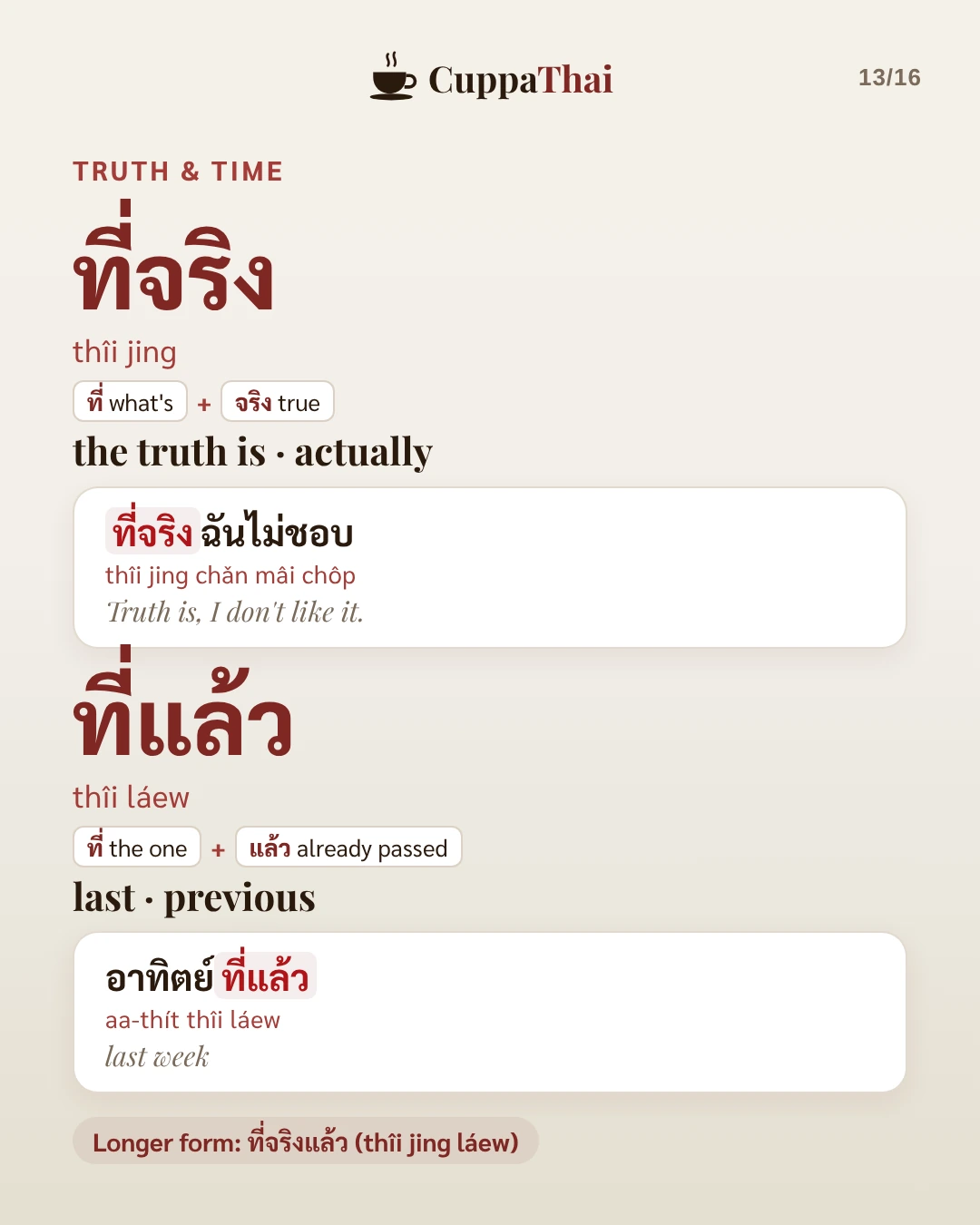
Truth and time. ที่จริง (thîi jing), the truth is, actually. Example: ที่จริงฉันไม่ชอบ (thîi jing chǎn mâi chôp), Truth is, I don't like it. ที่แล้ว (thîi láew), last, previous. Example: อาทิตย์ที่แล้ว (aa-thít thîi láew), last week. Longer form: ที่จริงแล้ว (thîi jing láew).
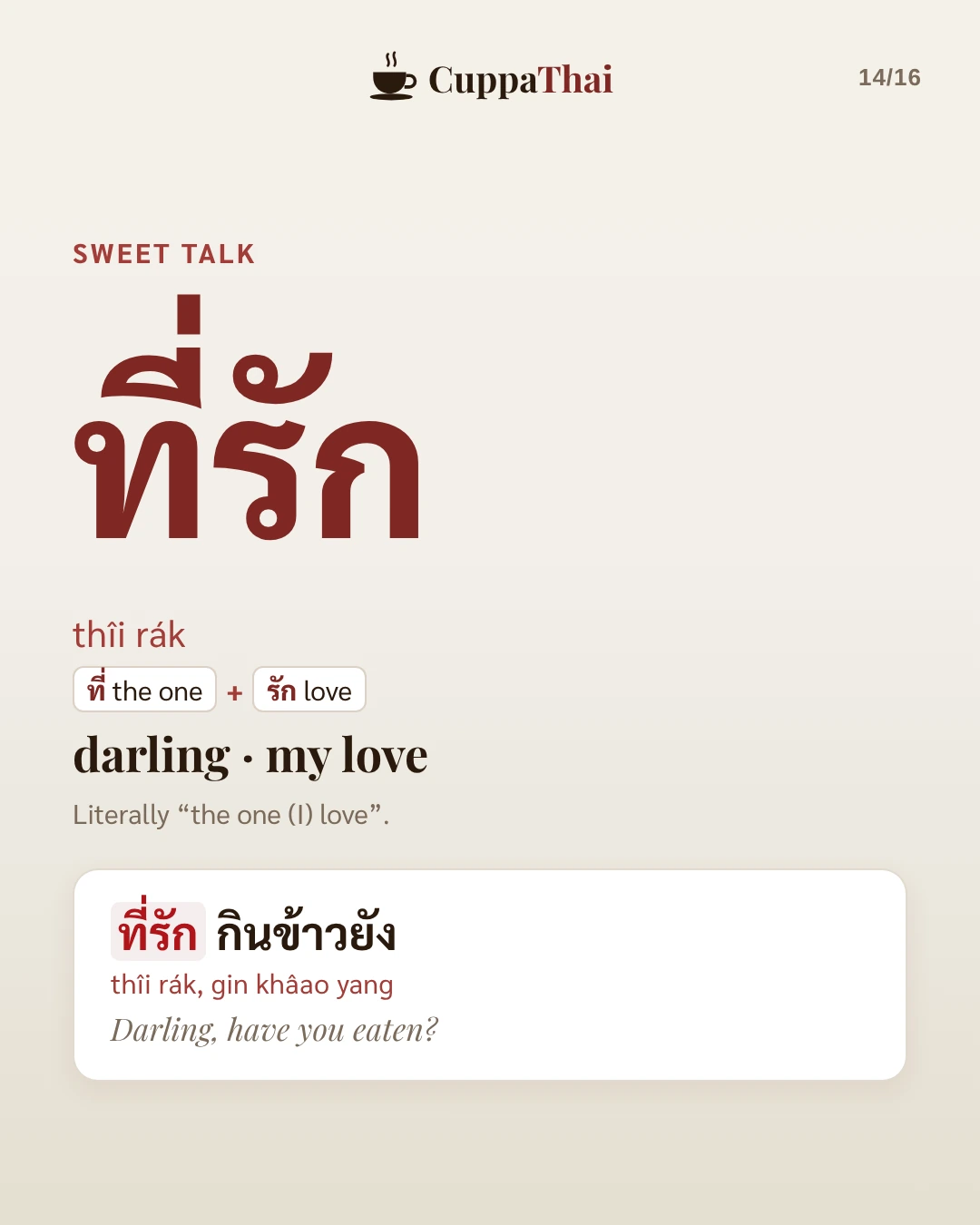
Sweet talk. ที่รัก (thîi rák), darling, my love. Literally the one I love. Example: ที่รัก กินข้าวยัง (thîi rák, gin khâao yang), Darling, have you eaten?
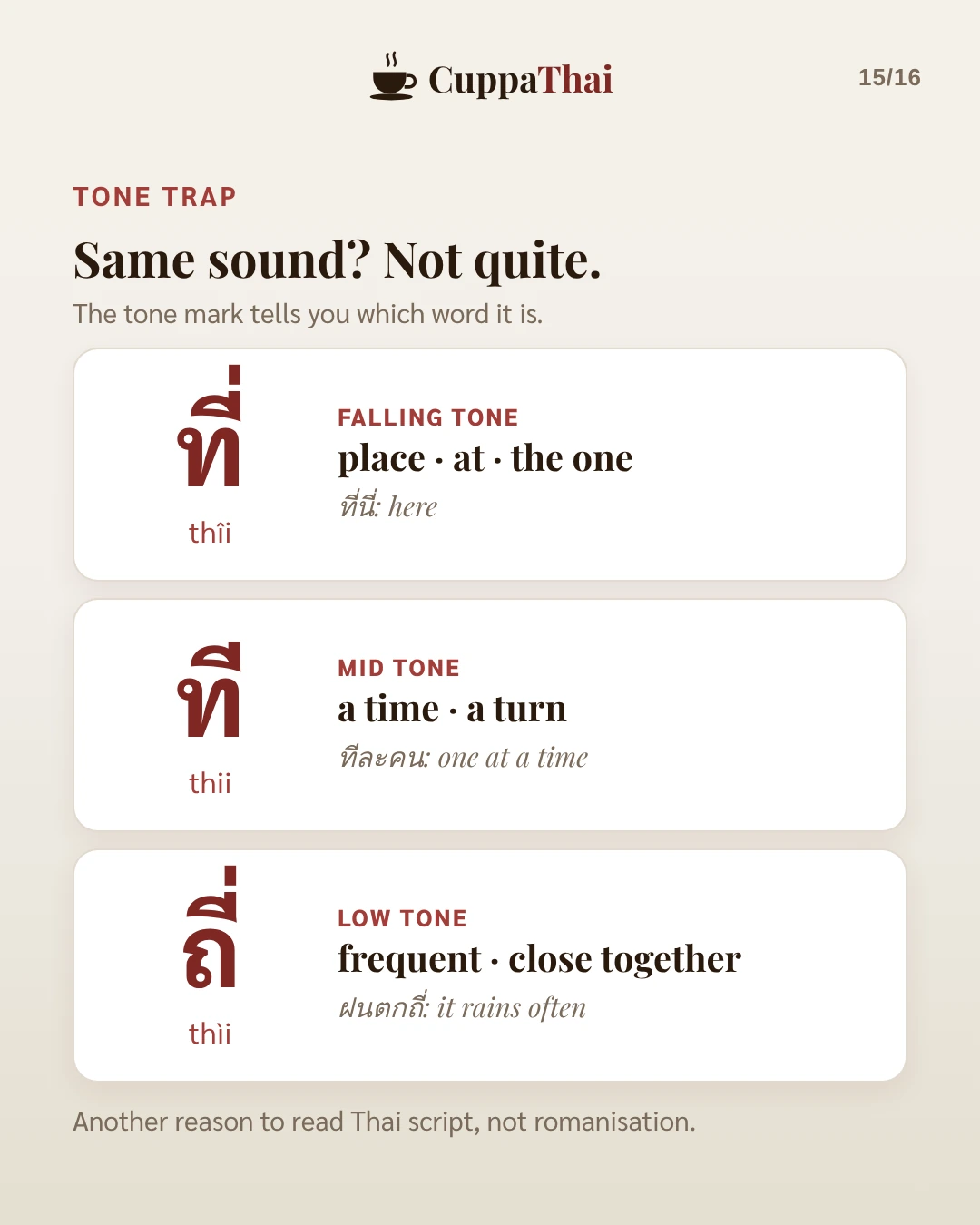
Tone trap. Same sound? Not quite. The tone mark tells you which word it is. ที่ (thii), falling tone: place, at, the one, as in ที่นี่, here. ที (thii), mid tone: a time, a turn, as in ทีละคน, one at a time. ถี่ (thii), low tone: frequent, close together, as in ฝนตกถี่, it rains often. Another reason to read Thai script, not romanisation.
That's ที่. Which ที่ will you use first? Save this for later. Want to learn Thai? Comment or DM me if you're interested in lessons. Reading Thai from lesson one, from someone who grew up here.

That's the lot 🎉

With full lesson explanations like these, plus live practice with a teacher, in English, in a small group or one-to-one, is the best and easiest way to learn.

See the live Thai classesMore free content
Read this as text
  1. Cover. One word, 6 jobs. ที่ (thîi). Place, at, the one… it points at a spot.
  2. The golden rule. ที่ points at a spot: a place, a person, a position, or a moment. ที่นี่, a place, here. อยู่ที่บ้าน, at, at home. คนที่…, the one who or which, the person who. ที่หนึ่ง, number or position, first place. สองที่, servings or seats, two plates. ขอบคุณที่…, for or to, thanks for.
  3. Job 1, a place. ที่ (thîi) means a place, a spot, room. On its own: มีที่ไหม (mii thîi mǎi), is there room? Example: ไม่มีที่นั่ง (mâi mii thîi nâng), There's nowhere to sit.
  4. Job 2, at. ที่ (thîi) means at. For in or inside, Thai uses ใน (nai): ในห้อง, in the room. Examples: อยู่ที่บ้าน (yùu thîi bâan), I'm at home. เจอกันที่ร้านกาแฟ (joe gan thîi ráan gaa-fae), Meet at the café.
  5. Job 3, the one. คนที่… (khon thîi…), the one who, the one which. คน person plus ที่ the one. English often drops the who or which completely. Examples: คนที่ใส่เสื้อแดง (khon thîi sài sûea daeng), The person in red. ร้านที่ฉันชอบ (ráan thîi chǎn chôp), The shop I like.
  6. Job 4, position. ที่หนึ่ง (thîi nèung), first, number one. ที่ position plus หนึ่ง one. ที่ plus a number gives 1st, 2nd, 3rd. Examples: ได้ที่หนึ่ง (dâi thîi nèung), Got first place. วันที่ห้า (wan thîi hâa), the 5th of the month.
  7. Job 5, servings and seats. สองที่ (sǒng thîi), two servings, two seats. สอง two plus ที่ servings. A number plus ที่ means portions or places. Examples: ข้าวผัดสองที่ (khâao-phàt sǒng thîi), Two plates of fried rice. จองโต๊ะสี่ที่ (jong dtó sìi thîi), Book a table for four.
  8. Job 6, for or to. ขอบคุณที่… (khòp-khun thîi…), thanks for. Example: ขอบคุณที่มา (khòp-khun thîi maa), Thanks for coming. ดีใจที่… (dii-jai thîi…), glad to. Example: ดีใจที่ได้เจอ (dii-jai thîi dâi joe), Glad to meet you. Spot the ได้ from our last carousel!
  9. Here, there and over there. ที่นี่ (thîi nîi), here. Example: มาที่นี่ (maa thîi nîi), Come here. ที่นั่น (thîi nân), there. Example: ไปที่นั่นไหม (bpai thîi nân mǎi), Going there? ที่โน่น (thîi nôhn), over there. Example: อยู่ที่โน่น (yùu thîi nôhn), It's over there.
  10. Where and everywhere. ที่ไหน (thîi nǎi), where? Example: ห้องน้ำอยู่ที่ไหน (hông-náam yùu thîi nǎi), Where's the bathroom? ทุกที่ (thúk thîi), everywhere. Example: มีเซเว่นทุกที่ (mii see-wên thúk thîi), There's a 7-Eleven everywhere. ที่ไหนก็ได้ (thîi nǎi gôr dâi), anywhere's fine. Example: นั่งที่ไหนก็ได้ (nâng thîi nǎi gôr dâi), Sit anywhere.
  11. Handy places. ที่อยู่ (thîi yùu), address. Example: ขอที่อยู่หน่อย (khǒr thîi yùu nòi), Can I have your address? ที่จอดรถ (thîi jòt rót), parking spot. Example: มีที่จอดรถไหม (mii thîi jòt rót mǎi), Is there parking?
  12. The best. ที่สุด (thîi sùt), most, -est. ที่ at plus สุด the extreme. Add it after any adjective: อร่อยที่สุด = the most delicious. Example: ดีที่สุด (dii thîi sùt), The best!
  13. Truth and time. ที่จริง (thîi jing), the truth is, actually. Example: ที่จริงฉันไม่ชอบ (thîi jing chǎn mâi chôp), Truth is, I don't like it. ที่แล้ว (thîi láew), last, previous. Example: อาทิตย์ที่แล้ว (aa-thít thîi láew), last week. Longer form: ที่จริงแล้ว (thîi jing láew).
  14. Sweet talk. ที่รัก (thîi rák), darling, my love. Literally the one I love. Example: ที่รัก กินข้าวยัง (thîi rák, gin khâao yang), Darling, have you eaten?
  15. Tone trap. Same sound? Not quite. The tone mark tells you which word it is. ที่ (thii), falling tone: place, at, the one, as in ที่นี่, here. ที (thii), mid tone: a time, a turn, as in ทีละคน, one at a time. ถี่ (thii), low tone: frequent, close together, as in ฝนตกถี่, it rains often. Another reason to read Thai script, not romanisation.
  16. That's ที่. Which ที่ will you use first? Save this for later. Want to learn Thai? Comment or DM me if you're interested in lessons. Reading Thai from lesson one, from someone who grew up here.

Like how we teach? Practise this live with a teacher, in English, in a small group or one-to-one.

See the live Thai classes

More like this

Pinch to zoom · drag to move · double-tap to zoom