✕

← All free Thai content

แล้ว (láew): one word, 20 uses

แล้ว shows up in almost every Thai conversation. Swipe through to see how its meaning changes with its position, and the everyday phrases built on it.
1 / 18
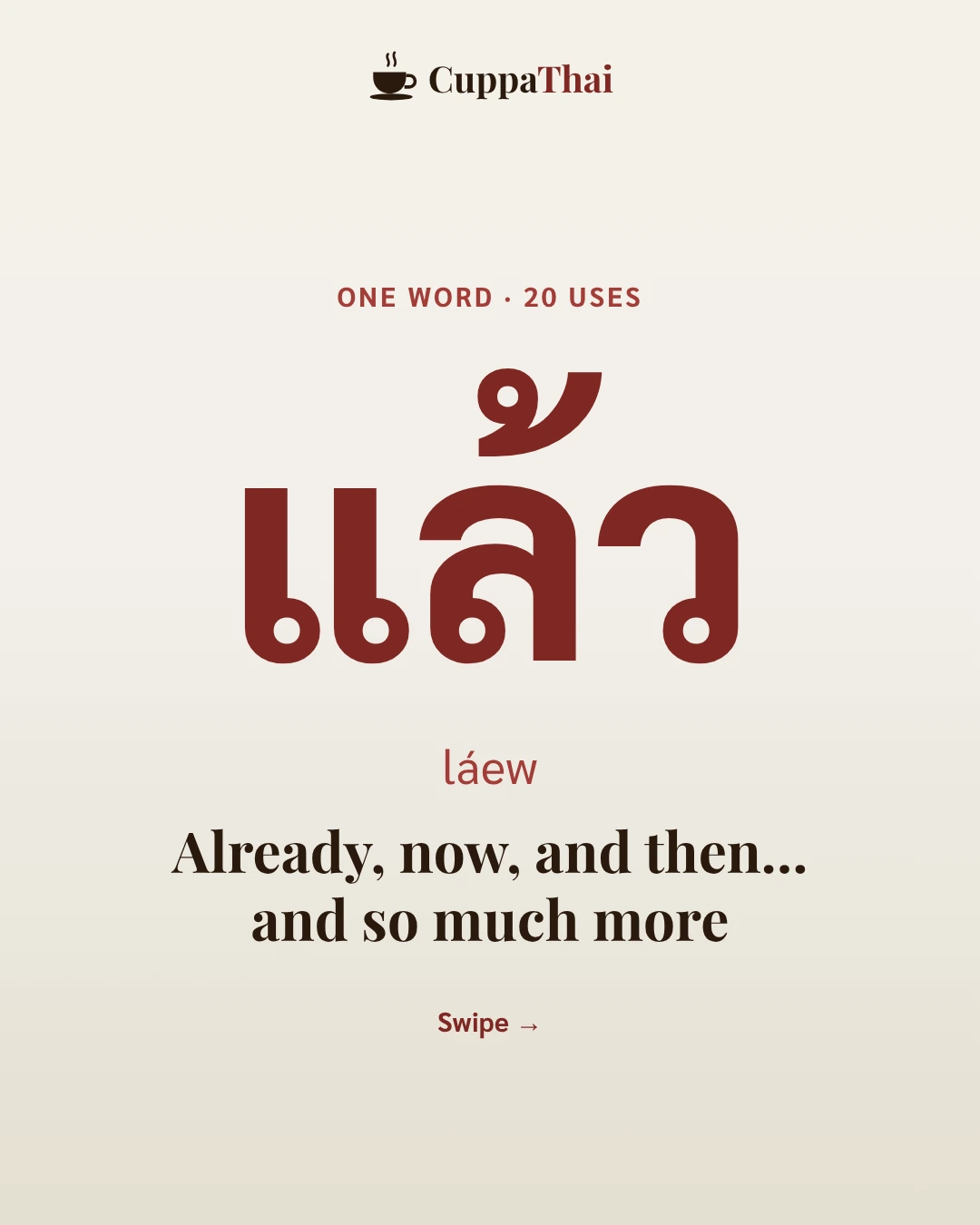
Cover. The Thai word แล้ว (láew). One word, 20 uses. Already, now, and then… and so much more.
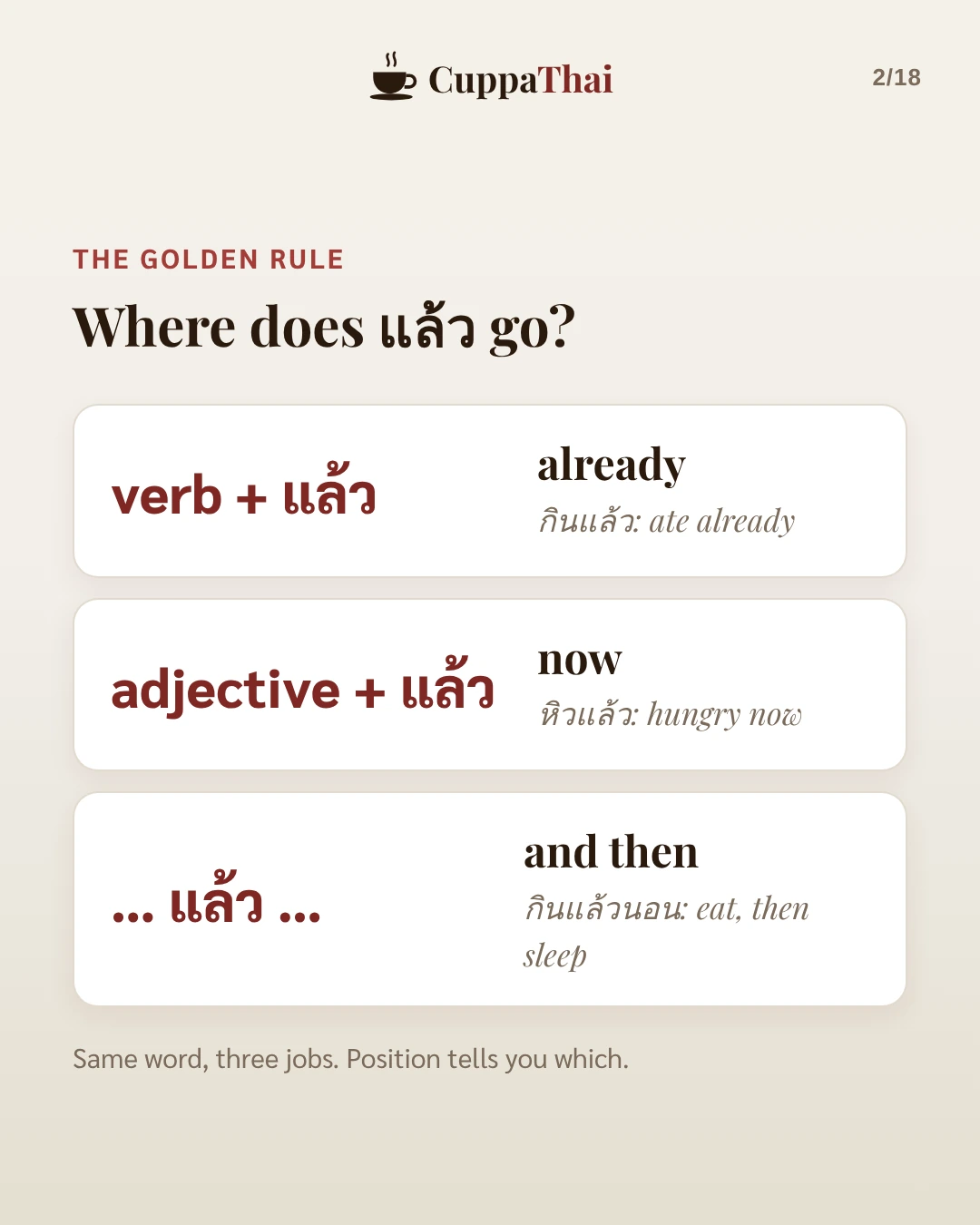
The golden rule: where does แล้ว go? Verb + แล้ว means already (กินแล้ว, ate already). Adjective + แล้ว means now (หิวแล้ว, hungry now). ... แล้ว ... means and then (กินแล้วนอน, eat, then sleep). Same word, three jobs. Position tells you which.
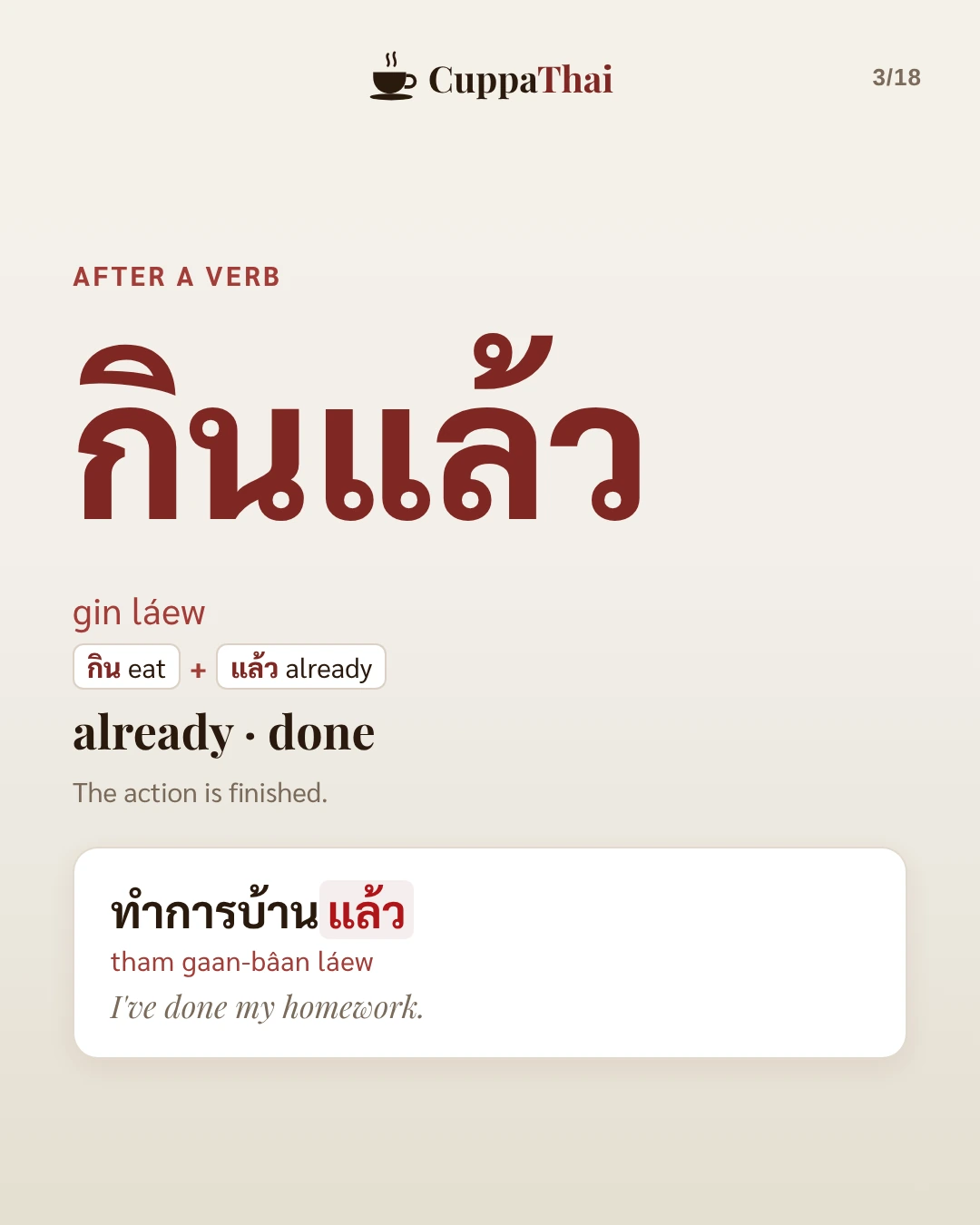
After a verb. กินแล้ว (gin láew) means already, done: the action is finished. Example: ทำการบ้านแล้ว (tham gaan-bâan láew), I've done my homework.
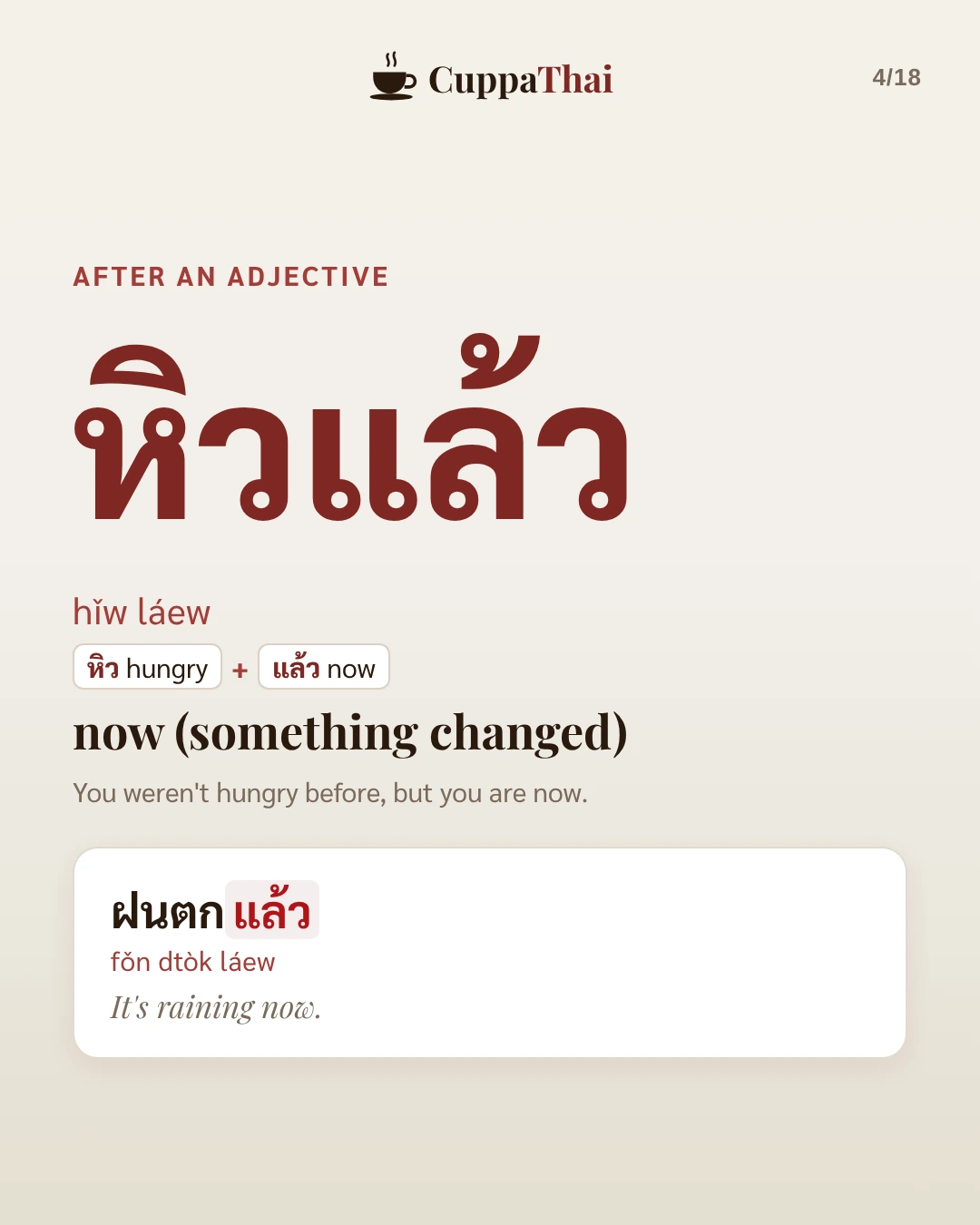
After an adjective. หิวแล้ว (hǐw láew) means now: something changed. You weren't hungry before, but you are now. Example: ฝนตกแล้ว (fǒn dtòk láew), It's raining now.
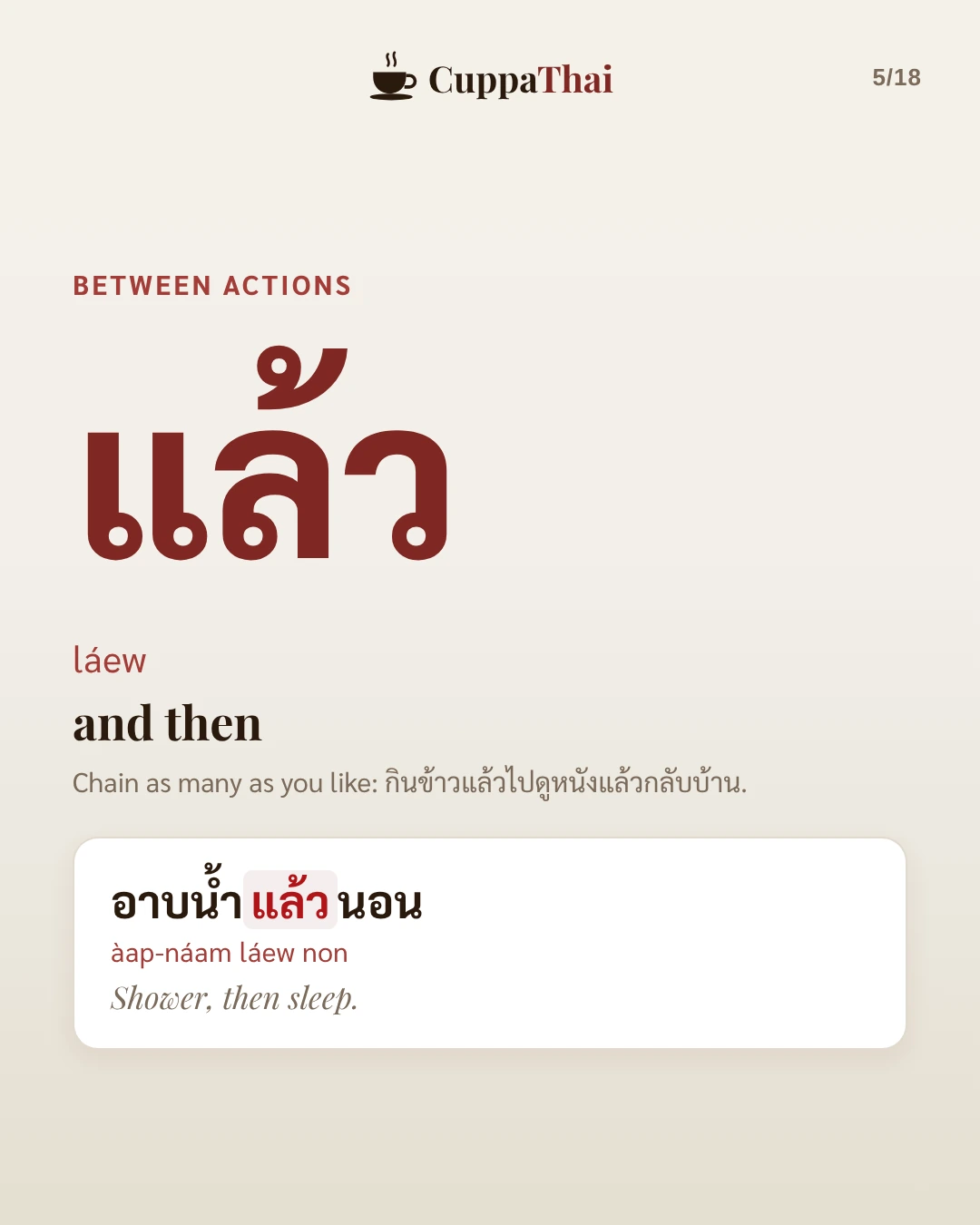
Between actions. แล้ว (láew) means and then. Chain as many as you like: กินข้าวแล้วไปดูหนังแล้วกลับบ้าน. Example: อาบน้ำแล้วนอน (àap-náam láew non), Shower, then sleep.
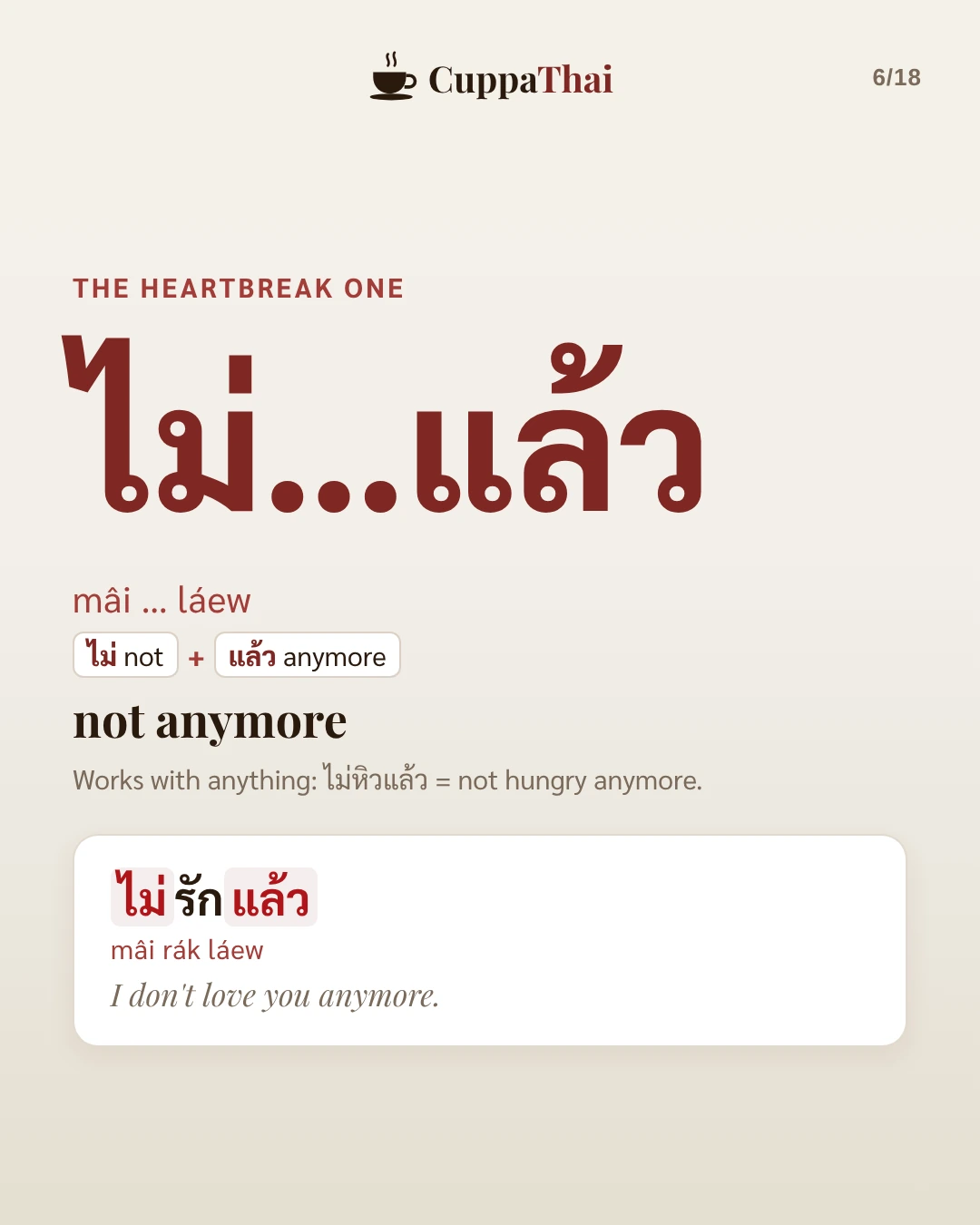
The heartbreak one. ไม่...แล้ว (mâi ... láew) means not anymore. It works with anything: ไม่หิวแล้ว means not hungry anymore. Example: ไม่รักแล้ว (mâi rák láew), I don't love you anymore.
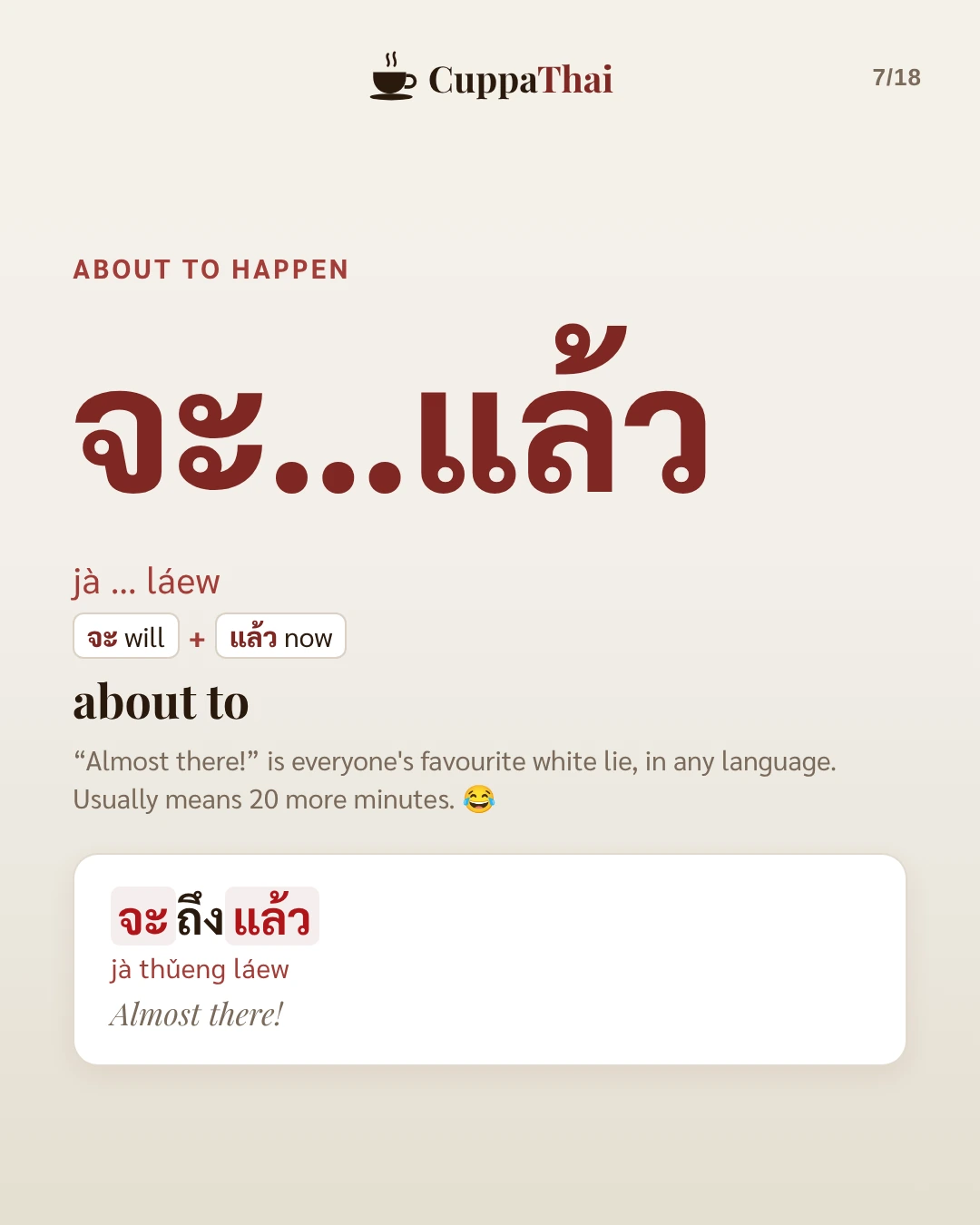
About to happen. จะ...แล้ว (jà ... láew) means about to. "Almost there!" is everyone's favourite white lie, in any language. It usually means 20 more minutes. Example: จะถึงแล้ว (jà thǔeng láew), Almost there!
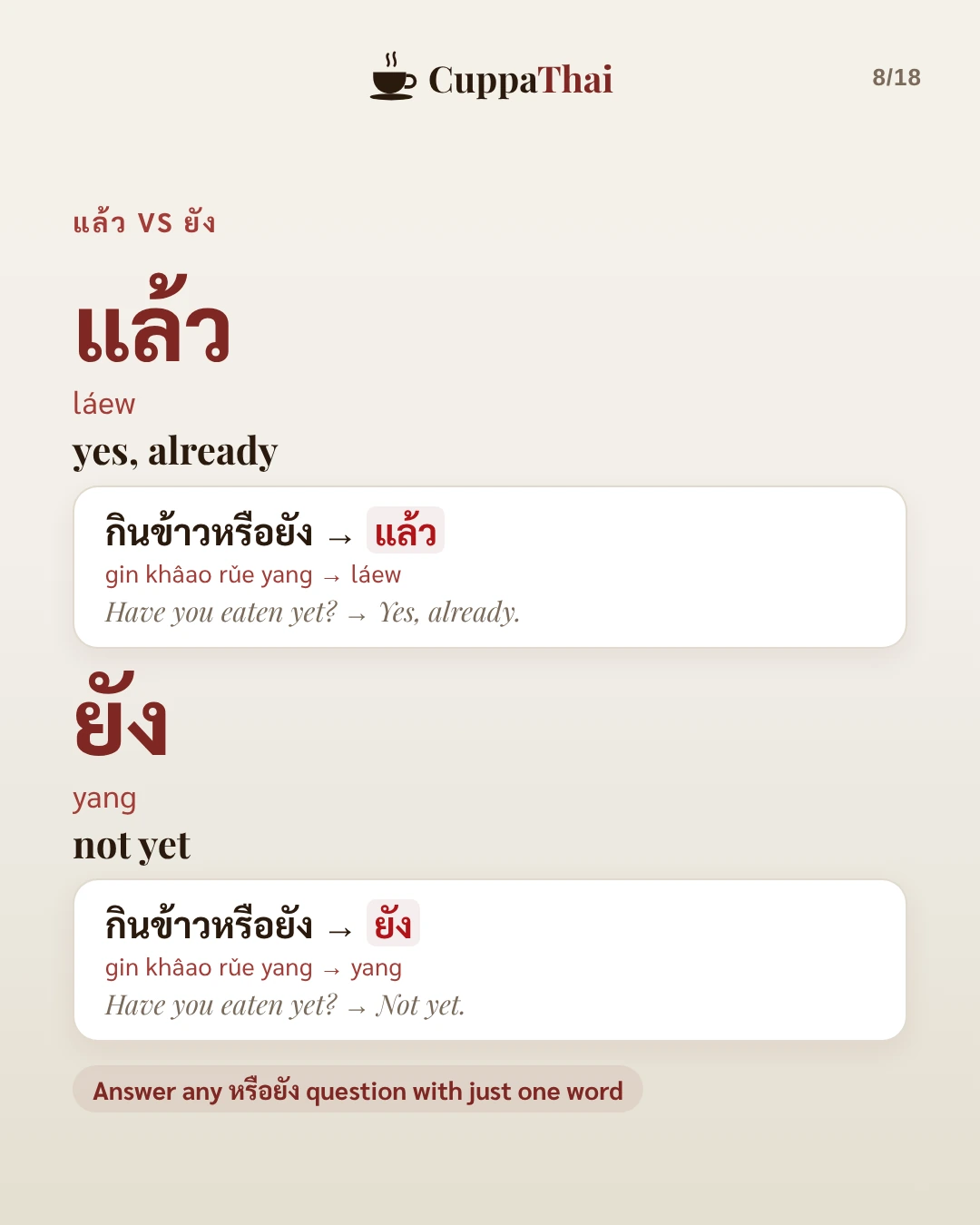
แล้ว versus ยัง. แล้ว (láew) means yes, already: กินข้าวหรือยัง → แล้ว, Have you eaten yet? Yes, already. ยัง (yang) means not yet: กินข้าวหรือยัง → ยัง, Have you eaten yet? Not yet. Answer any หรือยัง question with just one word.
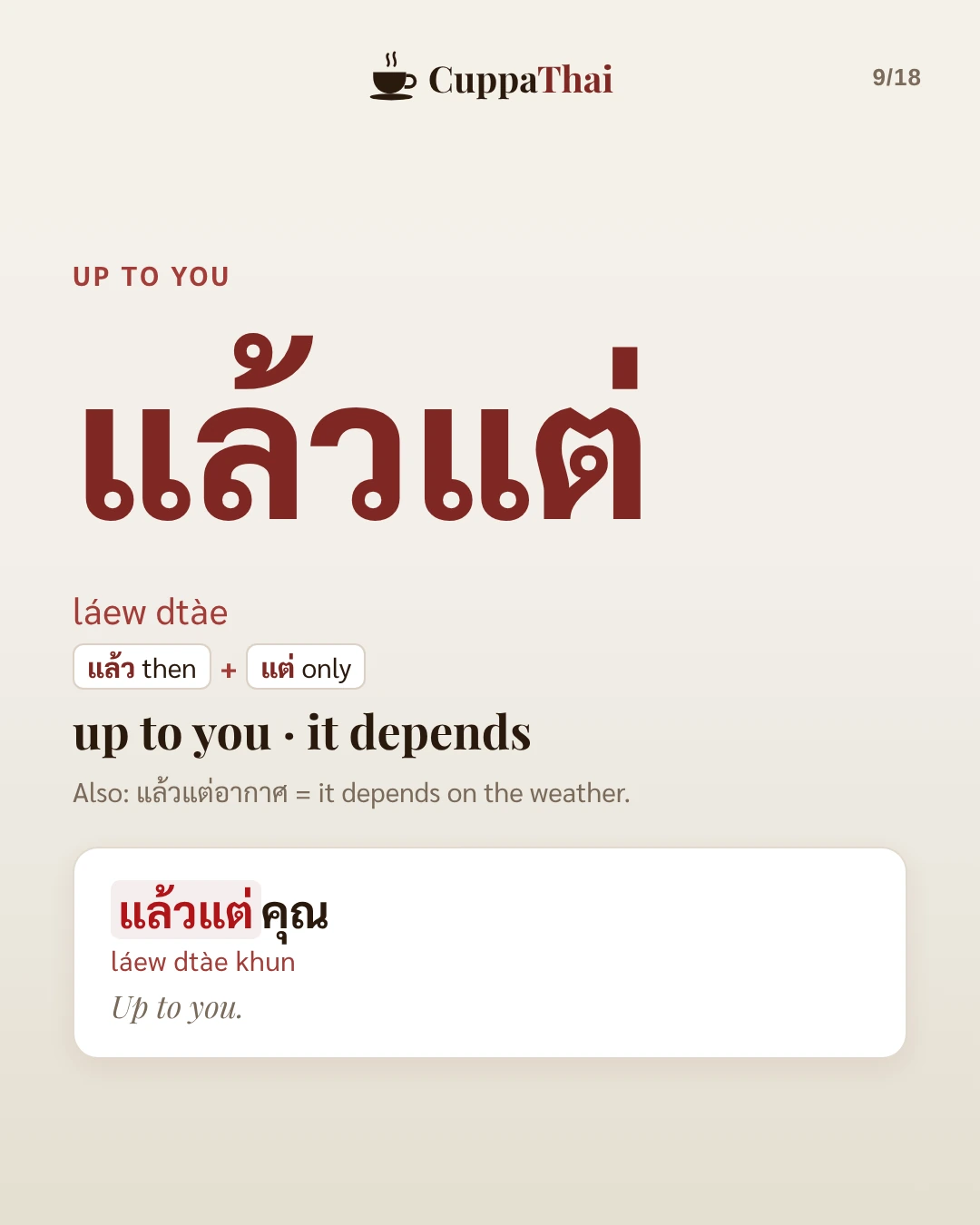
Up to you. แล้วแต่ (láew dtàe) means up to you, it depends. Also: แล้วแต่อากาศ means it depends on the weather. Example: แล้วแต่คุณ (láew dtàe khun), Up to you.
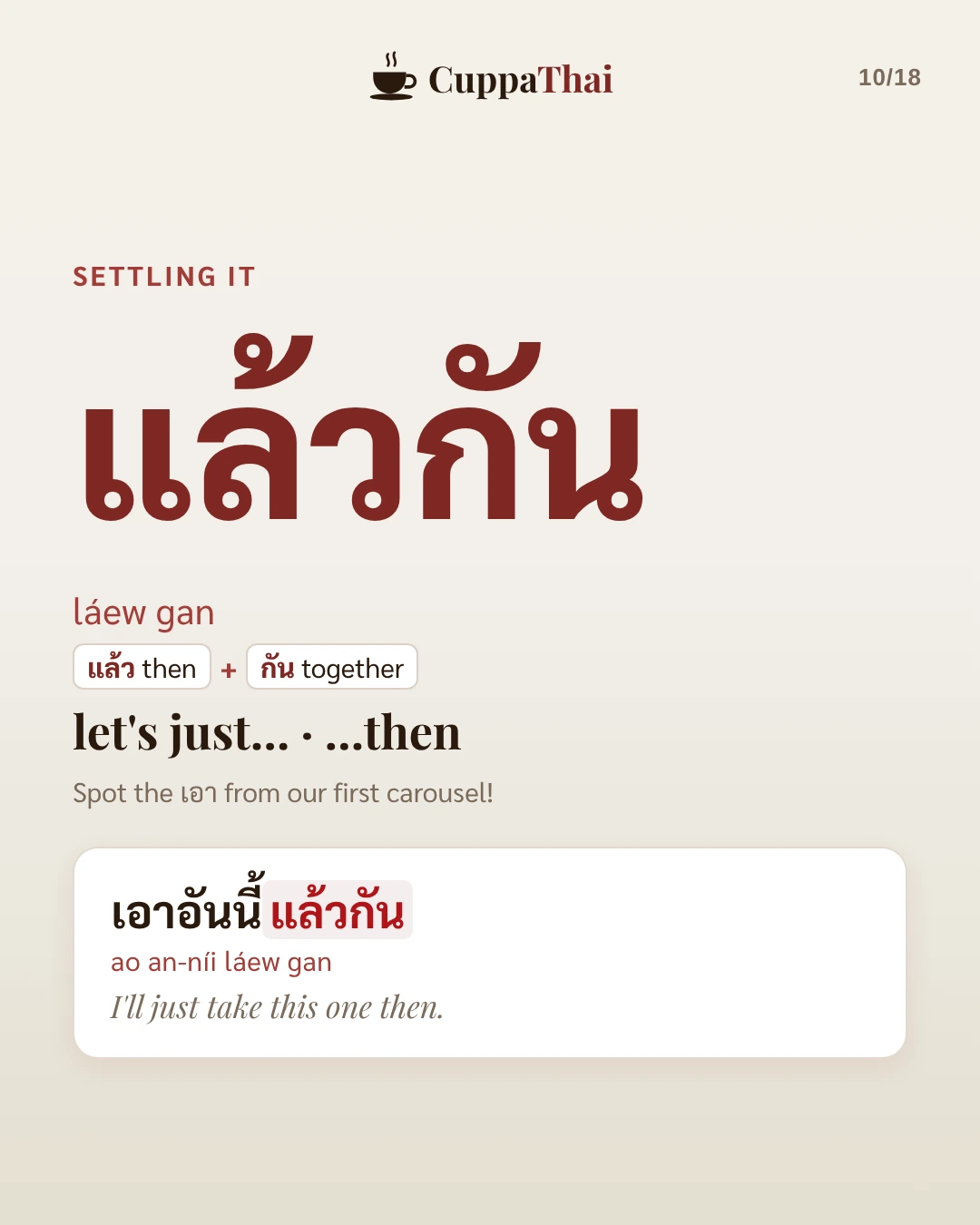
Settling it. แล้วกัน (láew gan) means let's just... or ...then. Spot the เอา from our first carousel. Example: เอาอันนี้แล้วกัน (ao an-níi láew gan), I'll just take this one then.
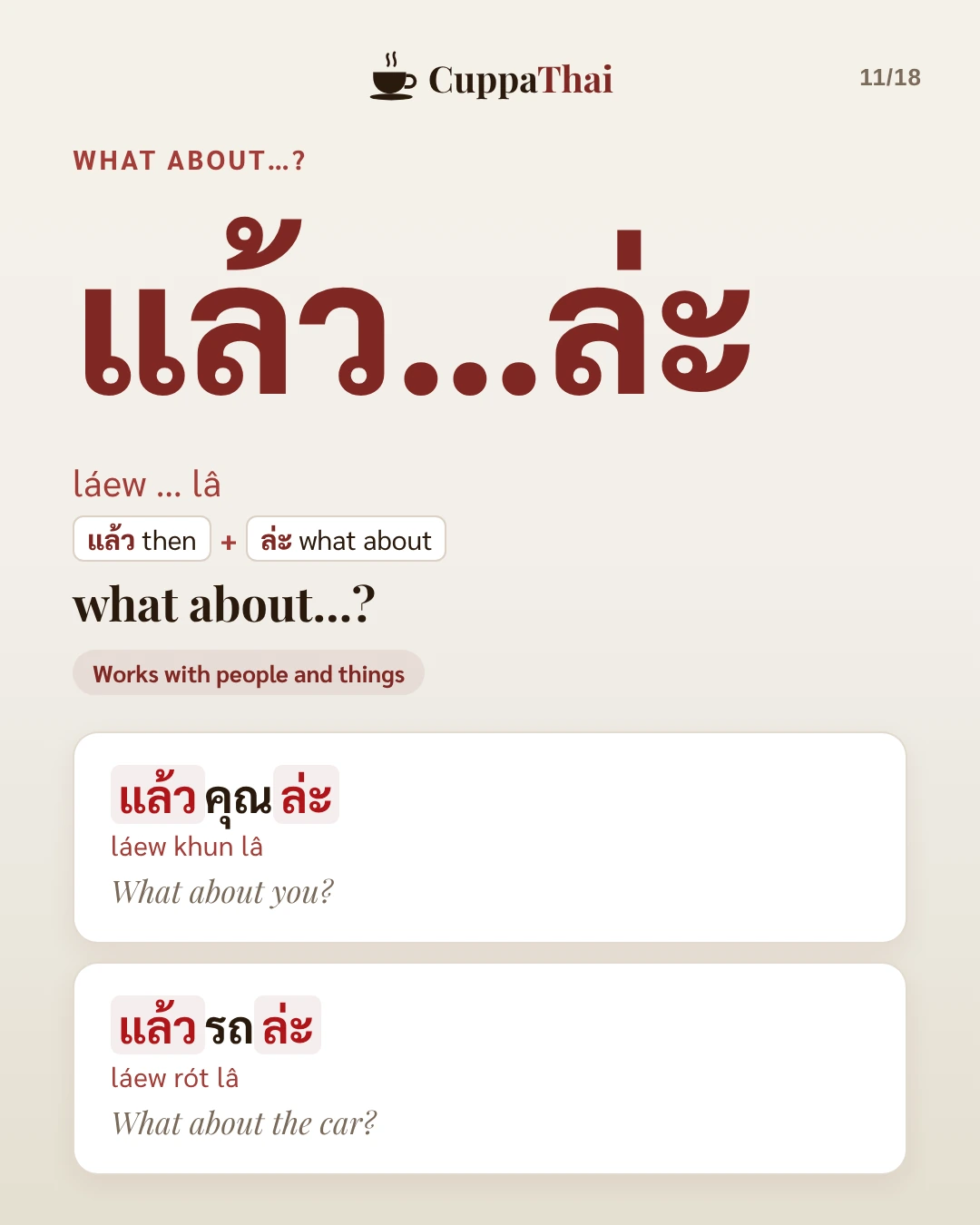
What about...? แล้ว...ล่ะ (láew ... lâ) means what about...? It works with people and things. Examples: แล้วคุณล่ะ (láew khun lâ), What about you? แล้วรถล่ะ (láew rót lâ), What about the car?
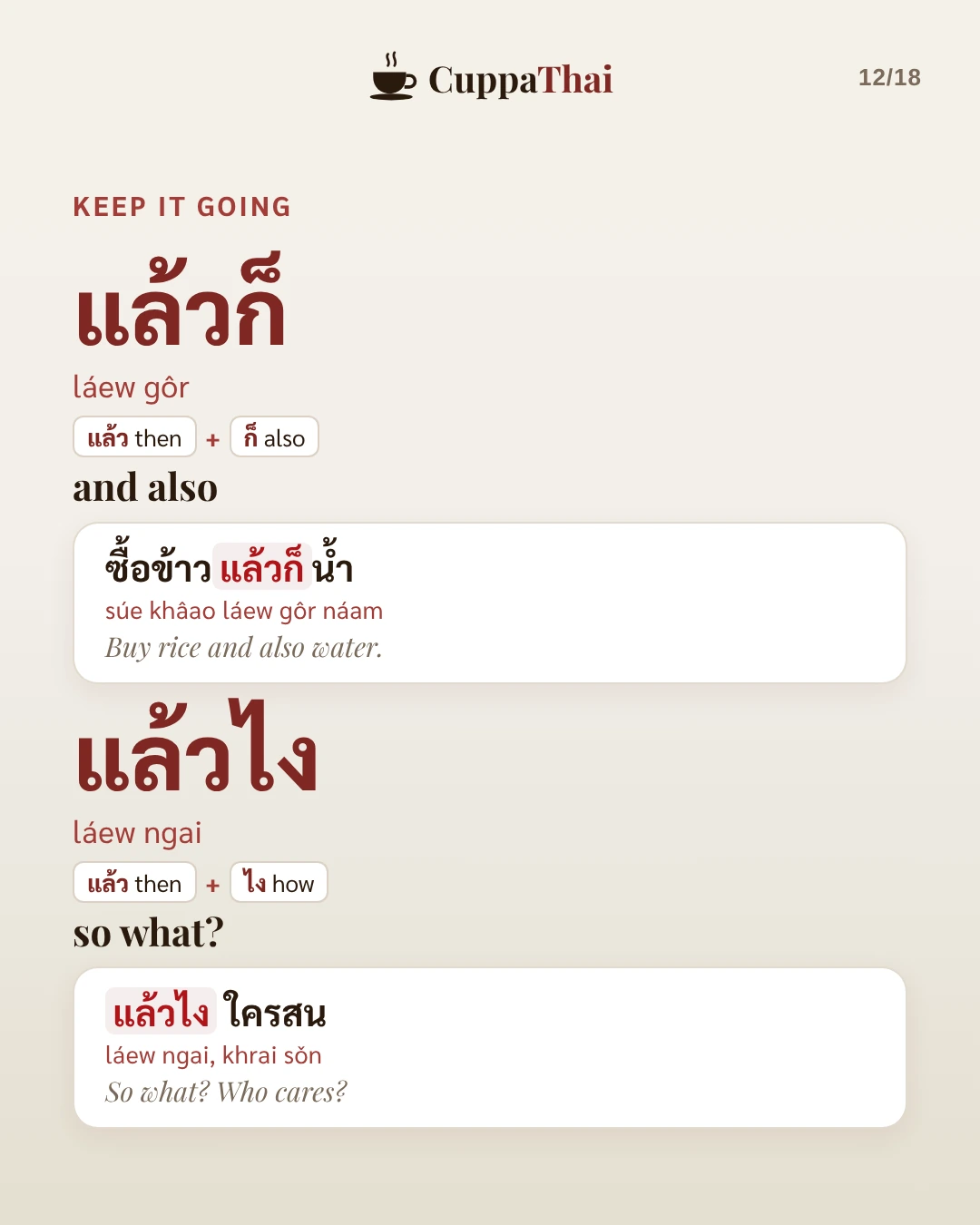
Keep it going. แล้วก็ (láew gôr) means and also: ซื้อข้าวแล้วก็น้ำ (súe khâao láew gôr náam), Buy rice and also water. แล้วไง (láew ngai) means so what?: แล้วไง ใครสน (láew ngai, khrai sǒn), So what? Who cares?
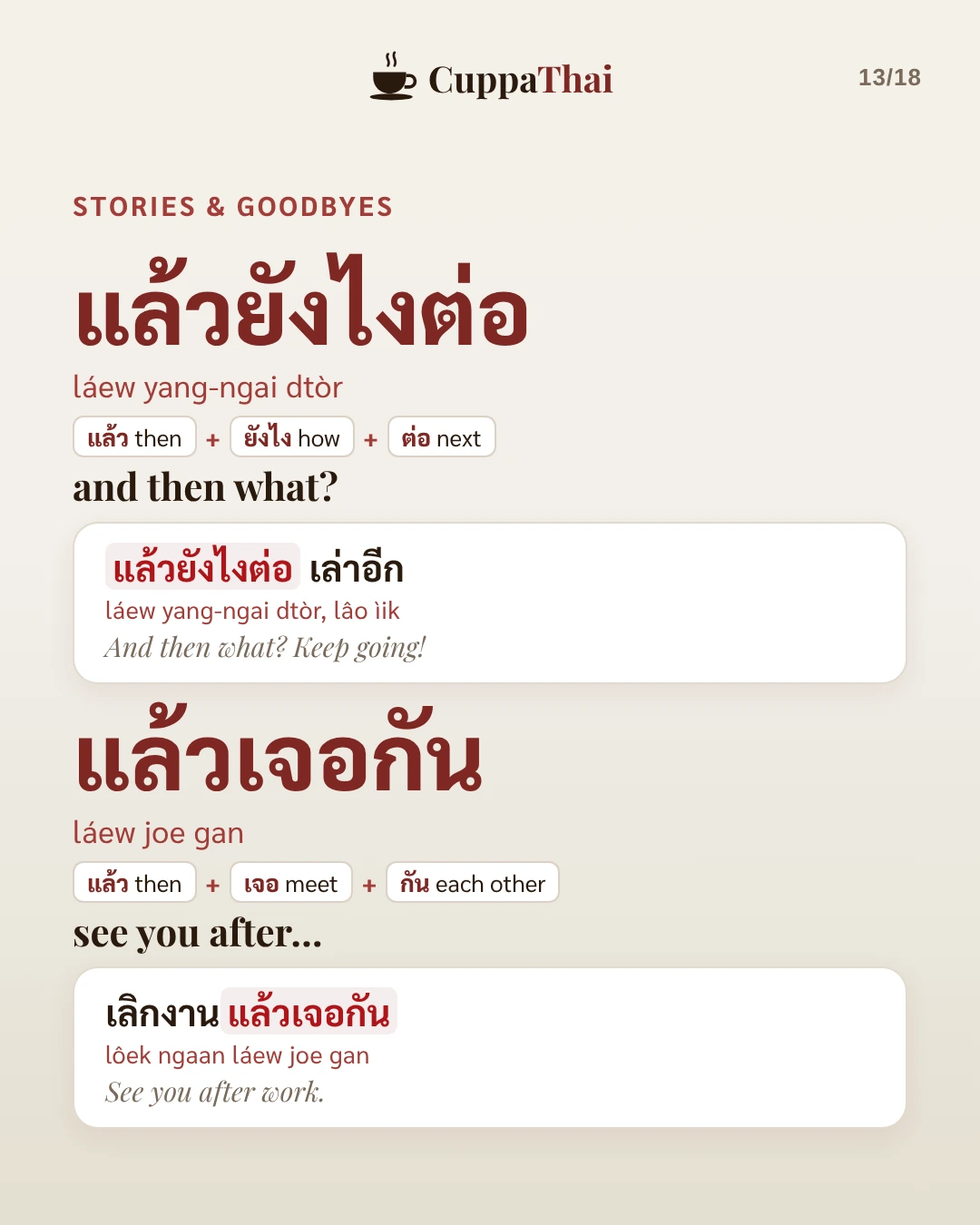
Stories and goodbyes. แล้วยังไงต่อ (láew yang-ngai dtòr), and then what?: แล้วยังไงต่อ เล่าอีก (láew yang-ngai dtòr, lâo iik), And then what? Keep going! แล้วเจอกัน (láew joe gan), see you after...: เลิกงานแล้วเจอกัน (lôek ngaan láew joe gan), See you after work.
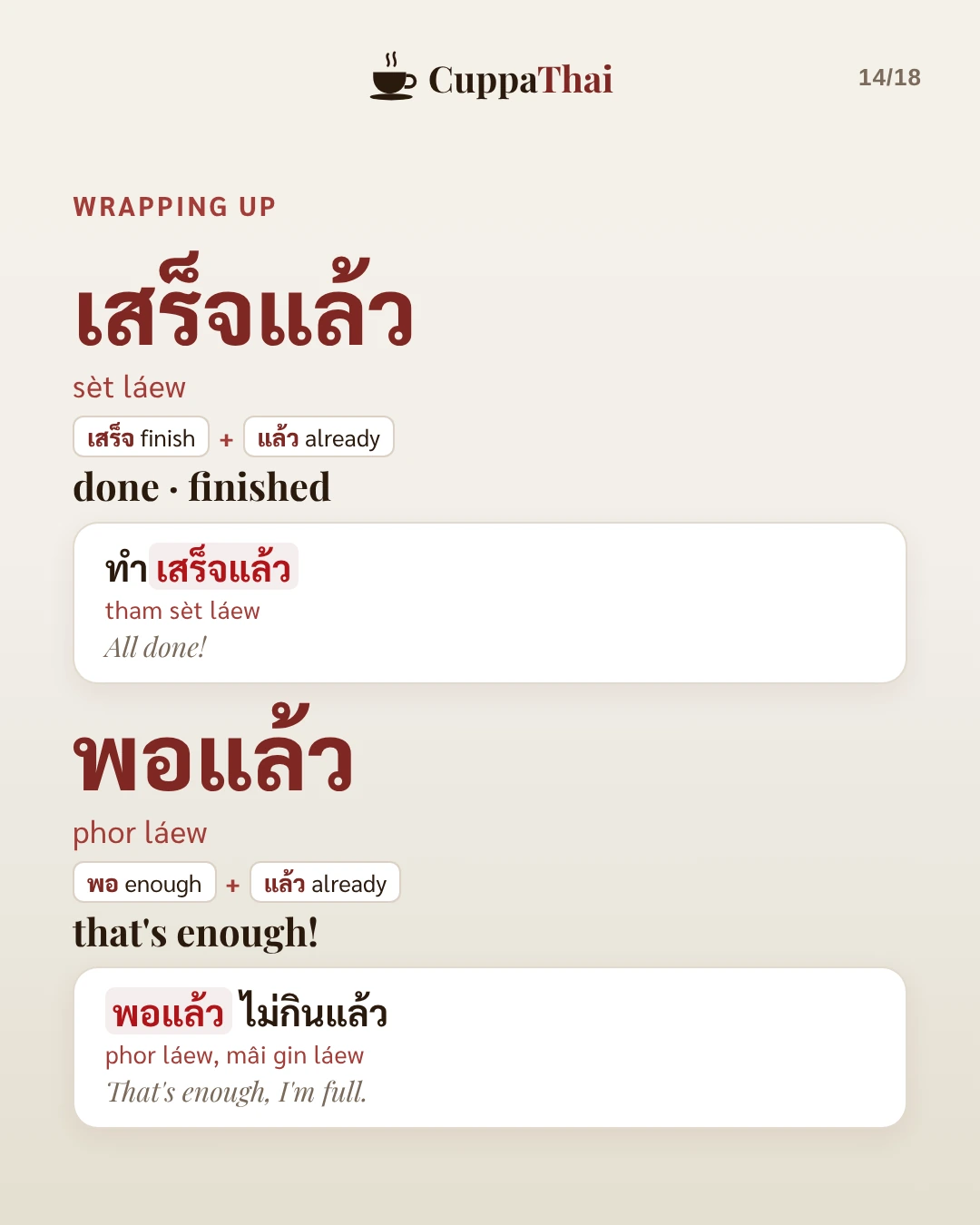
Wrapping up. เสร็จแล้ว (sèt láew), done, finished: ทำเสร็จแล้ว (tham sèt láew), All done! พอแล้ว (phor láew), that's enough!: พอแล้ว ไม่กินแล้ว (phor láew, mâi gin láew), That's enough, I'm full.
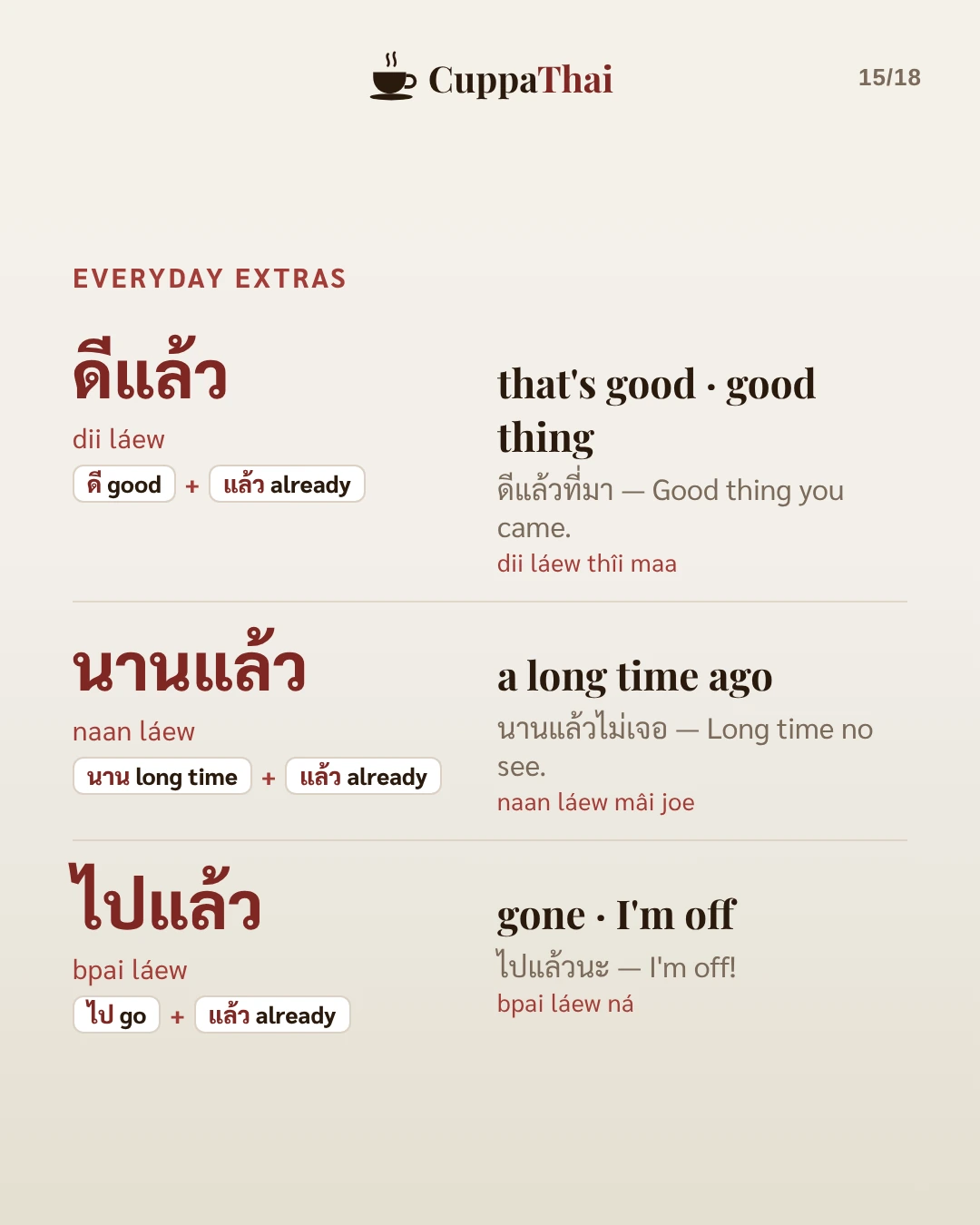
Everyday extras. ดีแล้ว (dii láew), that's good, good thing: ดีแล้วที่มา (dii láew thîi maa), Good thing you came. นานแล้ว (naan láew), a long time ago: นานแล้วไม่เจอ (naan láew mâi joe), Long time no see. ไปแล้ว (bpai láew), gone, I'm off: ไปแล้วนะ (bpai láew ná), I'm off!
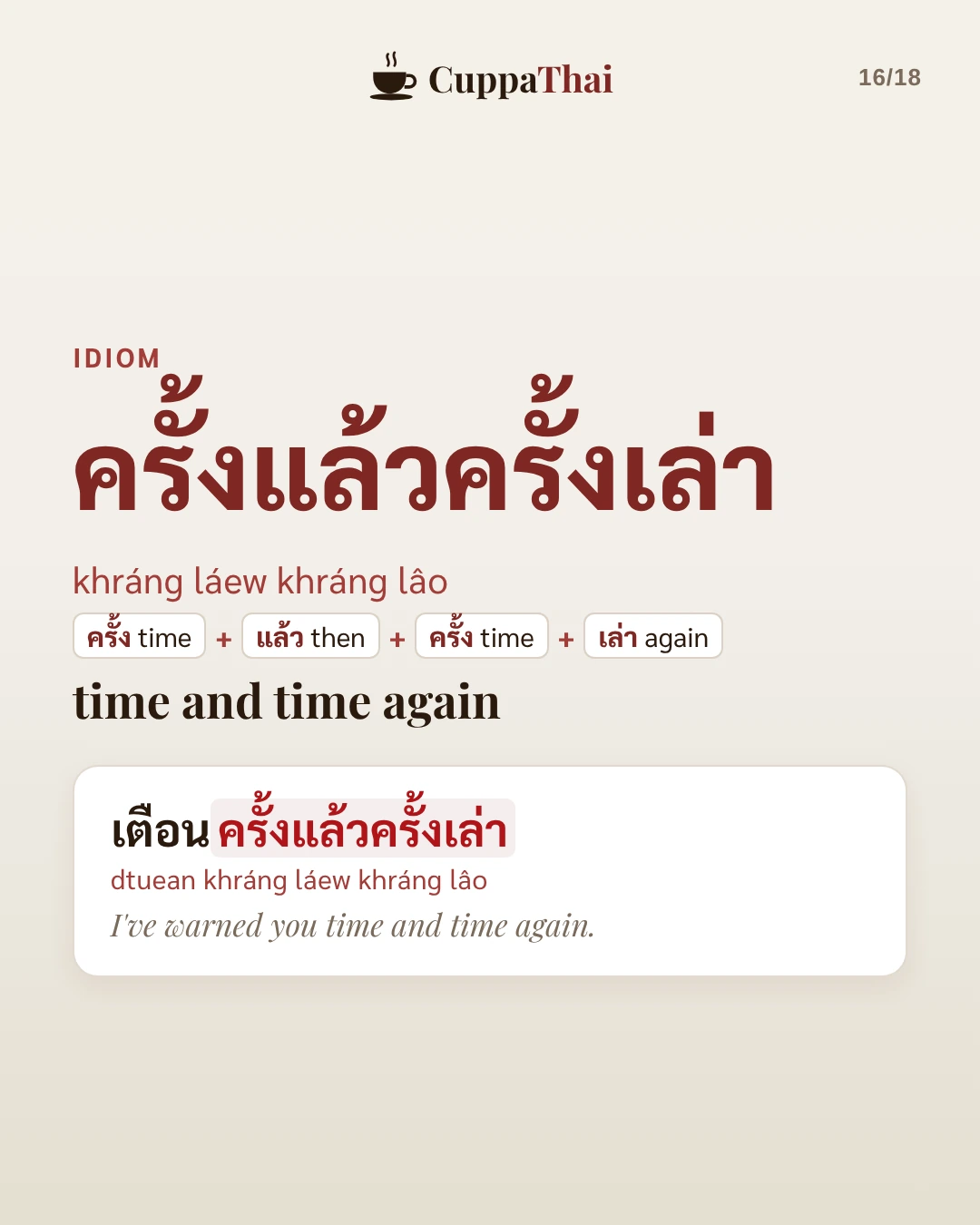
Idiom. ครั้งแล้วครั้งเล่า (khráng láew khráng lâo) means time and time again. Example: เตือนครั้งแล้วครั้งเล่า (dtueang khráng láew khráng lâo), I've warned you time and time again.
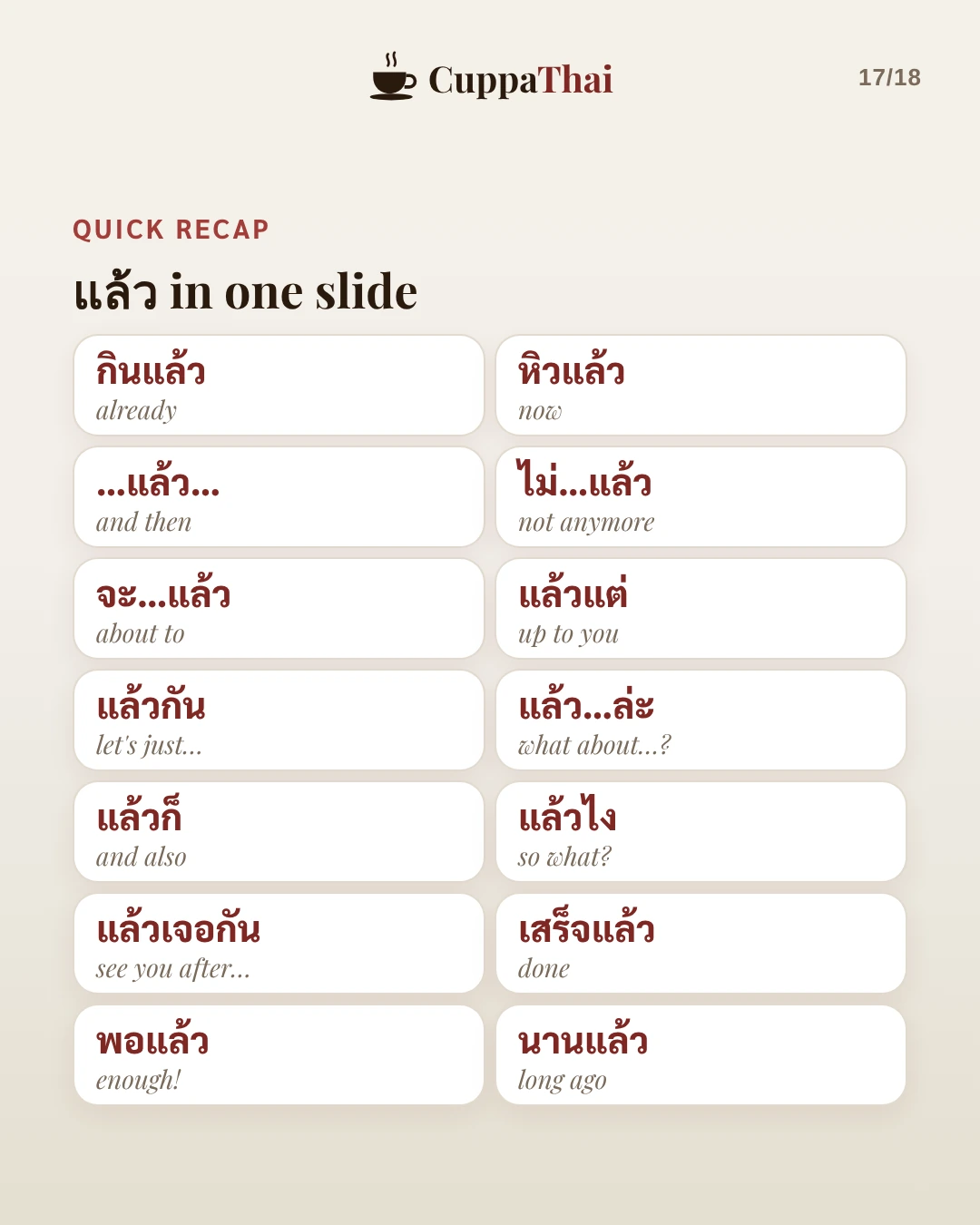
Quick recap: แล้ว in one slide. กินแล้ว already. หิวแล้ว now. ...แล้ว... and then. ไม่...แล้ว not anymore. จะ...แล้ว about to. แล้วแต่ up to you. แล้วกัน let's just... แล้ว...ล่ะ what about...? แล้วก็ and also. แล้วไง so what? แล้วเจอกัน see you after... เสร็จแล้ว done. พอแล้ว enough! นานแล้ว long ago.
Your turn. Which แล้ว trips you up the most? Save this. You'll use it every day. Learn to read Thai: real Thai, from someone who grew up here.

That's the lot 🎉

With full lesson explanations like these, plus live practice with a teacher, in English, in a small group or one-to-one, is the best and easiest way to learn.

See the live Thai classesMore free content
Read this as text
  1. Cover. The Thai word แล้ว (láew). One word, 20 uses. Already, now, and then… and so much more.
  2. The golden rule: where does แล้ว go? Verb + แล้ว means already (กินแล้ว, ate already). Adjective + แล้ว means now (หิวแล้ว, hungry now). ... แล้ว ... means and then (กินแล้วนอน, eat, then sleep). Same word, three jobs. Position tells you which.
  3. After a verb. กินแล้ว (gin láew) means already, done: the action is finished. Example: ทำการบ้านแล้ว (tham gaan-bâan láew), I've done my homework.
  4. After an adjective. หิวแล้ว (hǐw láew) means now: something changed. You weren't hungry before, but you are now. Example: ฝนตกแล้ว (fǒn dtòk láew), It's raining now.
  5. Between actions. แล้ว (láew) means and then. Chain as many as you like: กินข้าวแล้วไปดูหนังแล้วกลับบ้าน. Example: อาบน้ำแล้วนอน (àap-náam láew non), Shower, then sleep.
  6. The heartbreak one. ไม่...แล้ว (mâi ... láew) means not anymore. It works with anything: ไม่หิวแล้ว means not hungry anymore. Example: ไม่รักแล้ว (mâi rák láew), I don't love you anymore.
  7. About to happen. จะ...แล้ว (jà ... láew) means about to. "Almost there!" is everyone's favourite white lie, in any language. It usually means 20 more minutes. Example: จะถึงแล้ว (jà thǔeng láew), Almost there!
  8. แล้ว versus ยัง. แล้ว (láew) means yes, already: กินข้าวหรือยัง → แล้ว, Have you eaten yet? Yes, already. ยัง (yang) means not yet: กินข้าวหรือยัง → ยัง, Have you eaten yet? Not yet. Answer any หรือยัง question with just one word.
  9. Up to you. แล้วแต่ (láew dtàe) means up to you, it depends. Also: แล้วแต่อากาศ means it depends on the weather. Example: แล้วแต่คุณ (láew dtàe khun), Up to you.
  10. Settling it. แล้วกัน (láew gan) means let's just... or ...then. Spot the เอา from our first carousel. Example: เอาอันนี้แล้วกัน (ao an-níi láew gan), I'll just take this one then.
  11. What about...? แล้ว...ล่ะ (láew ... lâ) means what about...? It works with people and things. Examples: แล้วคุณล่ะ (láew khun lâ), What about you? แล้วรถล่ะ (láew rót lâ), What about the car?
  12. Keep it going. แล้วก็ (láew gôr) means and also: ซื้อข้าวแล้วก็น้ำ (súe khâao láew gôr náam), Buy rice and also water. แล้วไง (láew ngai) means so what?: แล้วไง ใครสน (láew ngai, khrai sǒn), So what? Who cares?
  13. Stories and goodbyes. แล้วยังไงต่อ (láew yang-ngai dtòr), and then what?: แล้วยังไงต่อ เล่าอีก (láew yang-ngai dtòr, lâo iik), And then what? Keep going! แล้วเจอกัน (láew joe gan), see you after...: เลิกงานแล้วเจอกัน (lôek ngaan láew joe gan), See you after work.
  14. Wrapping up. เสร็จแล้ว (sèt láew), done, finished: ทำเสร็จแล้ว (tham sèt láew), All done! พอแล้ว (phor láew), that's enough!: พอแล้ว ไม่กินแล้ว (phor láew, mâi gin láew), That's enough, I'm full.
  15. Everyday extras. ดีแล้ว (dii láew), that's good, good thing: ดีแล้วที่มา (dii láew thîi maa), Good thing you came. นานแล้ว (naan láew), a long time ago: นานแล้วไม่เจอ (naan láew mâi joe), Long time no see. ไปแล้ว (bpai láew), gone, I'm off: ไปแล้วนะ (bpai láew ná), I'm off!
  16. Idiom. ครั้งแล้วครั้งเล่า (khráng láew khráng lâo) means time and time again. Example: เตือนครั้งแล้วครั้งเล่า (dtueang khráng láew khráng lâo), I've warned you time and time again.
  17. Quick recap: แล้ว in one slide. กินแล้ว already. หิวแล้ว now. ...แล้ว... and then. ไม่...แล้ว not anymore. จะ...แล้ว about to. แล้วแต่ up to you. แล้วกัน let's just... แล้ว...ล่ะ what about...? แล้วก็ and also. แล้วไง so what? แล้วเจอกัน see you after... เสร็จแล้ว done. พอแล้ว enough! นานแล้ว long ago.
  18. Your turn. Which แล้ว trips you up the most? Save this. You'll use it every day. Learn to read Thai: real Thai, from someone who grew up here.

Like how we teach? Practise this live with a teacher, in English, in a small group or one-to-one.

See the live Thai classes

More like this

Pinch to zoom · drag to move · double-tap to zoom