
ได้ (dâi) and all its different uses
The little word ได้ can mean get, can, did, okay and more, depending on where it sits in the sentence. Learn the three positions, then the everyday expressions.

That's the lot 🎉
With full lesson explanations like these, plus live practice with a teacher, in English, in a small group or one-to-one, is the best and easiest way to learn.
See the live Thai classesMore free contentRead this as text
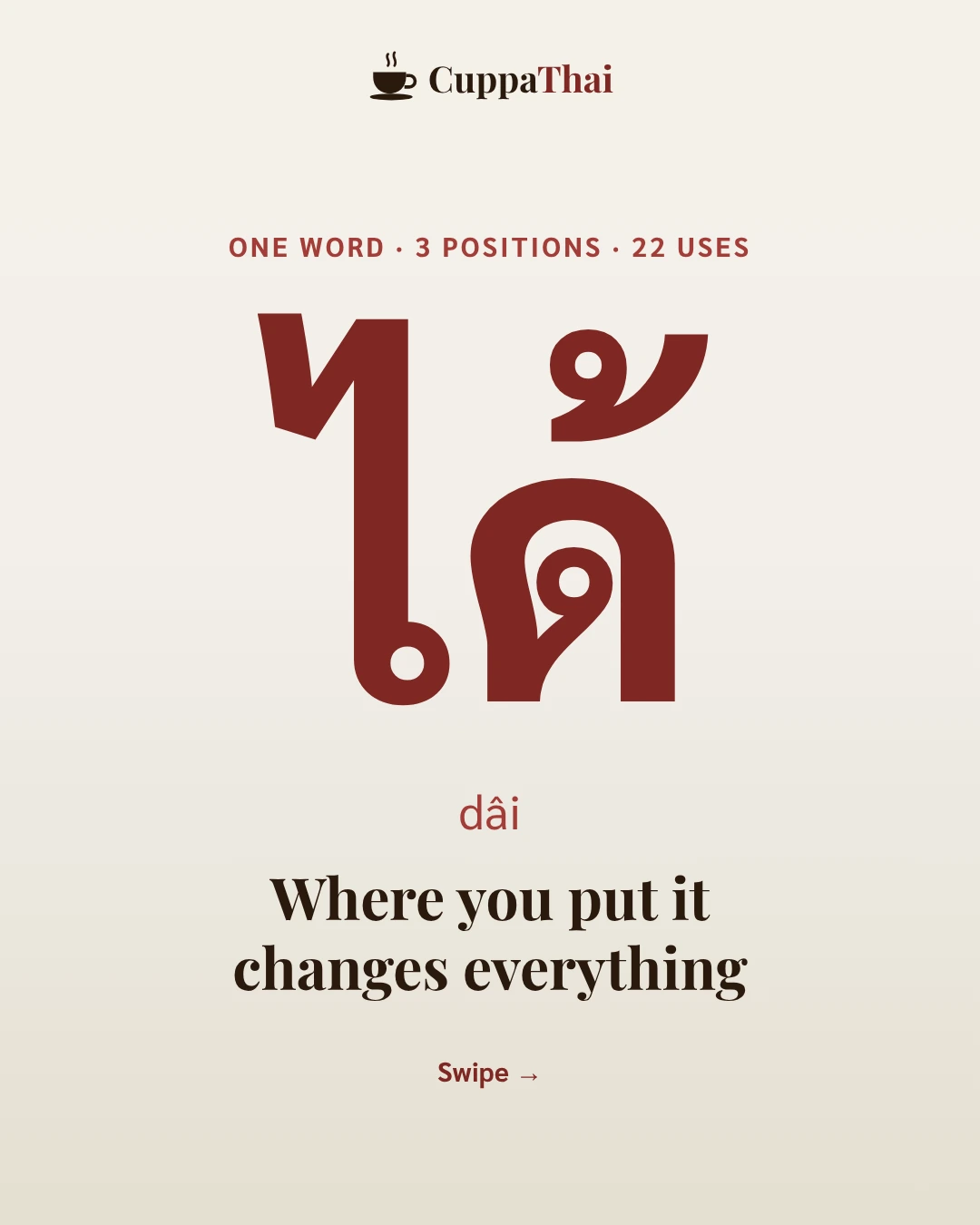
- Cover. The Thai word ได้ (dâi). One word, 3 positions, 22 uses. Where you put it changes everything.
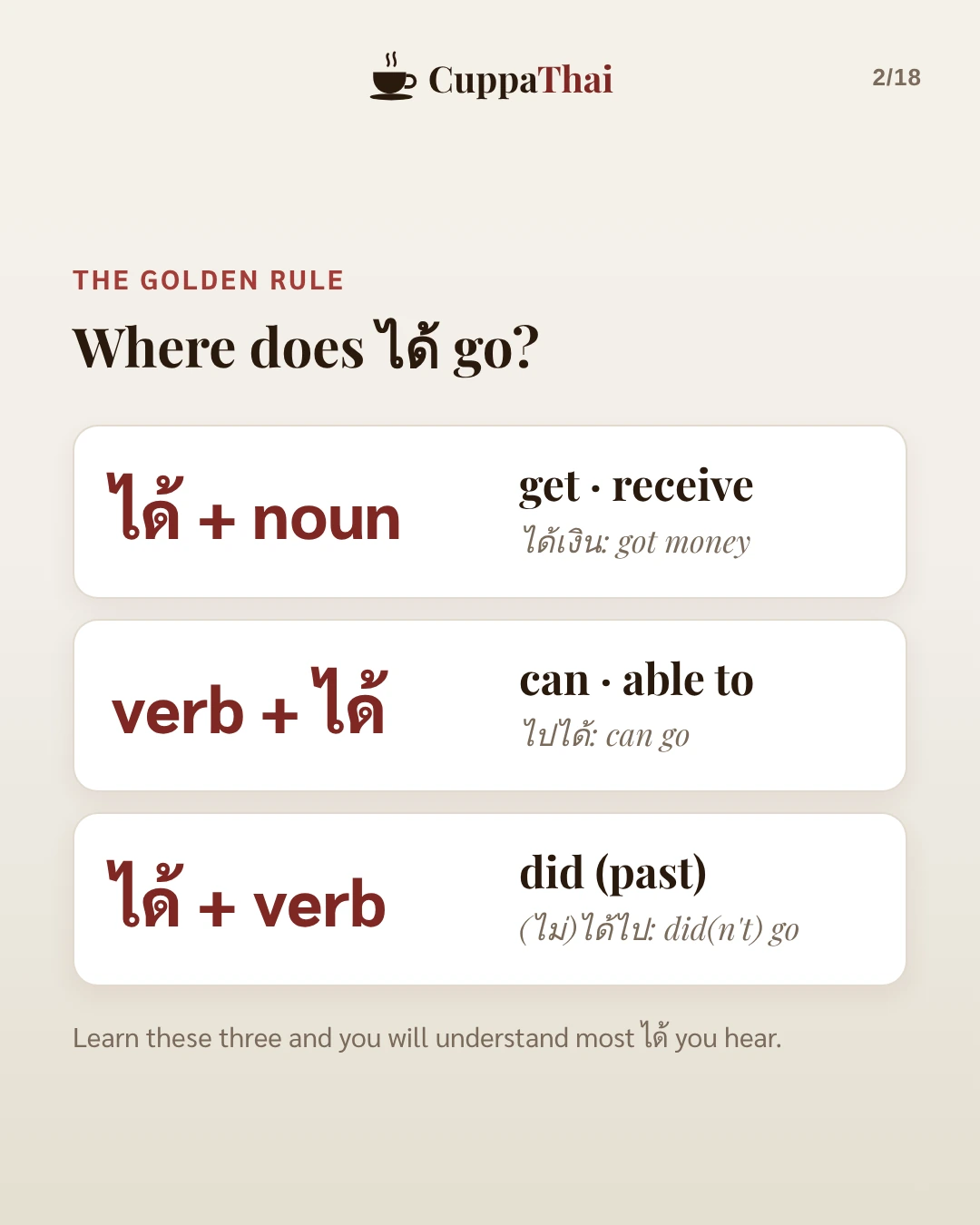
- The golden rule: where does ได้ go? ได้ + noun means get, receive (ได้เงิน, got money). Verb + ได้ means can, able to (ไปได้, can go). ได้ + verb means did, in the past ((ไม่)ได้ไป, did(n't) go). Learn these three and you will understand most ได้ you hear.
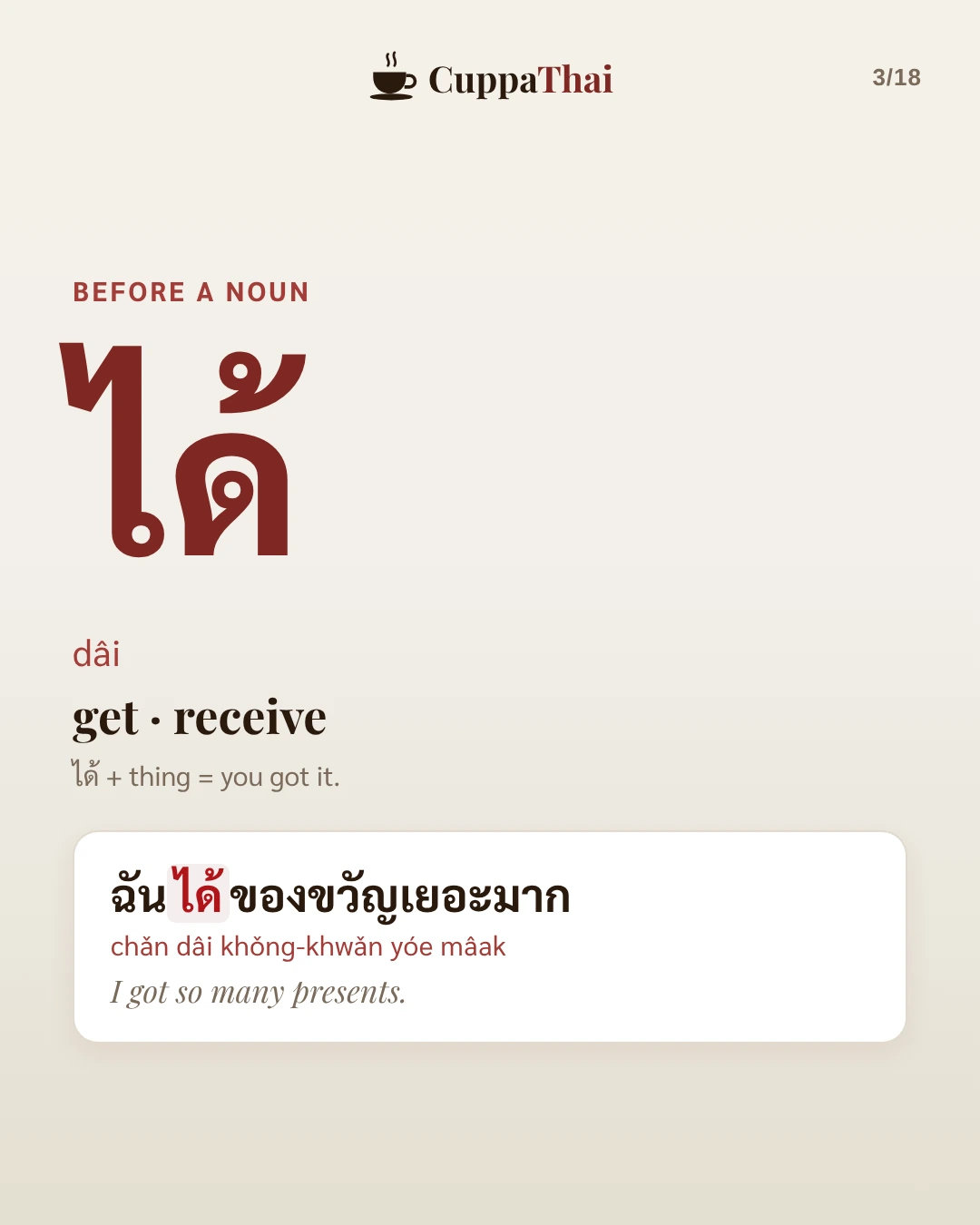
- Before a noun. ได้ (dâi) means get, receive. ได้ + thing = you got it. Example: ฉันได้ของขวัญเยอะมาก (chǎn dâi khǒng-khwǎn yóe mâak), I got so many presents.
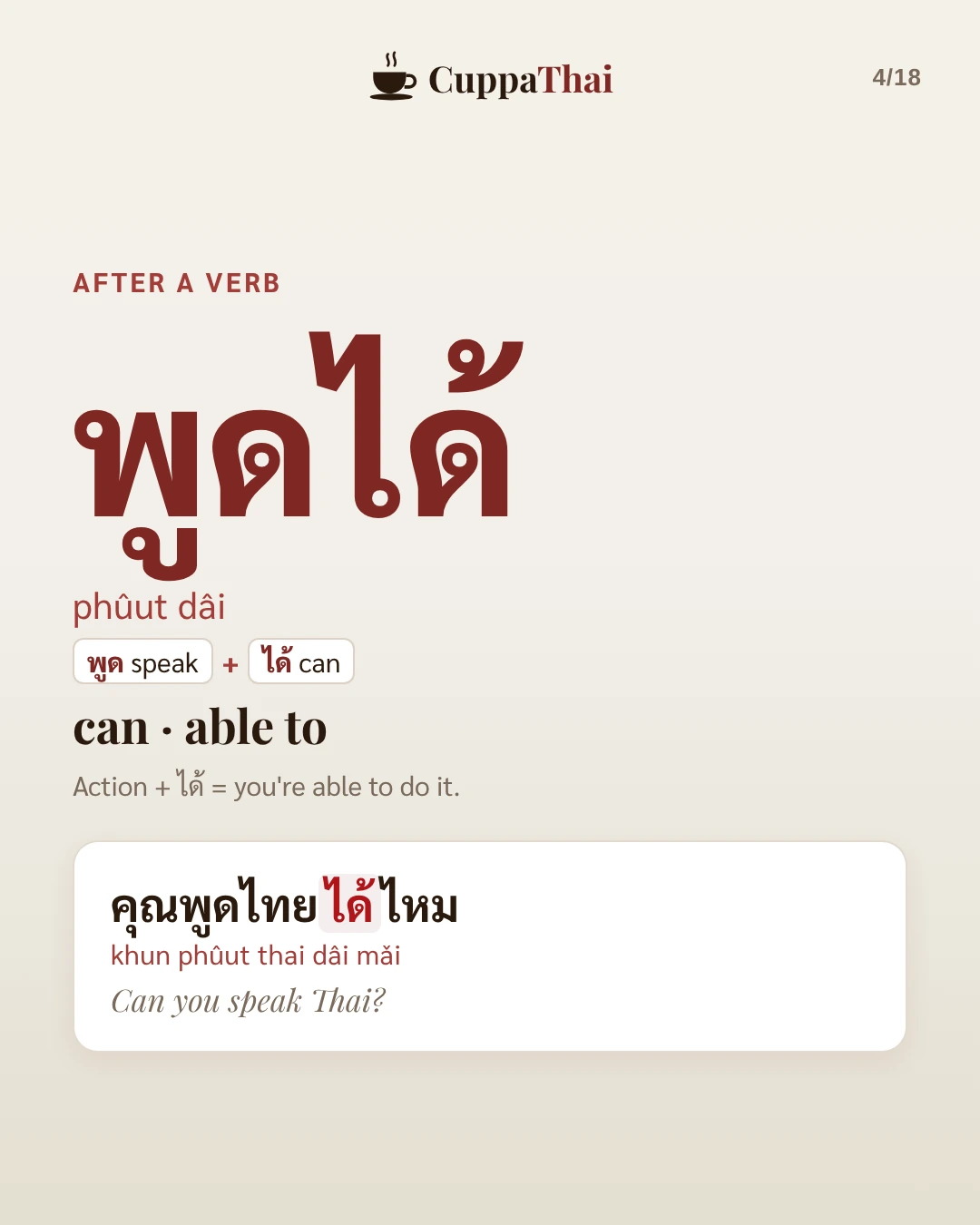
- After a verb. พูดได้ (phûut dâi) means can, able to: พูด speak + ได้ can. Action + ได้ = you're able to do it. Example: คุณพูดไทยได้ไหม (khun phûut thai dâi mǎi), Can you speak Thai?
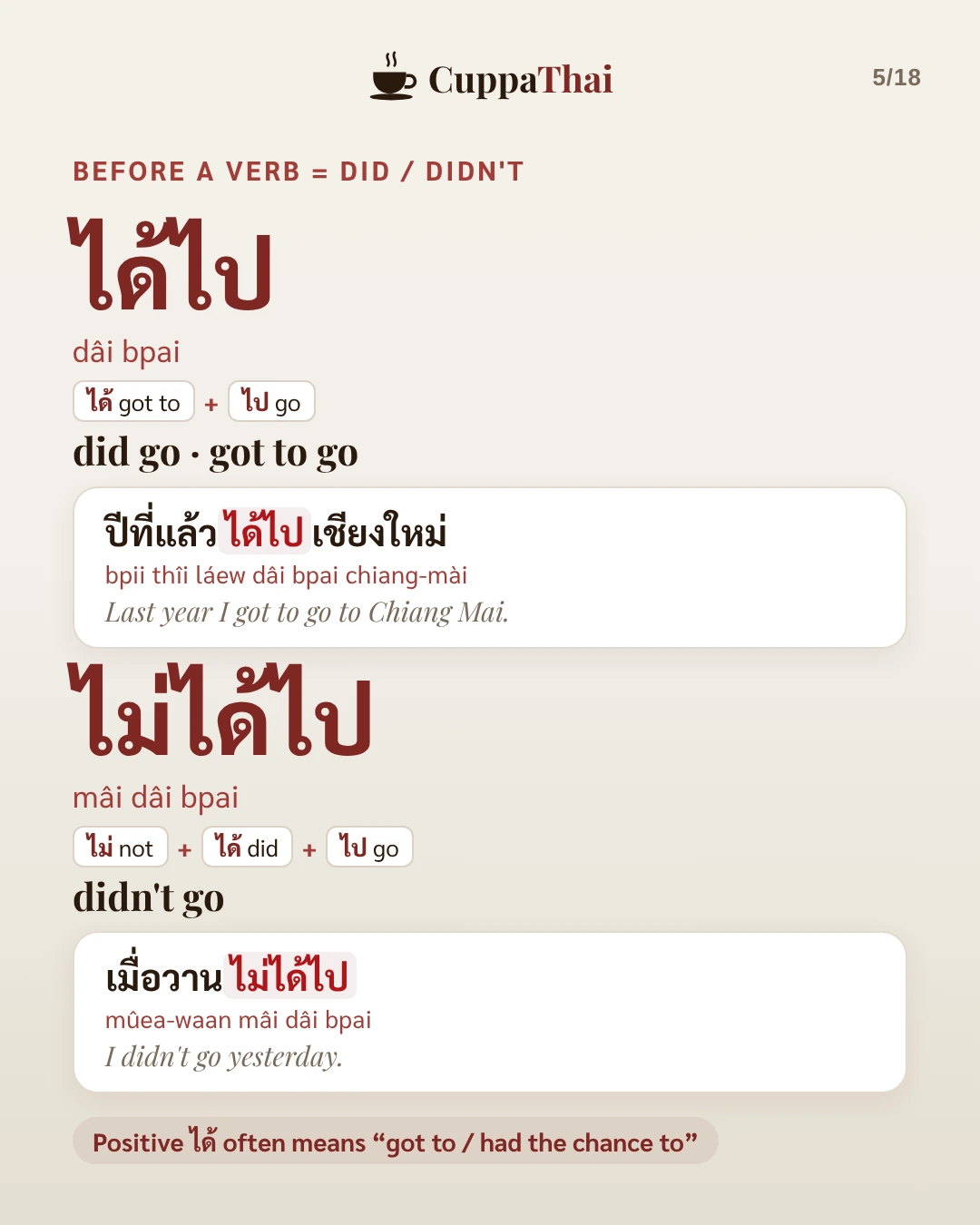
- Before a verb means did or didn't. ได้ไป (dâi bpai), did go, got to go: ปีที่แล้วได้ไปเชียงใหม่ (bpii thîi láew dâi bpai chiang-mài), Last year I got to go to Chiang Mai. ไม่ได้ไป (mâi dâi bpai), didn't go: เมื่อวานไม่ได้ไป (mûea-waan mâi dâi bpai), I didn't go yesterday. Positive ได้ often means "got to / had the chance to".
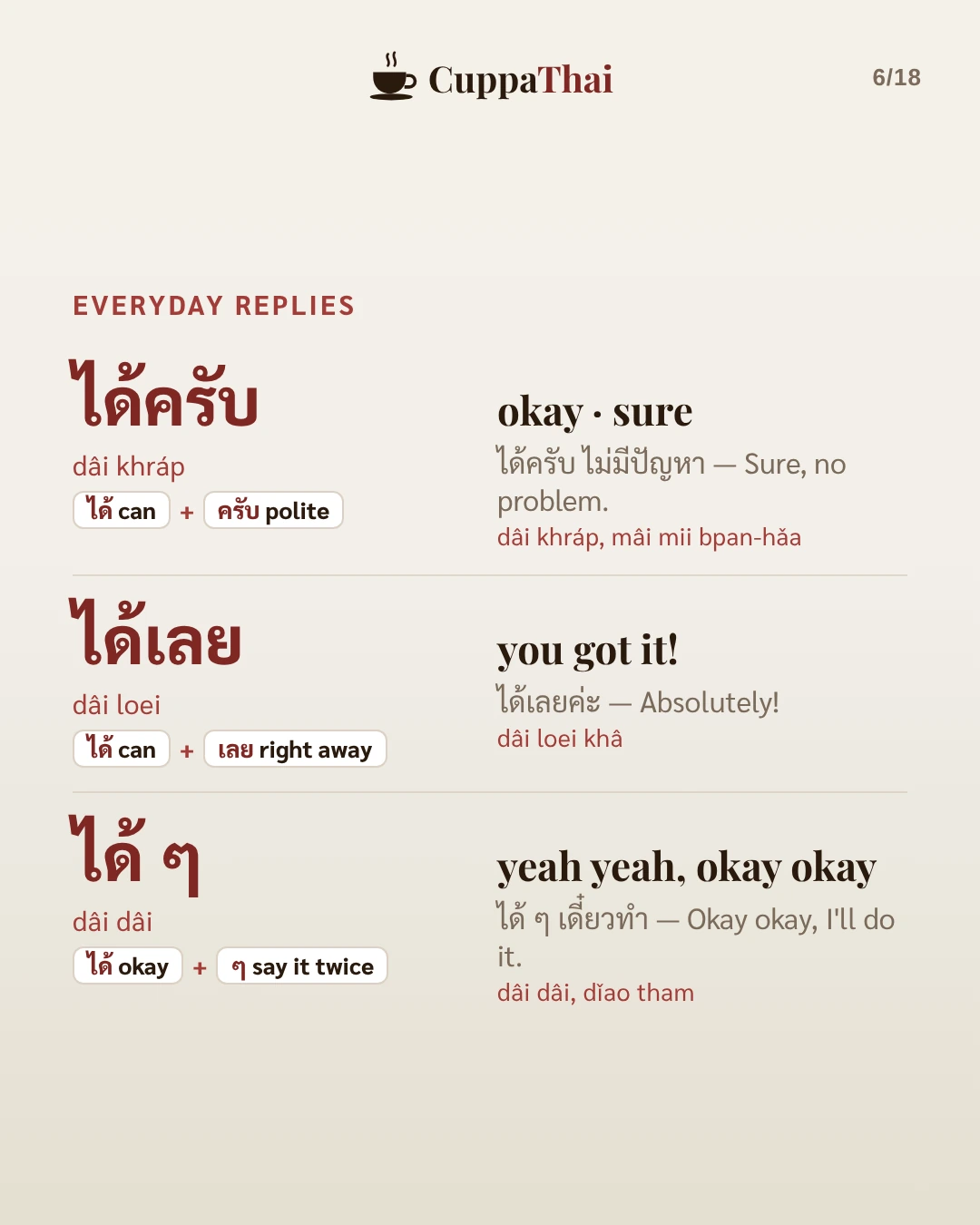
- Everyday replies. ได้ครับ (dâi khráp), okay, sure: ได้ครับ ไม่มีปัญหา, Sure, no problem. ได้เลย (dâi loei), you got it: ได้เลยค่ะ, Absolutely! ได้ ๆ (dâi dâi), yeah yeah, okay okay: ได้ ๆ เดี๋ยวทำ (dâi dâi, dǐao tham), Okay okay, I'll do it.
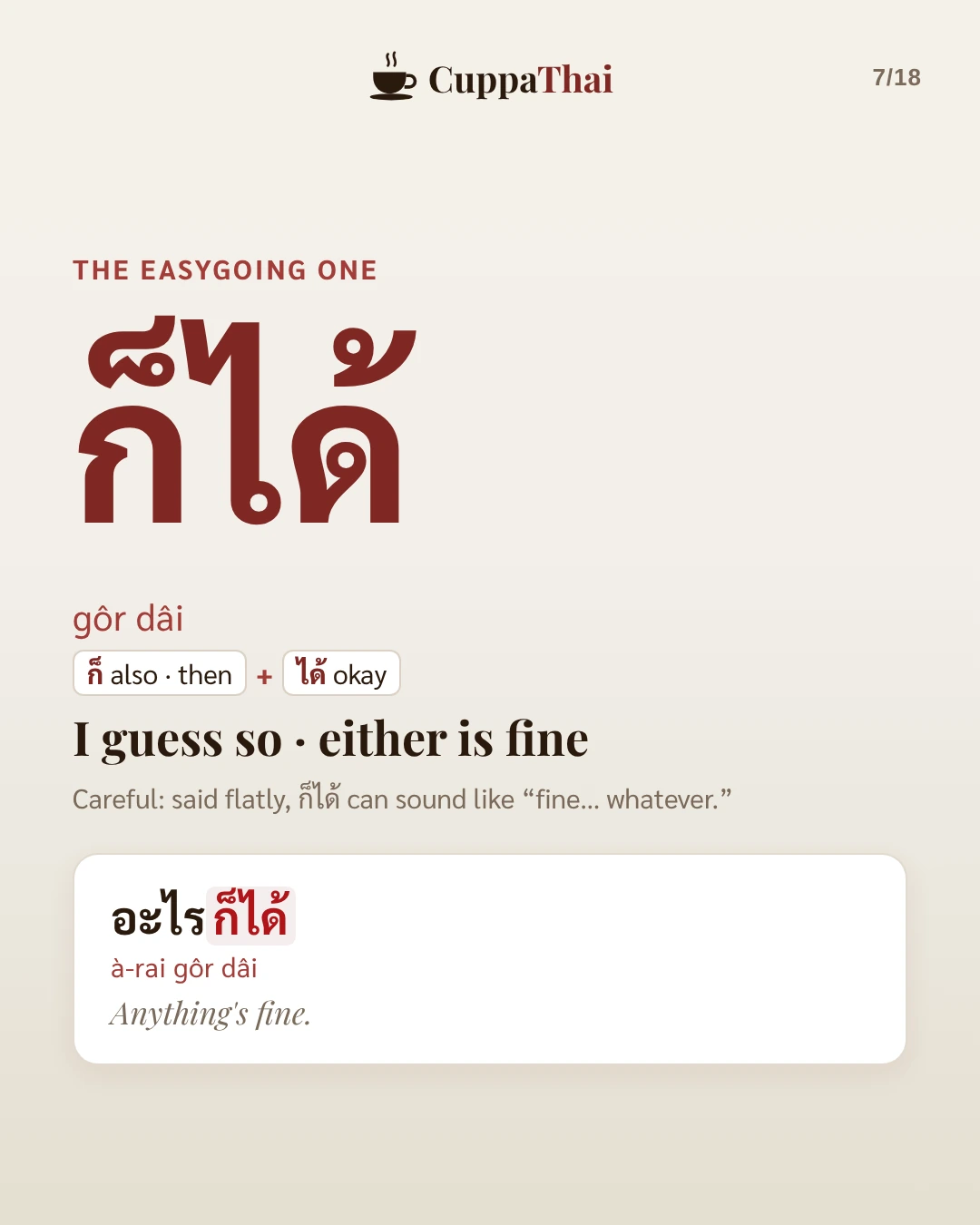
- The easygoing one. ก็ได้ (gôr dâi) means I guess so, either is fine. Careful: said flatly, ก็ได้ can sound like "fine... whatever." Example: อะไรก็ได้ (à-rai gôr dâi), Anything's fine.
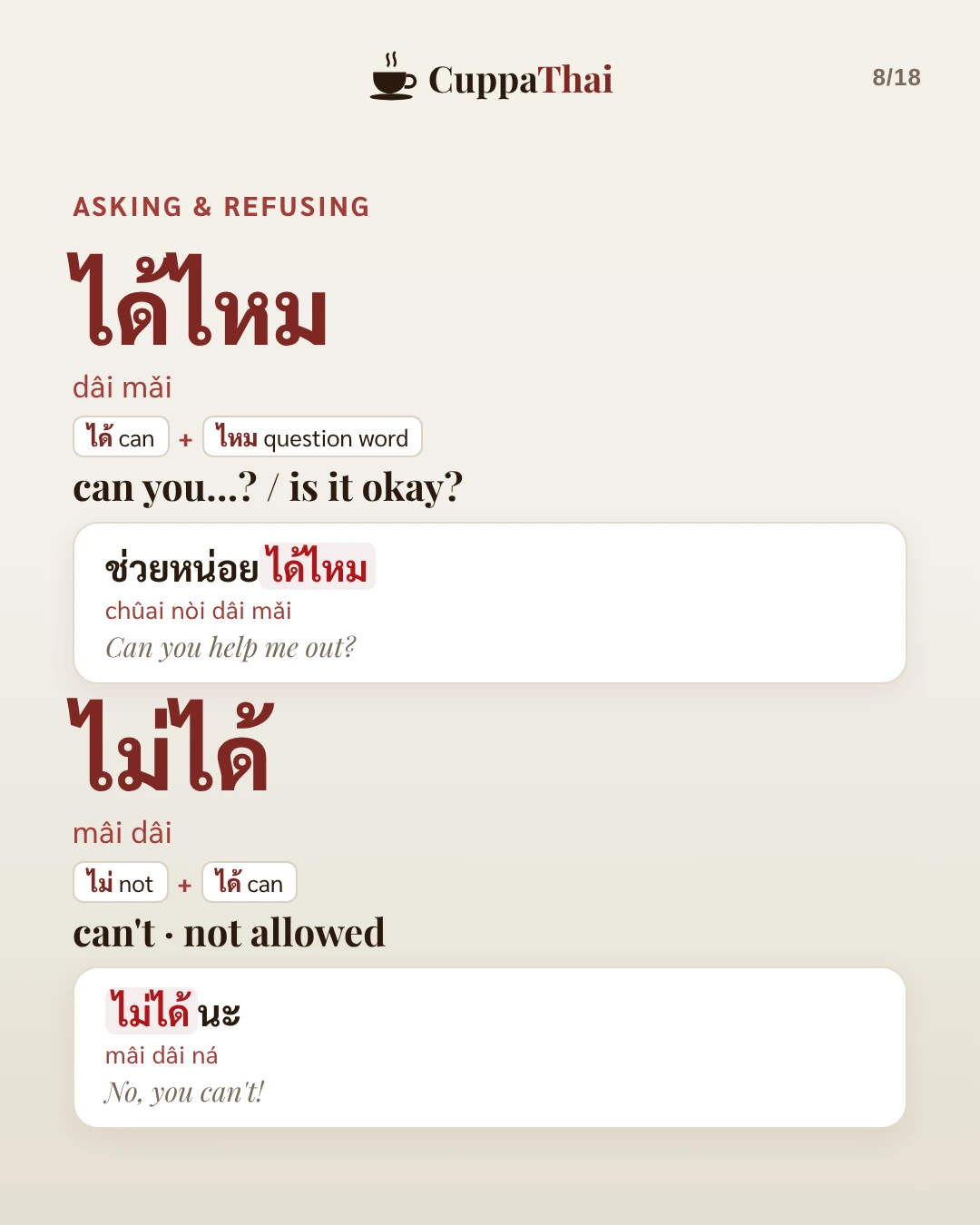
- Asking and refusing. ได้ไหม (dâi mǎi), can you...? is it okay?: ช่วยหน่อยได้ไหม (chûai nòi dâi mǎi), Can you help me out? ไม่ได้ (mâi dâi), can't, not allowed: ไม่ได้นะ (mâi dâi ná), No, you can't!
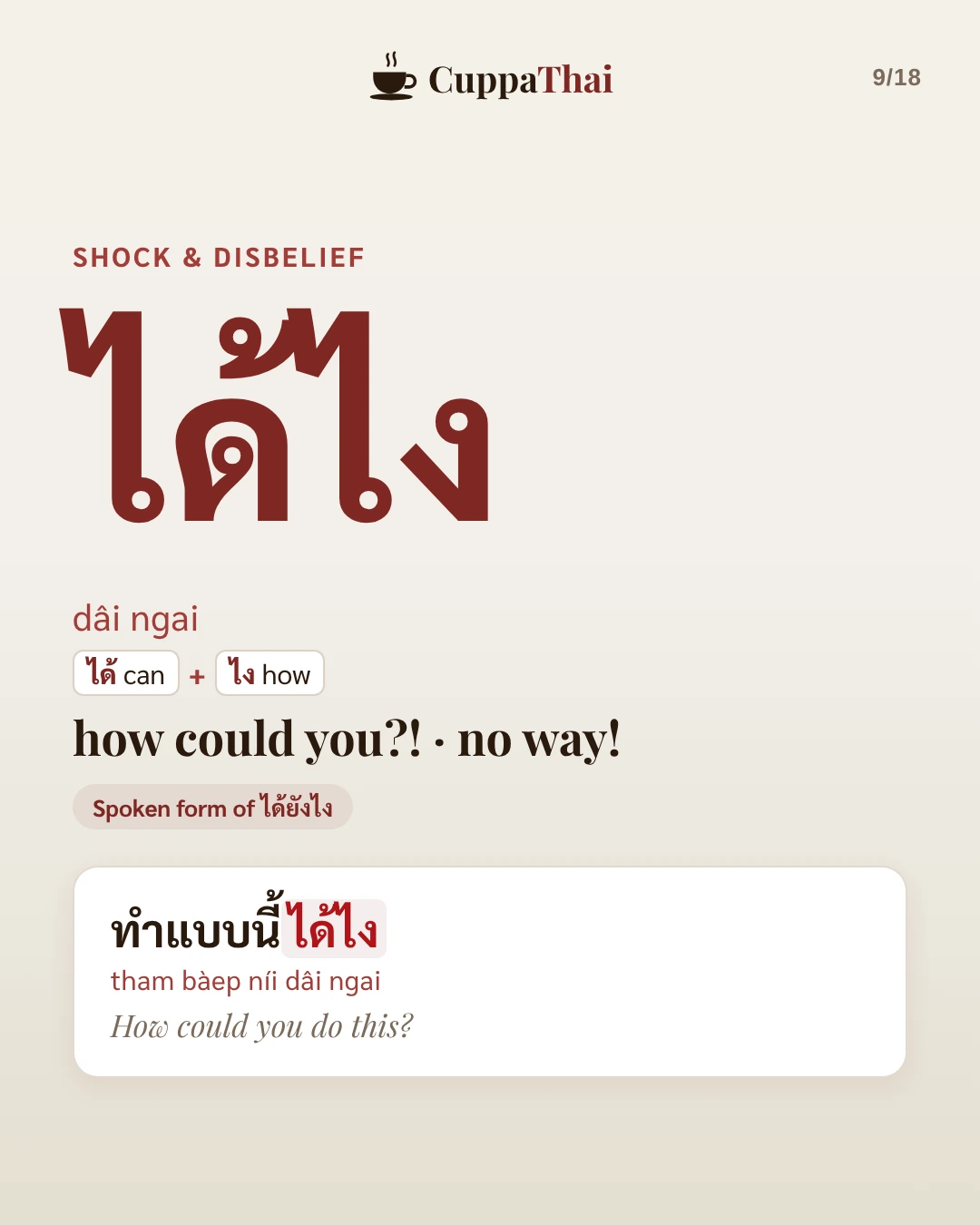
- Shock and disbelief. ได้ไง (dâi ngai) means how could you?! no way! It is the spoken form of ได้ยังไง. Example: ทำแบบนี้ได้ไง (tham bàep níi dâi ngai), How could you do this?
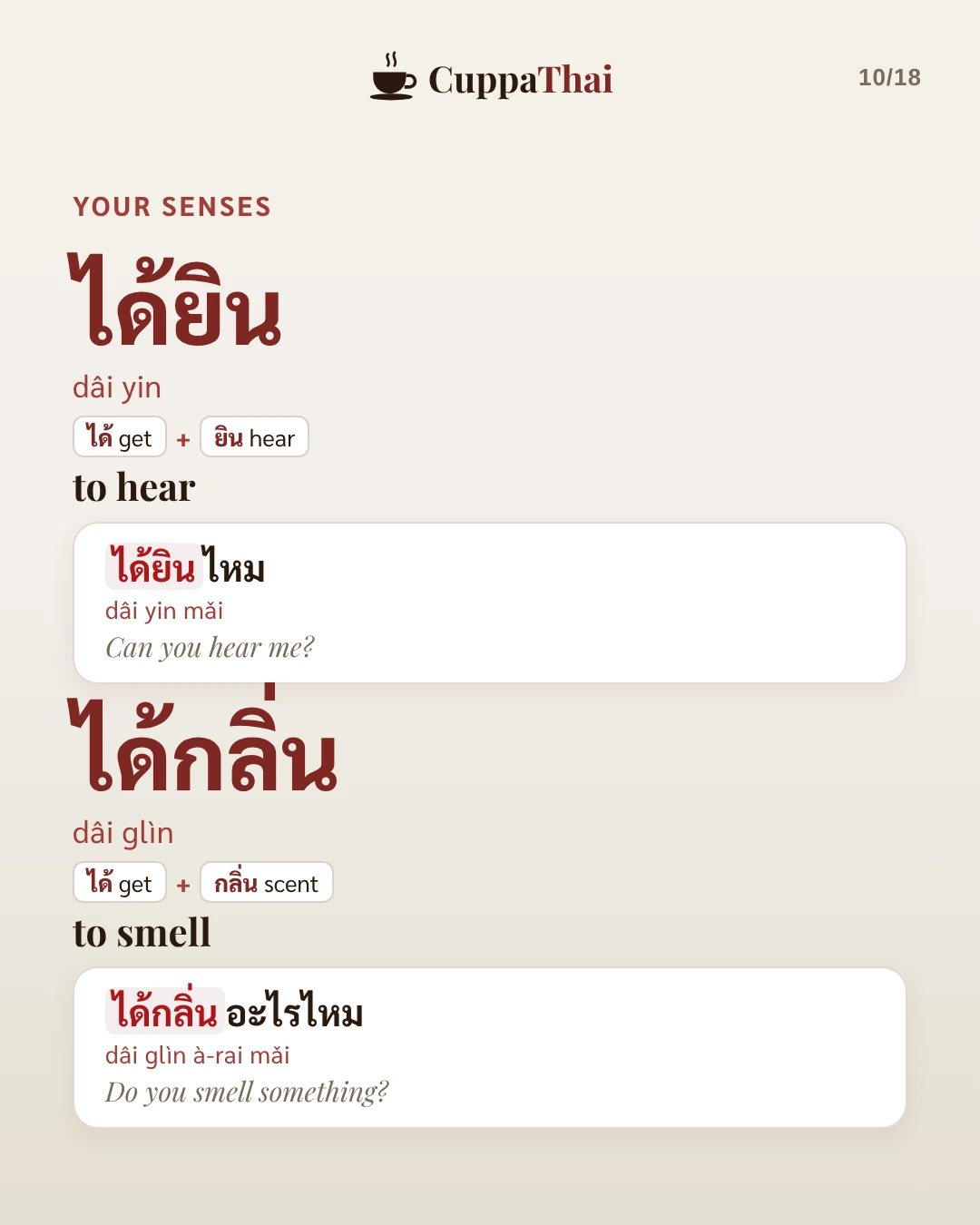
- Your senses. ได้ยิน (dâi yin), to hear: ได้ยินไหม (dâi yin mǎi), Can you hear me? ได้กลิ่น (dâi glìn), to smell: ได้กลิ่นอะไรไหม (dâi glìn à-rai mǎi), Do you smell something?
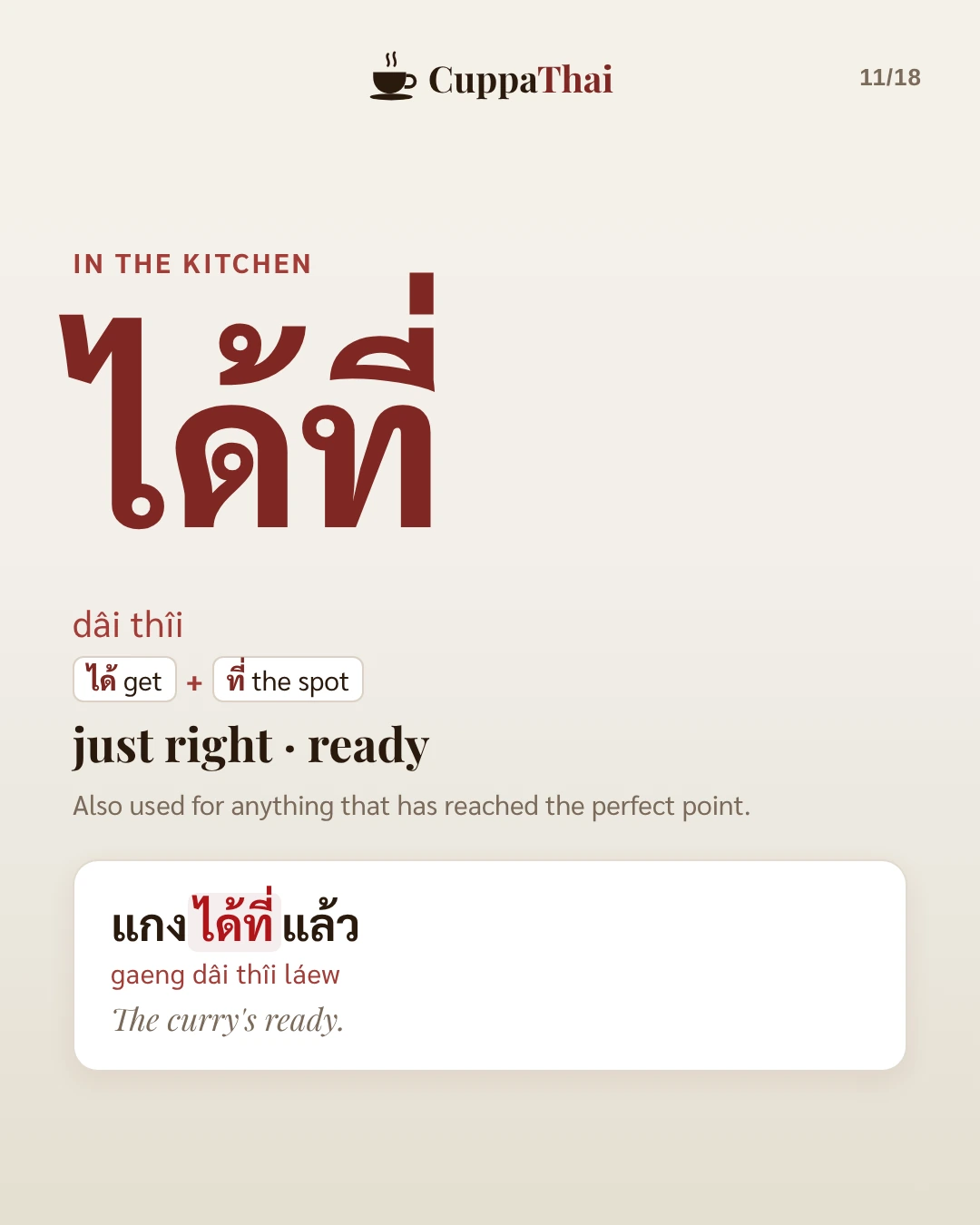
- In the kitchen. ได้ที่ (dâi thîi) means just right, ready. Also used for anything that has reached the perfect point. Example: แกงได้ที่แล้ว (gaeng dâi thîi láew), The curry's ready.
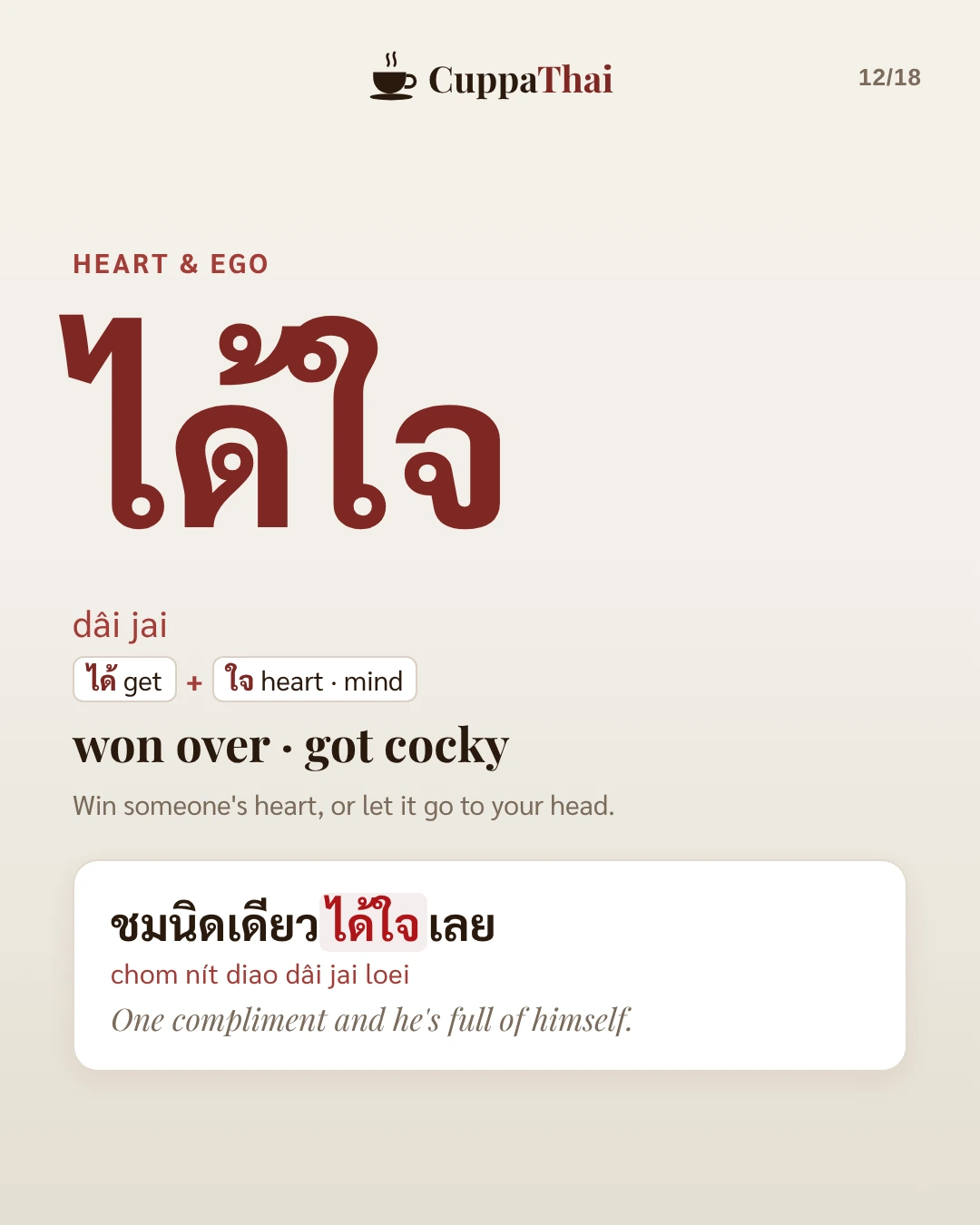
- Heart and ego. ได้ใจ (dâi jai) means won over, got cocky: win someone's heart, or let it go to your head. Example: ชมนิดเดียวได้ใจเลย (chom nít diao dâi jai loei), One compliment and he's full of himself.
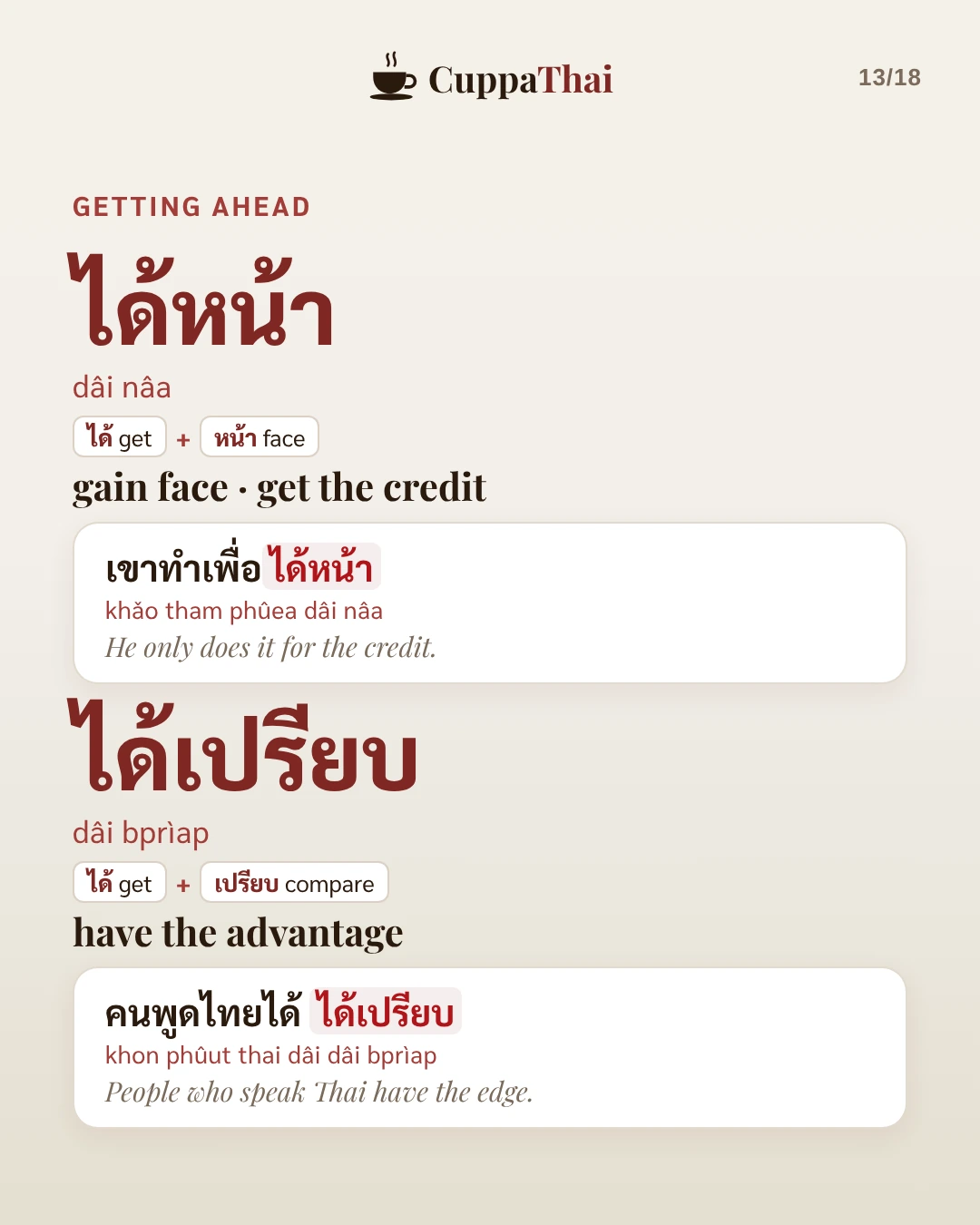
- Getting ahead. ได้หน้า (dâi nâa), gain face, get the credit: เขาทำเพื่อได้หน้า (khǎo tham phûea dâi nâa), He only does it for the credit. ได้เปรียบ (dâi bpriap), have the advantage: คนพูดไทยได้ได้เปรียบ (khon phûut thai dâi dâi bpriap), People who speak Thai have the edge.
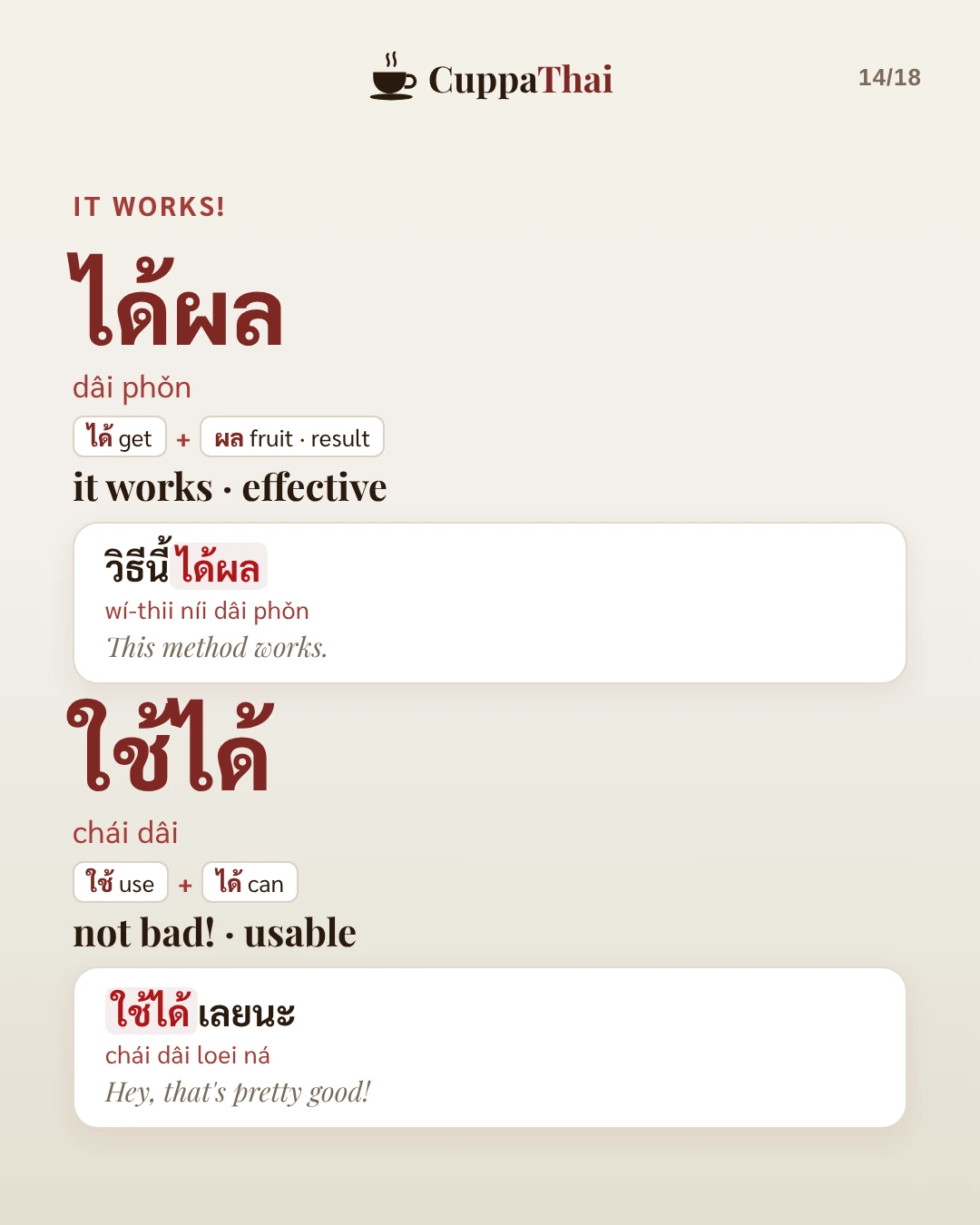
- It works! ได้ผล (dâi phǒn), it works, effective: วิธีนี้ได้ผล (wí-thii níi dâi phǒn), This method works. ใช้ได้ (chái dâi), not bad, usable: ใช้ได้เลยนะ (chái dâi loei ná), Hey, that's pretty good!
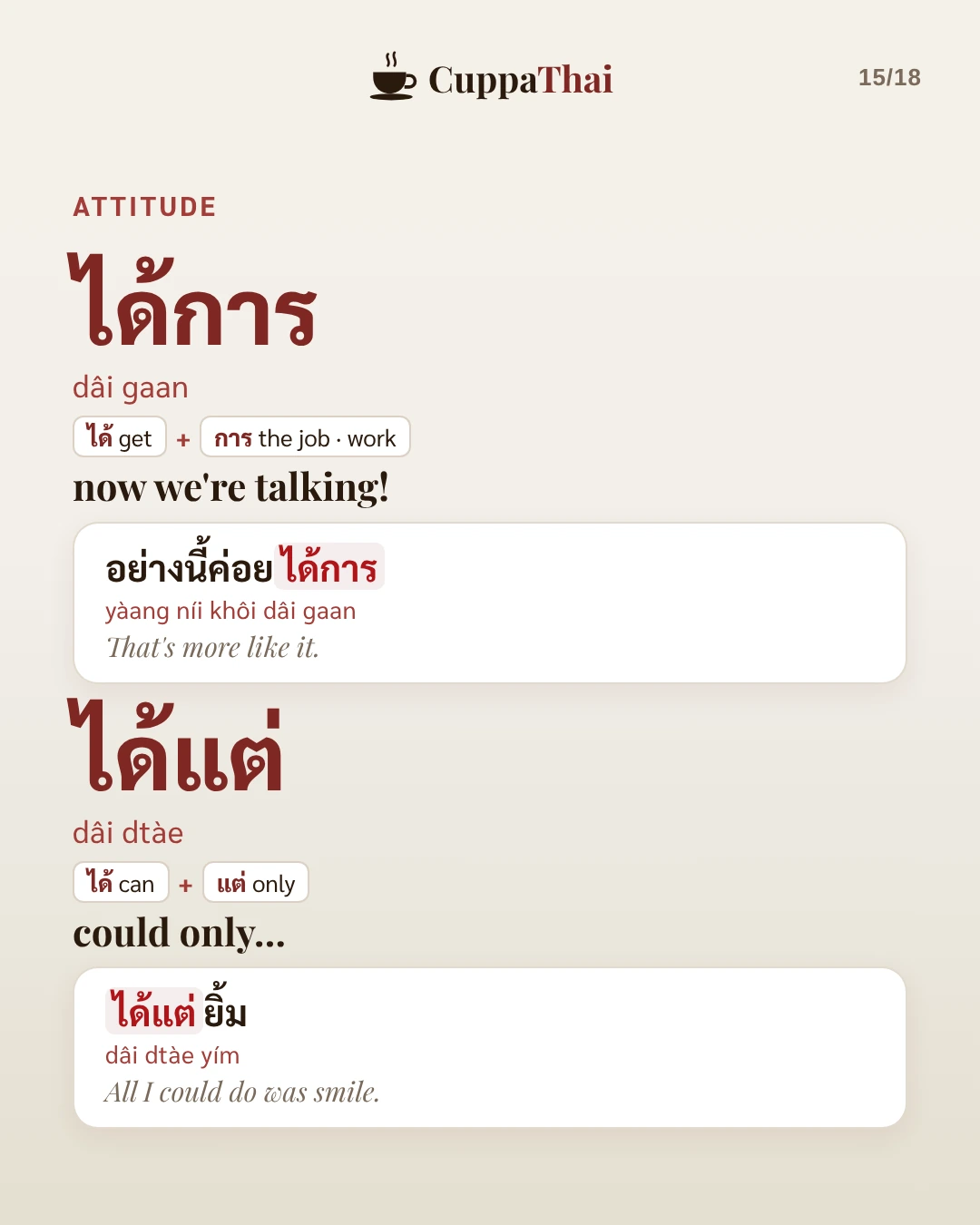
- Attitude. ได้การ (dâi gaan), now we're talking: อย่างนี้ค่อยได้การ (yàang níi khôi dâi gaan), That's more like it. ได้แต่ (dâi dtàe), could only...: ได้แต่ยิ้ม (dâi dtàe yím), All I could do was smile.
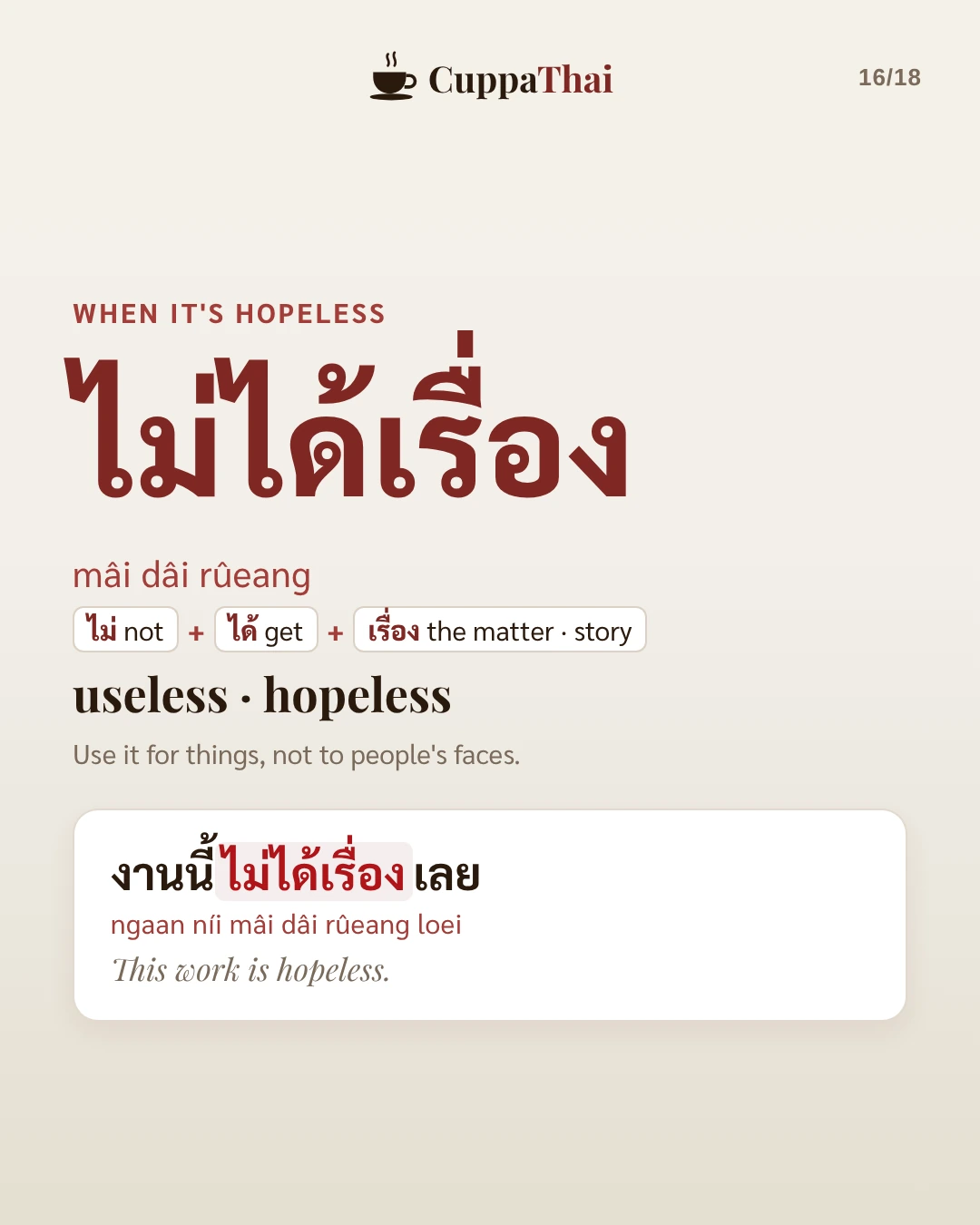
- When it's hopeless. ไม่ได้เรื่อง (mâi dâi rûeang) means useless, hopeless. Use it for things, not for people's faces. Example: งานนี้ไม่ได้เรื่องเลย (ngaan níi mâi dâi rûeang loei), This work is hopeless.
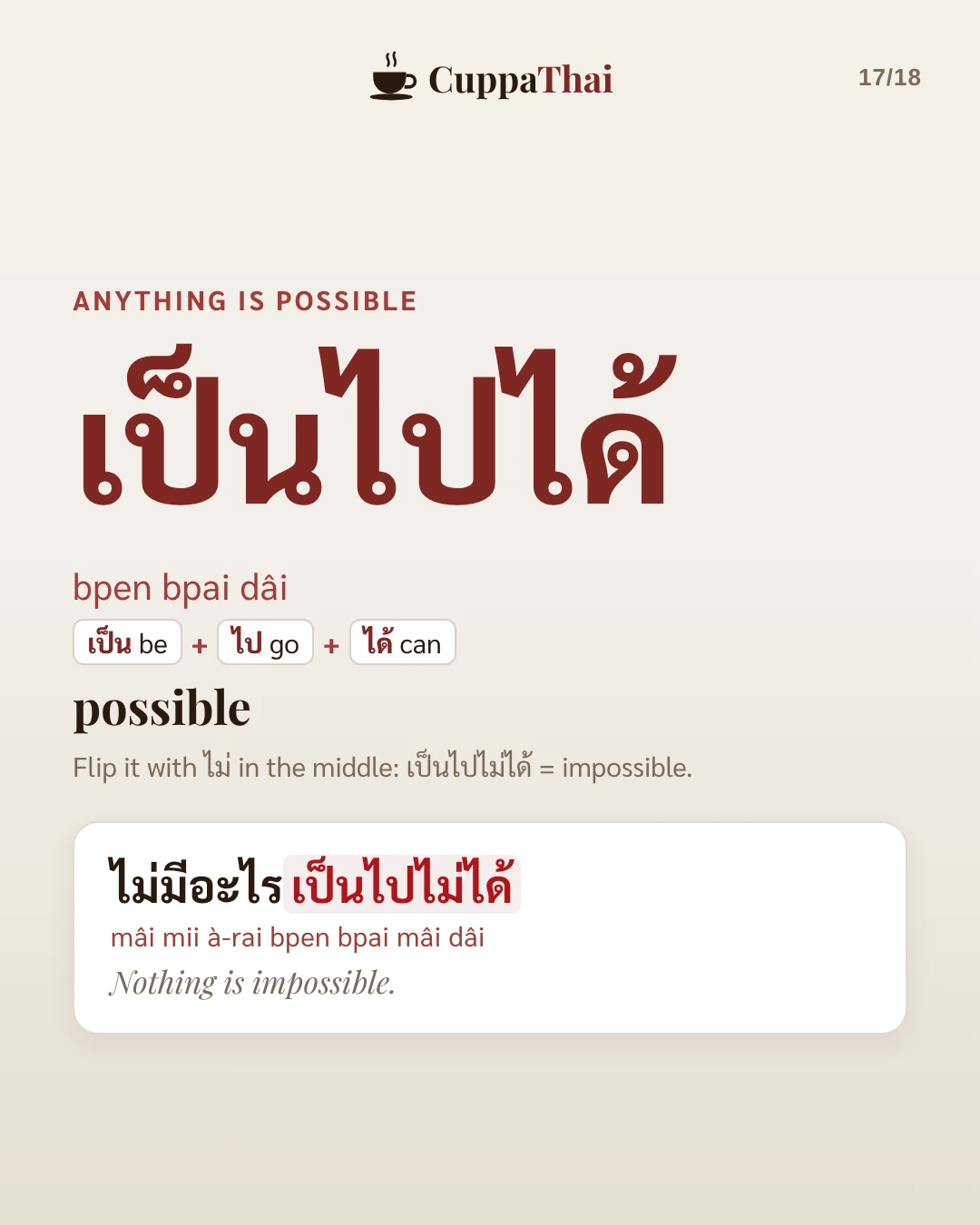
- Anything is possible. เป็นไปได้ (bpen bpai dâi) means possible. Flip it with ไม่ in the middle: เป็นไปไม่ได้ means impossible. Example: ไม่มีอะไรเป็นไปไม่ได้ (mâi mii à-rai bpen bpai mâi dâi), Nothing is impossible.
- Your turn. Which ได้ trips you up the most? Save this. You'll need it daily. Learn to read Thai: real Thai, from someone who grew up here.
Like how we teach? Practise this live with a teacher, in English, in a small group or one-to-one.
See the live Thai classesMore like this
ให้ (hâi): the word that passes things on
Give, let, for, make... Eight meanings of ให้, useful compounds like ให้อภัย and ปล่อยให้, and why it is spelled with ใ, not ไ.
เลย (loei): one word, a lot of moods
At all, so, right away and even "go past". Seven meanings of เลย, everyday replies and the vowel that wraps around.
ยัง (yang): small word, big job
Still, not yet, yet?, at least, towards and how. Six meanings of ยัง, plus spoken short forms and common expressions.