
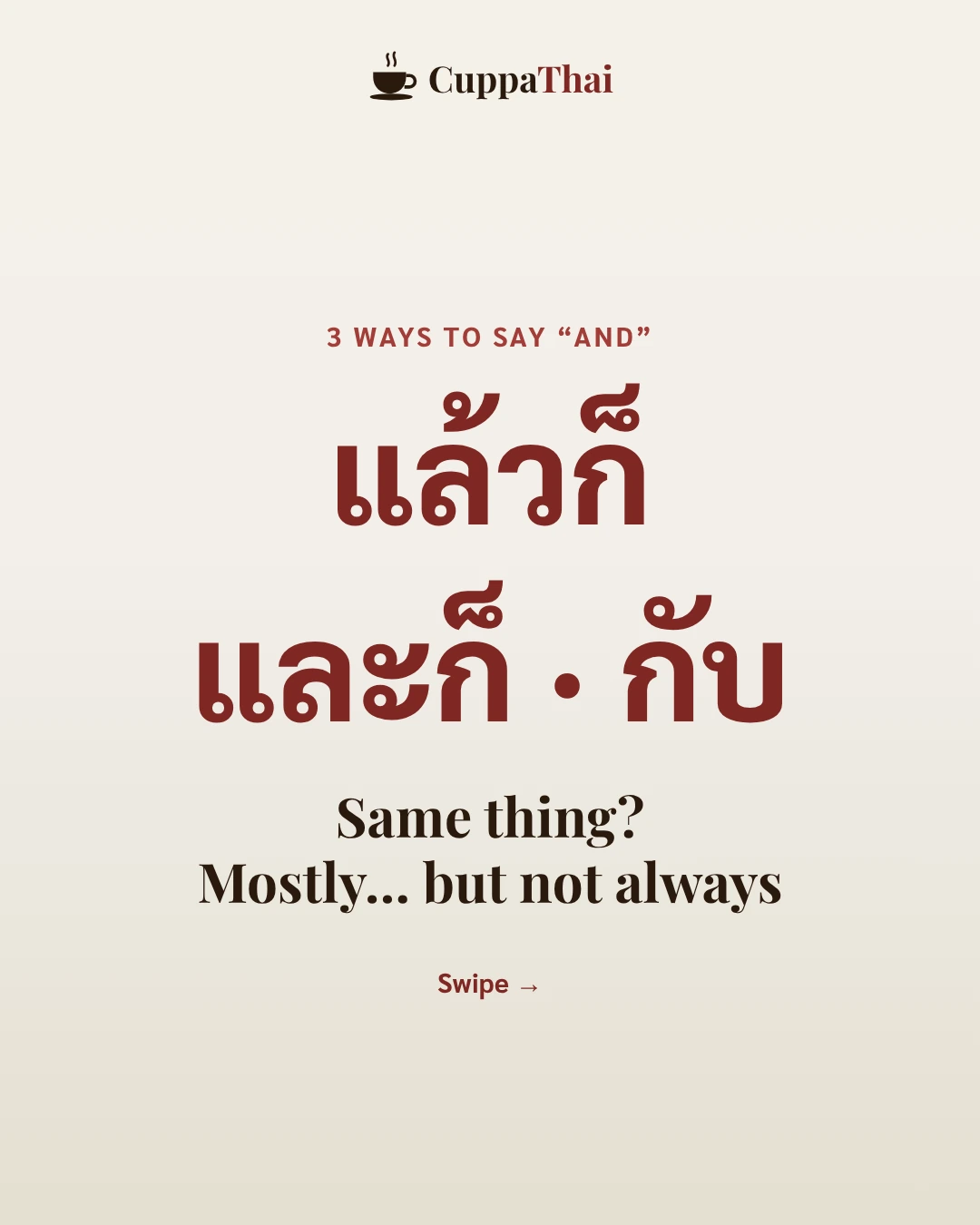
แล้วก็, และก็, กับ: 3 ways to say "and"
In casual speech แล้วก็ and และก็ often swap with no change in meaning. Swipe to see where they differ, and when กับ is the right choice.
That's the lot 🎉
With full lesson explanations like these, plus live practice with a teacher, in English, in a small group or one-to-one, is the best and easiest way to learn.
See the live Thai classesMore free contentRead this as text
- Cover. 3 ways to say and: แล้วก็, และก็, กับ. Same thing? Mostly… but not always.
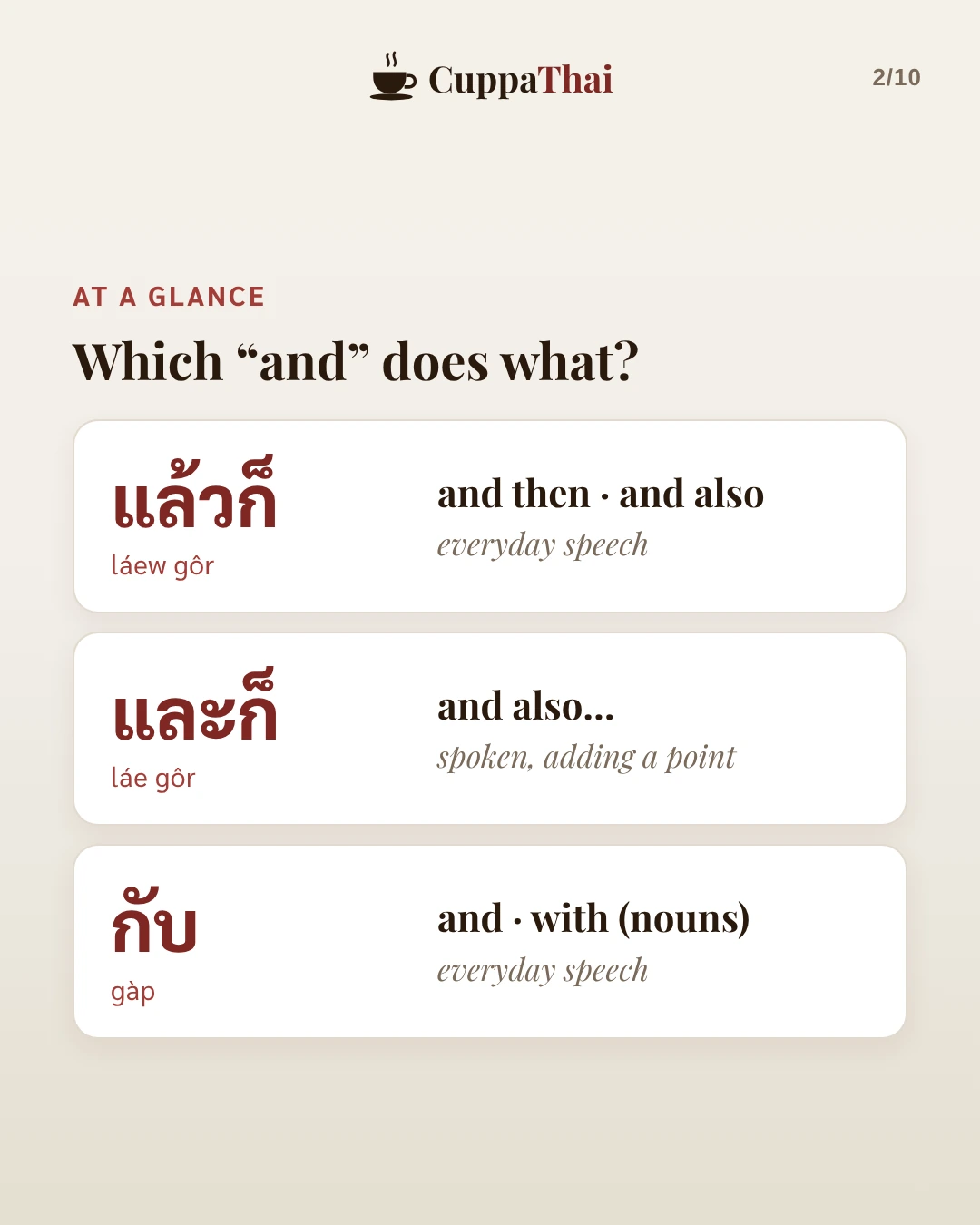
- At a glance. Which and does what? แล้วก็ (láew gôr), and then, and also, everyday speech. และก็ (láe gôr), and also, spoken, adding a point. กับ (gàp), and or with, used with nouns, everyday speech.
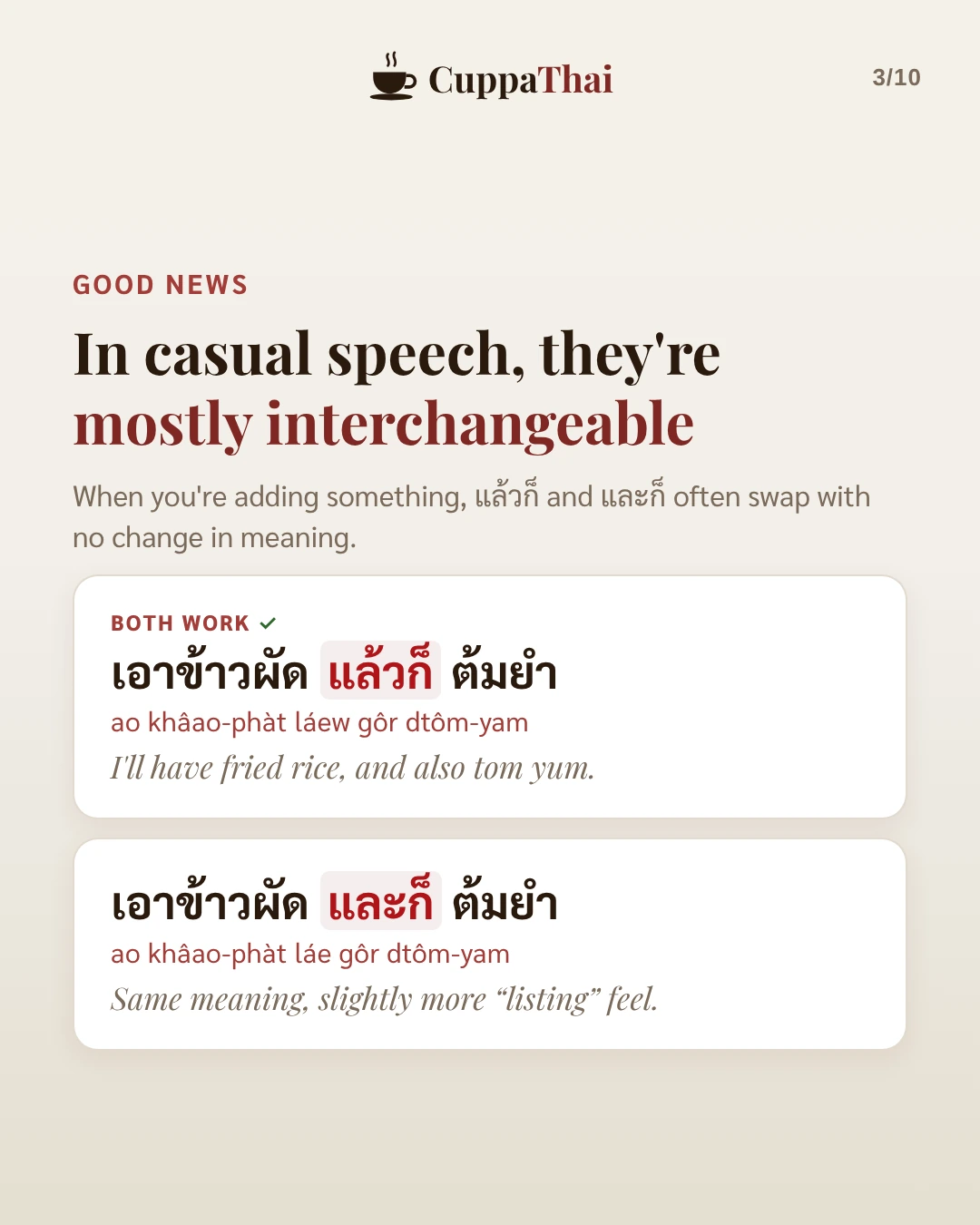
- Good news. In casual speech, they're mostly interchangeable. When you're adding something, แล้วก็ and และก็ often swap with no change in meaning. Both work: เอาข้าวผัด แล้วก็ ต้มยำ (ao khâao-phàt láew gôr dtôm-yam), I'll have fried rice, and also tom yum. เอาข้าวผัด และก็ ต้มยำ (ao khâao-phàt láe gôr dtôm-yam), Same meaning, slightly more listing feel.
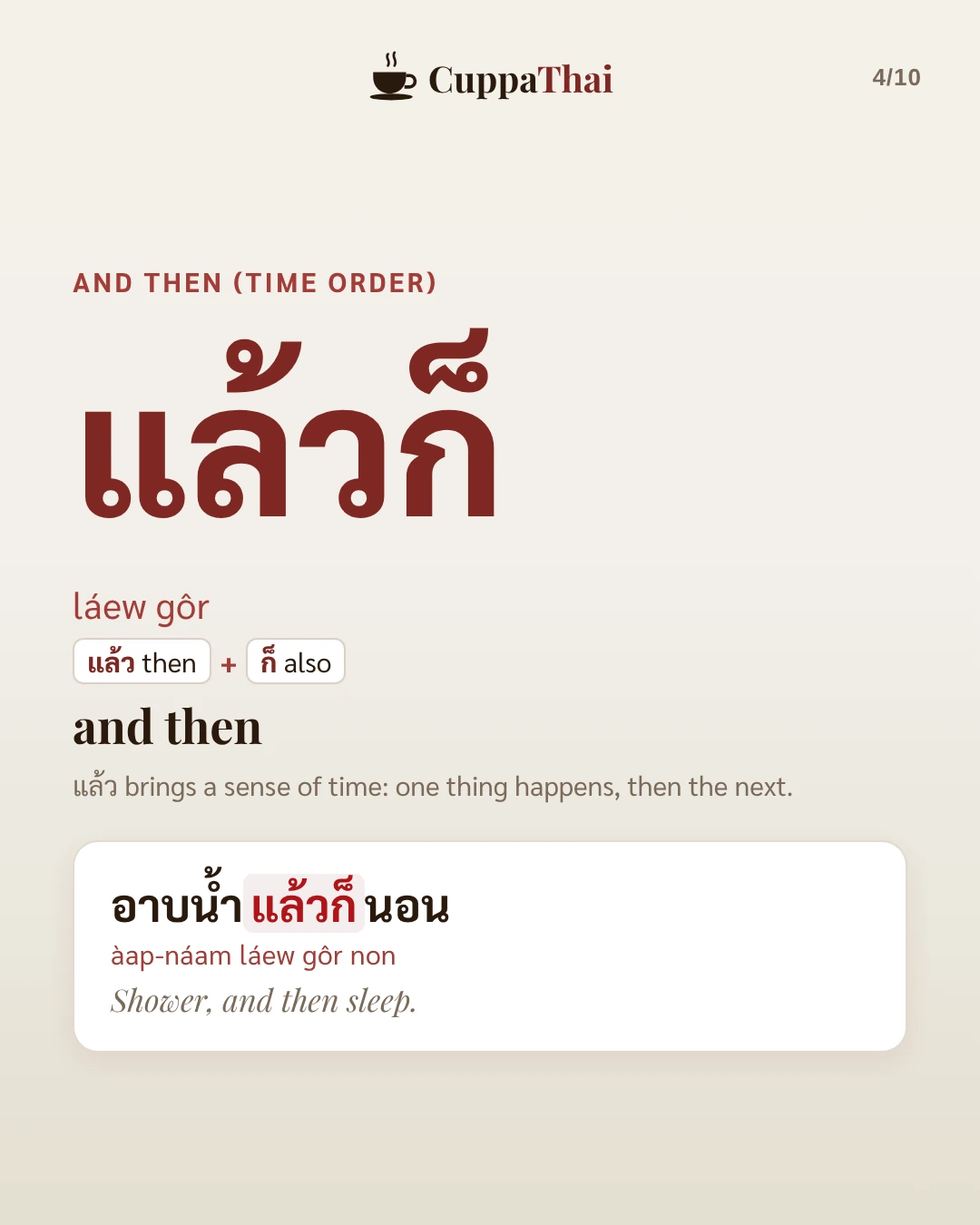
- And then, time order. แล้วก็ (láew gôr): แล้ว then plus ก็ also. And then. แล้ว brings a sense of time: one thing happens, then the next. Example: อาบน้ำแล้วก็นอน (àap-náam láew gôr non), Shower, and then sleep.
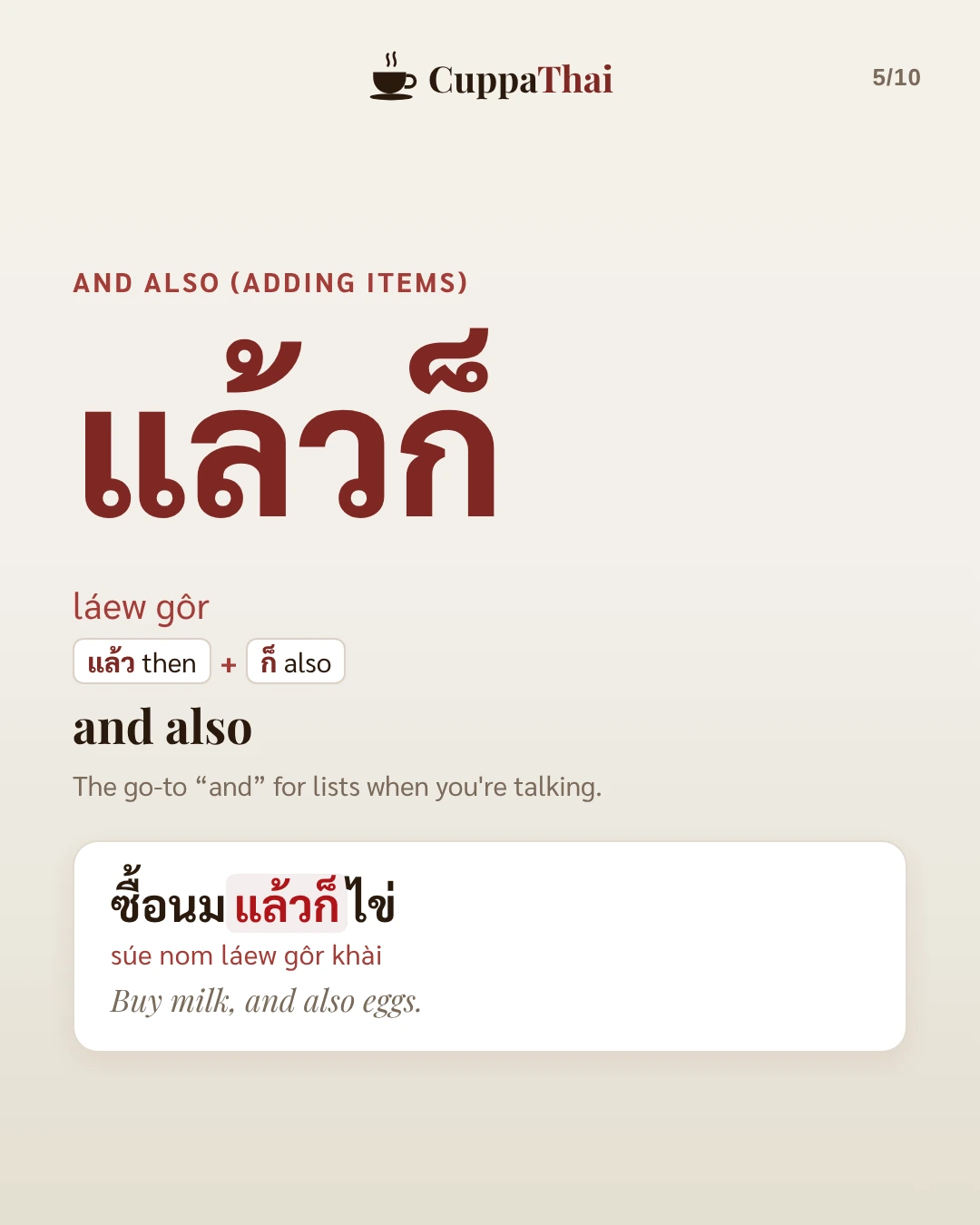
- And also, adding items. แล้วก็ (láew gôr): แล้ว then plus ก็ also. And also. The go-to and for lists when you're talking. Example: ซื้อนมแล้วก็ไข่ (súe nom láew gôr khài), Buy milk, and also eggs.
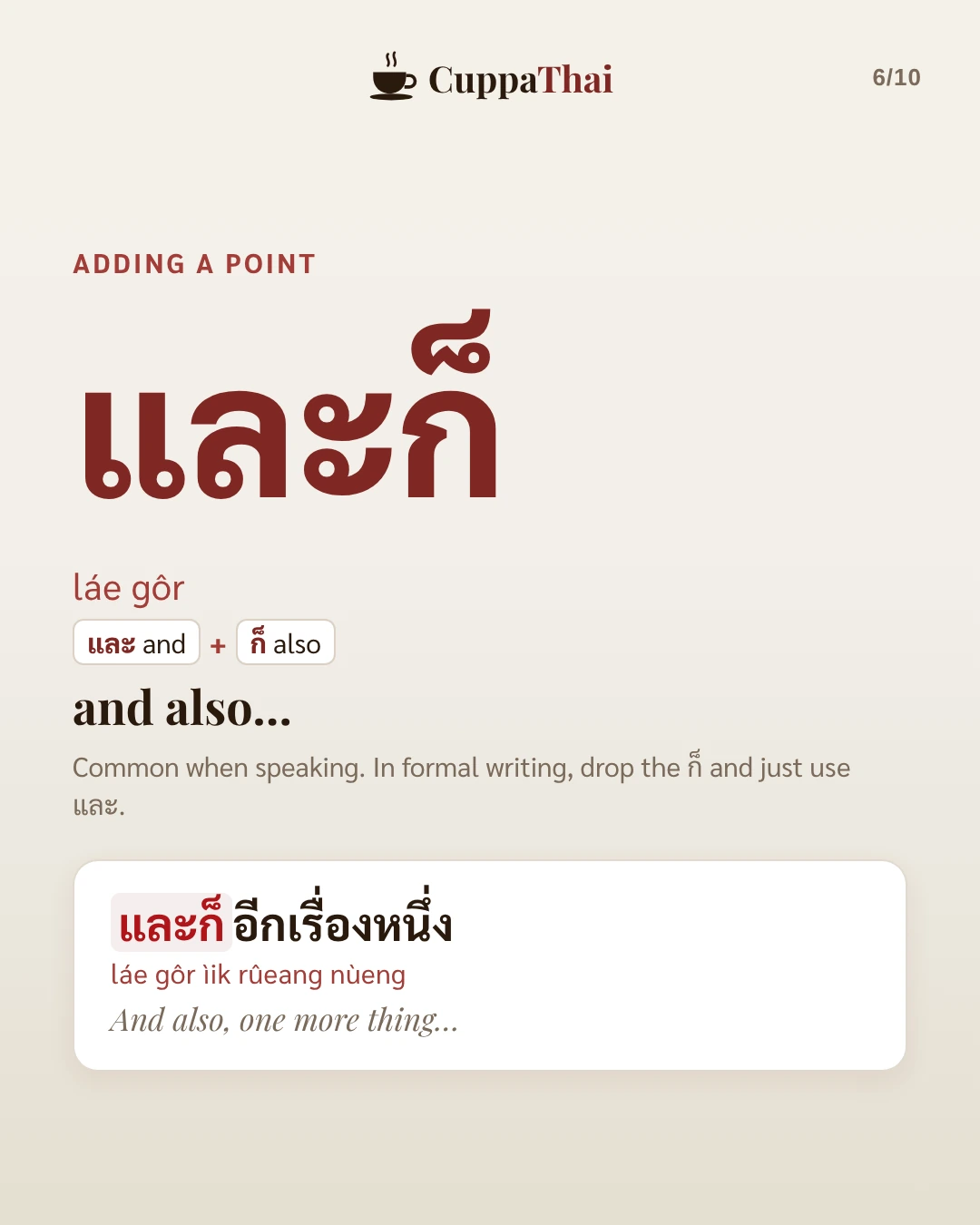
- Adding a point. และก็ (láe gôr): และ and plus ก็ also. And also… Common when speaking. In formal writing, drop the ก็ and just use และ. Example: และก็อีกเรื่องหนึ่ง (láe gôr ìik rûeang nùeng), And also, one more thing…
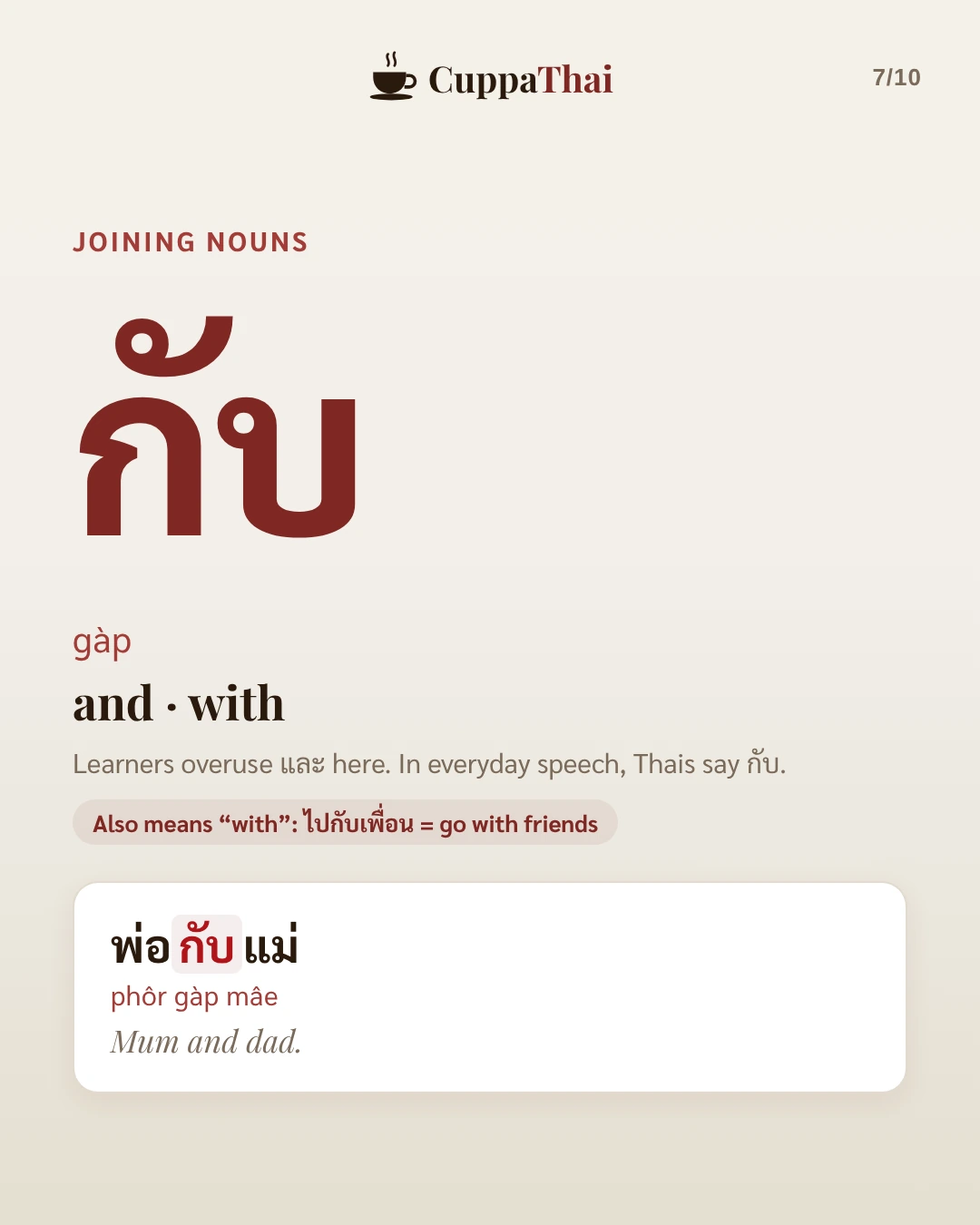
- Joining nouns. กับ (gàp), and or with. Learners overuse และ here. In everyday speech, Thais say กับ. It also means with: ไปกับเพื่อน = go with friends. Example: พ่อกับแม่ (phôr gàp mâe), Mum and dad.
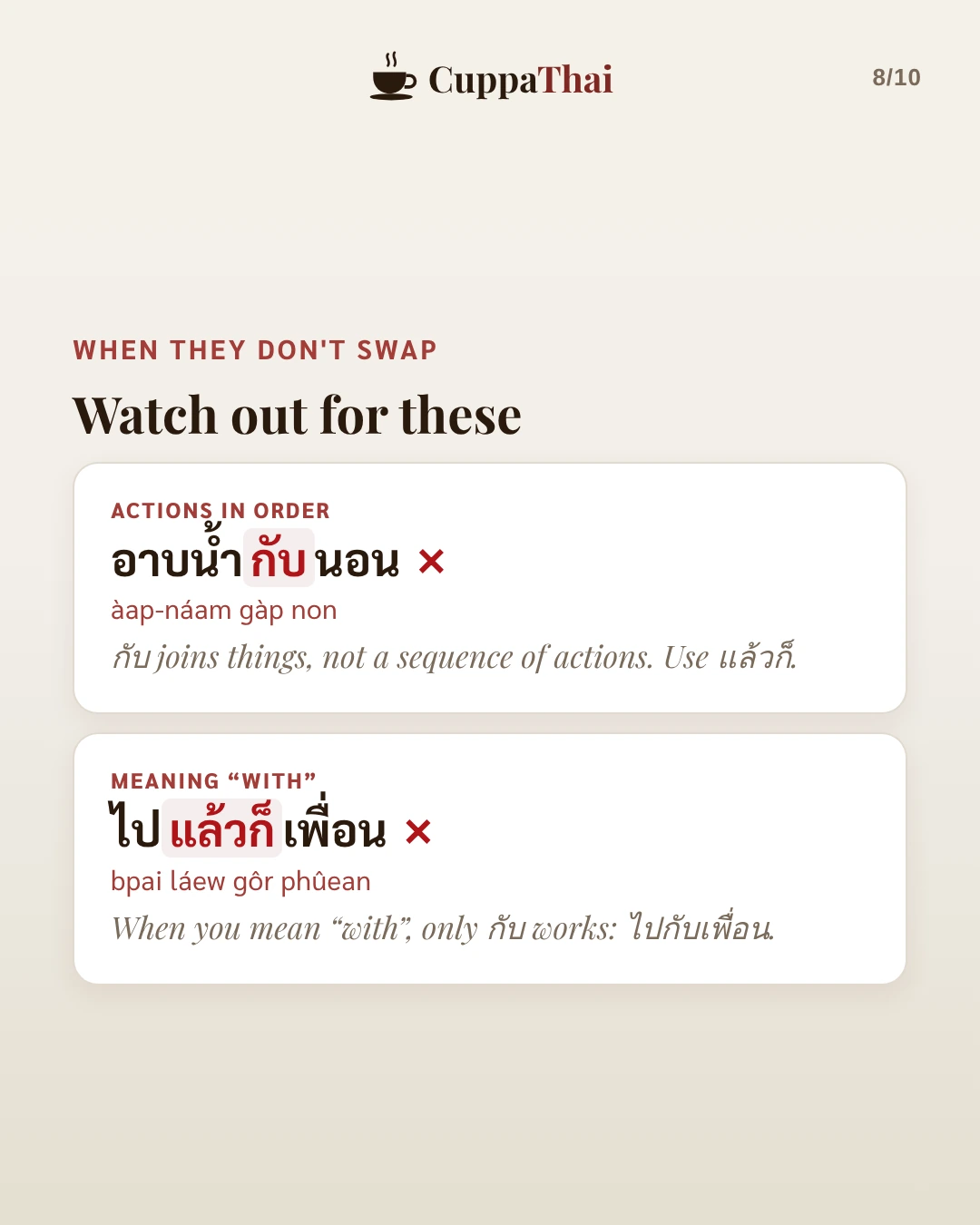
- When they don't swap. Watch out for these. Actions in order: อาบน้ำกับนอน is wrong, because กับ joins things, not a sequence of actions. Use แล้วก็. Meaning with: ไปแล้วก็เพื่อน is wrong. When you mean with, only กับ works: ไปกับเพื่อน.
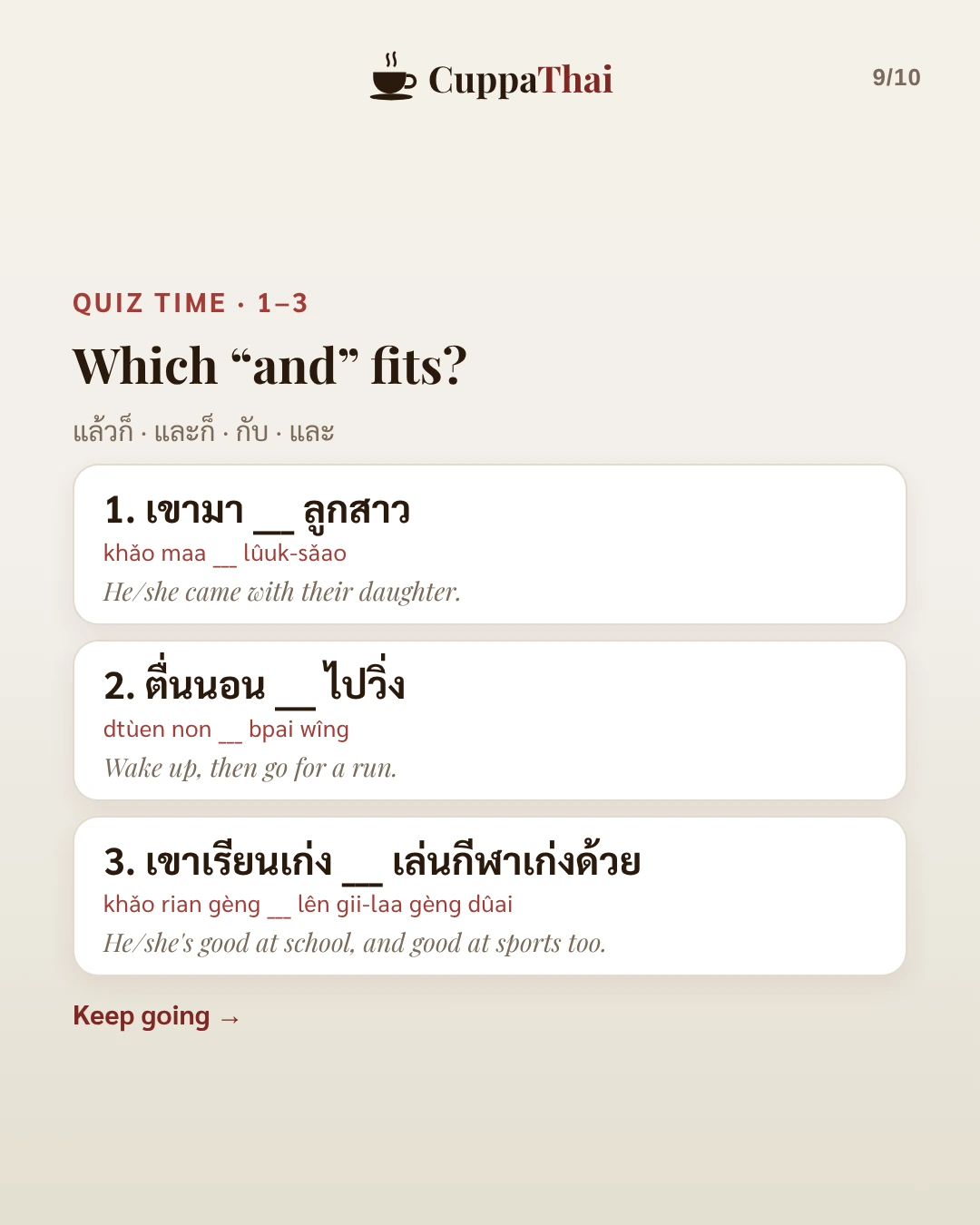
- Quiz time, 1 to 3. Which and fits? Choose from แล้วก็, และก็, กับ, และ. 1. เขามา __ ลูกสาว (khǎo maa __ lûuk-sǎao), He or she came with their daughter. 2. ตื่นนอน __ ไปวิ่ง (dtùen non __ bpai wîng), Wake up, then go for a run. 3. เขาเรียนเก่ง __ เล่นกีฬาเก่งด้วย (khǎo rian gèng __ lên gii-laa gèng dûai), He or she's good at school, and good at sports too. Keep going.
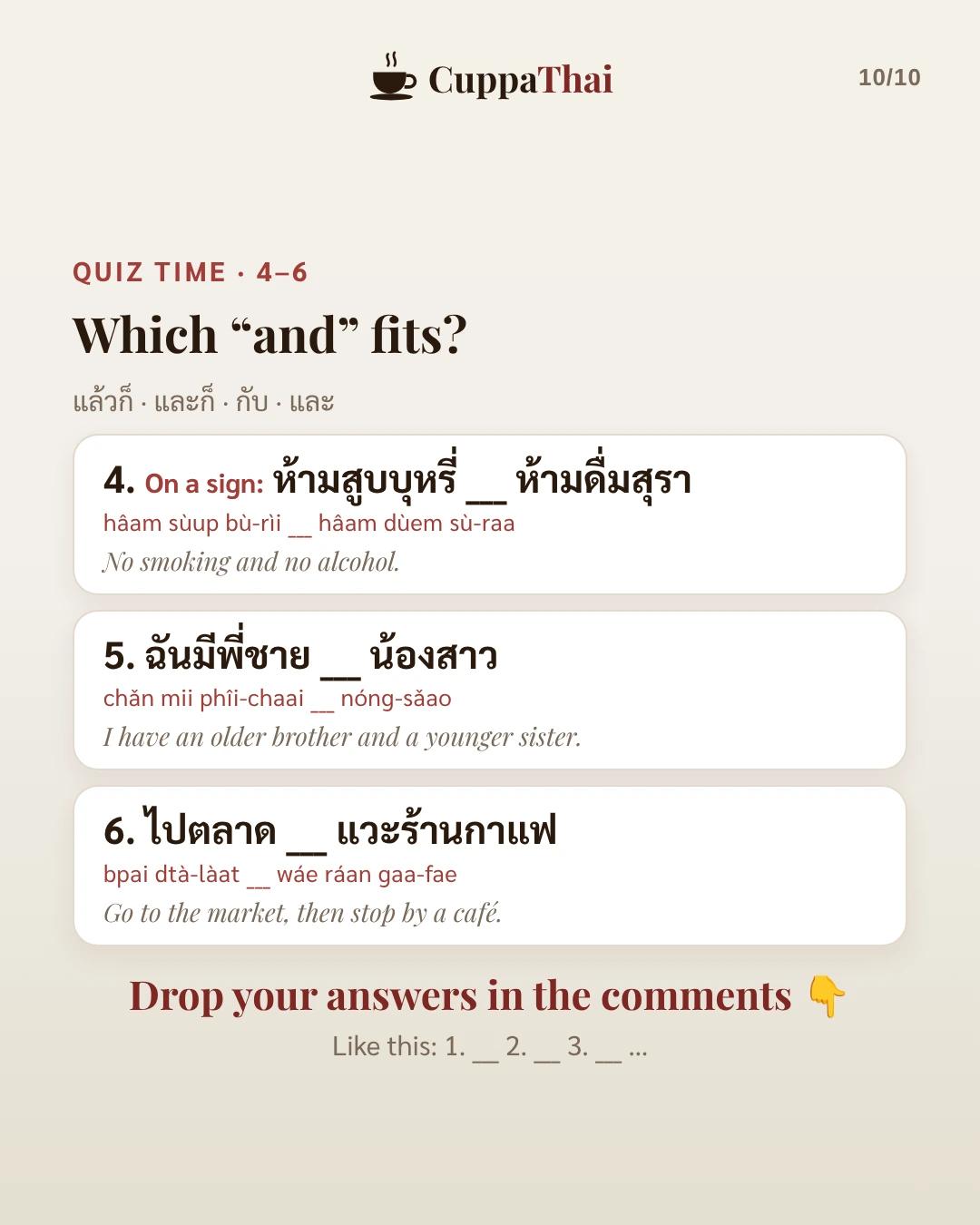
- Quiz time, 4 to 6. Which and fits? On a sign: ห้ามสูบบุหรี่ __ ห้ามดื่มสุรา (hâam sùup bù-rìi __ hâam dùem sù-raa), No smoking and no alcohol. 5. ฉันมีพี่ชาย __ น้องสาว (chǎn mii phîi-chaai __ nóng-sǎao), I have an older brother and a younger sister. 6. ไปตลาด __ แวะร้านกาแฟ (bpai dtà-làat __ wáe ráan gaa-fae), Go to the market, then stop by a café. Drop your answers in the comments.
Like how we teach? Practise this live with a teacher, in English, in a small group or one-to-one.
See the live Thai classesMore like this
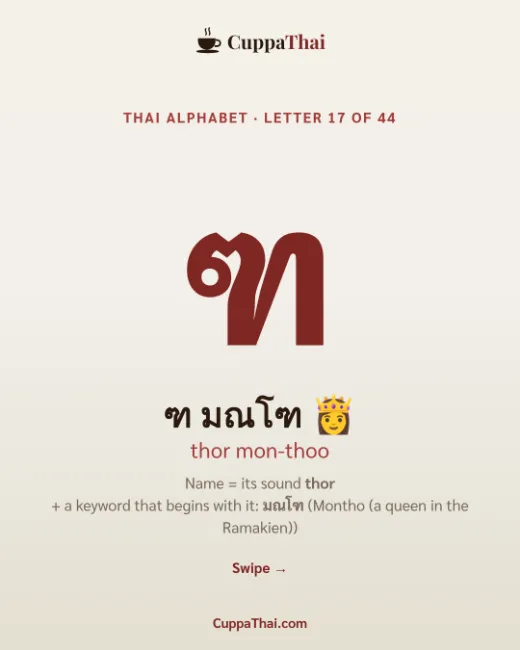
ฑ มณโฑ (thor mon-thoo): Thai alphabet, letter 17 of 44
Letter 17 of 44 in the Thai alphabet: its name, sound, consonant class, tones and everyday words. ฑ มณโฑ (Montho, a figure from the Ramakien).
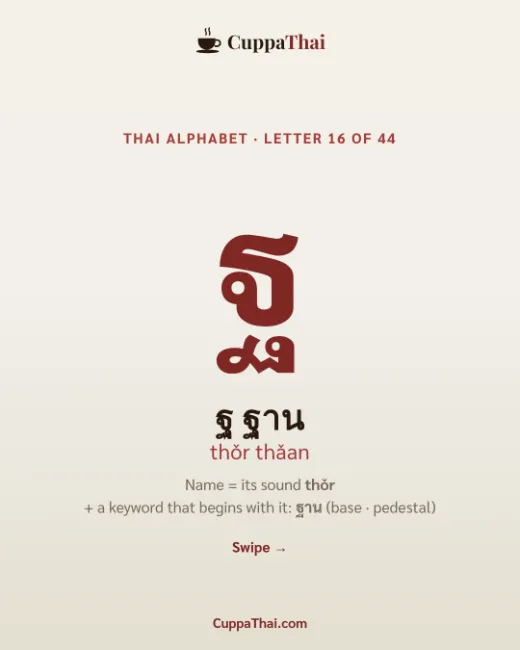
ฐ ฐาน (thor thaan): Thai alphabet, letter 16 of 44
Letter 16 of 44 in the Thai alphabet: its name, sound, consonant class, tones and everyday words. ฐ ฐาน (pedestal).
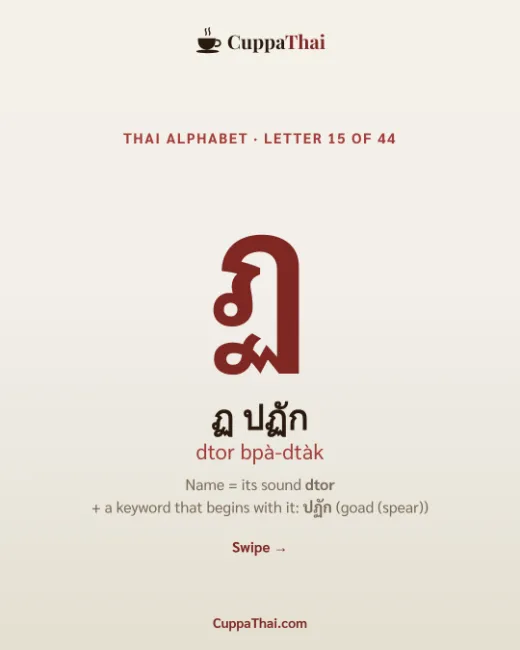
ฏ ปฏัก (dtor bpa-dtak): Thai alphabet, letter 15 of 44
Letter 15 of 44 in the Thai alphabet: its name, sound, consonant class, tones and everyday words. ฏ ปฏัก (goad, a pointed stick).